Cafeterias Unknown: Tasting Tibetan Cuisine at Academy School

2020.2.AcademySchoolCafUnknown(2).jpg

Back when this blog was started, the intent was to highlight all the amazing work that’s taking place in cafeterias throughout southeastern Vermont. Today, students are exposed to a far more diverse range of dishes and cuisines than what was common 10 or 20 years ago. During a recent meeting with Ali West (Fresh Picks, Brattleboro Town Schools Food Service Director), I was again reminded how far school lunch has come. 

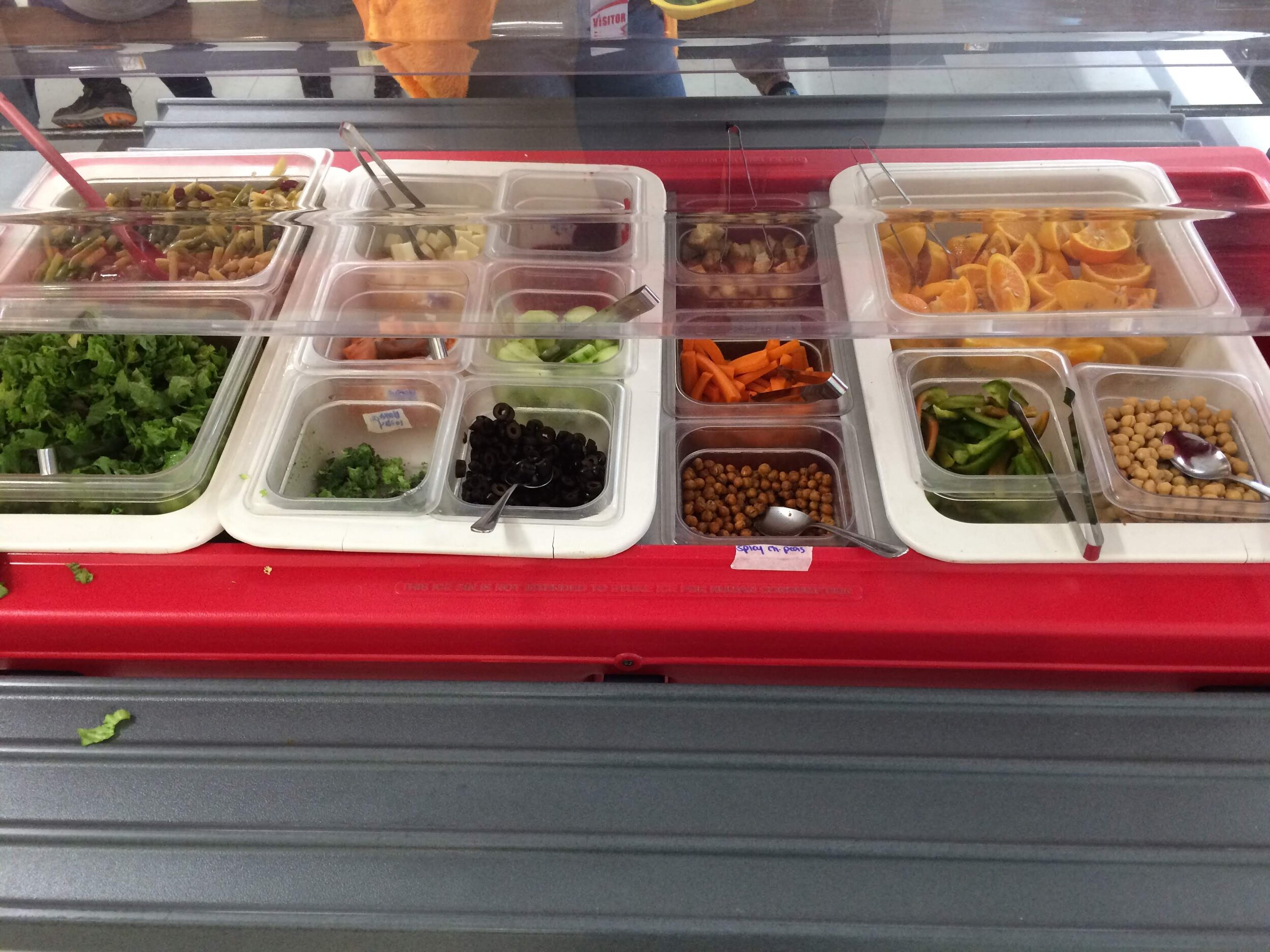
In an effort to be more inclusive of the increasingly diverse student body at Academy School, Ali started the “Where In The World Are We Eating” project, highlighting cuisines from other cultures. A few weeks back, that meant I was treated to a delicious Tibetan lunch while Ali and I talked over local purchasing. The meal turned out to be so good that it was hard to concentrate on the meeting!  

2020.2.AcademySchoolCafUnknown(1).jpg

What exactly was on the menu? Dhang Tsel (cabbage salad), Jha Sha Curry (Tibetan chicken curry with rice), and Shogo Ngopa (spicy potatoes with spinach and flatbread). If there’s ever been a challenge to the traditional school lunch, this is it. Ali let me bring some Shogo Ngopa back to the office and my coworkers had the same reaction as I did—“is this really what they served at school?!” It was exotic, it was spicy, and it was delicious. 

When asked about the students’ reaction, Ali said that “the entire school loved it, I only had one student who wouldn’t try it. Otherwise, it was a huge hit.” This reinforces one of the main philosophies we hold at Food Connects—if you serve quality food, students will trust you, try new things, and eat healthily. Next month the school is headed to China and Sheila and I already have our flight booked!
Lessons Learned from Two Food Connects Learning Journeys

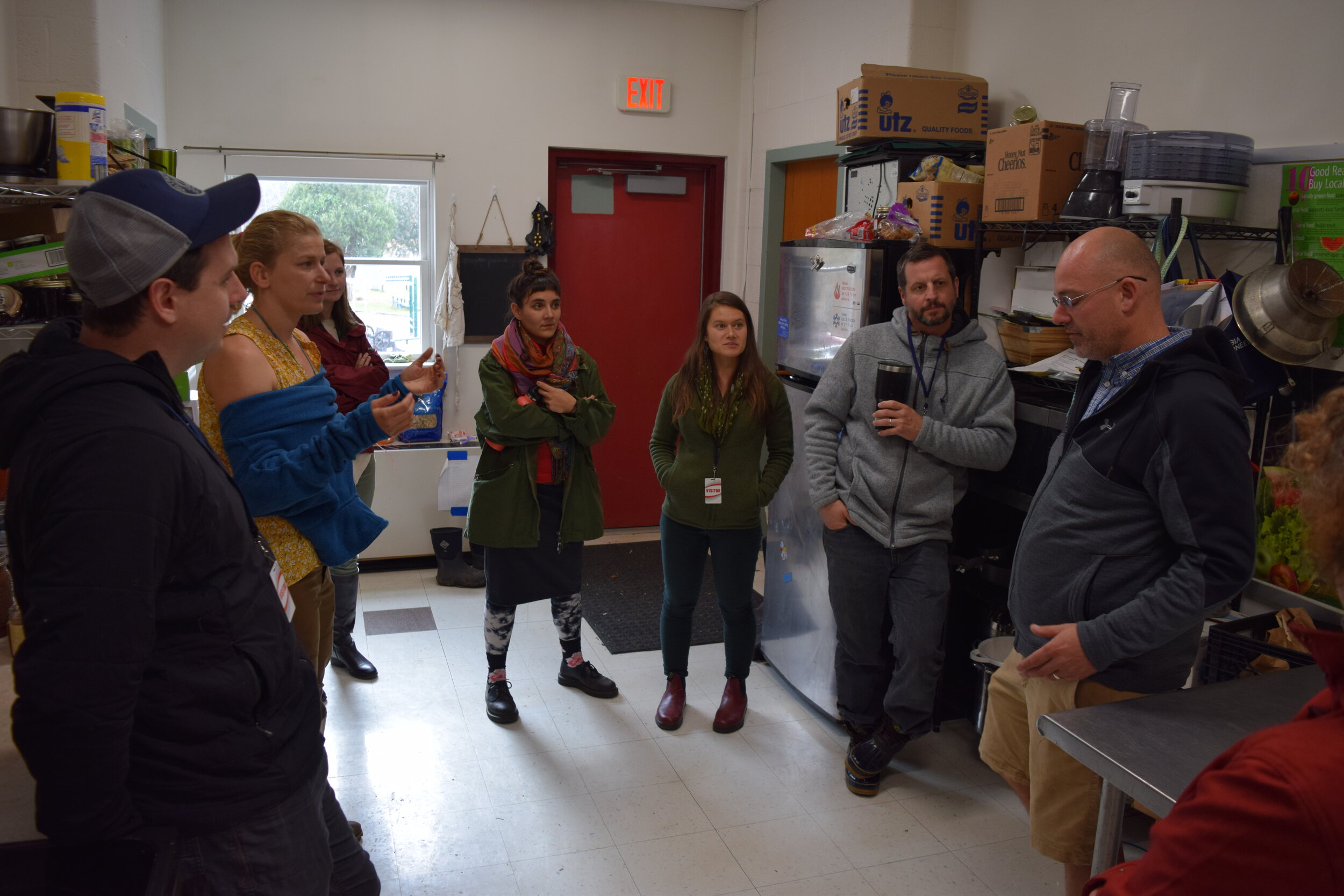
This past summer, Food Connects accompanied two Farm to School teams to the Northeast Farm to School Institute (NEFTSI) summer retreat. The retreat kicked off a year-long program where teams receive Farm to School program support and professional development as well as year-round coaching. Academy School from WSESD and a joint Grafton Elementary School and Westminster Center School team from WNESU spent three days at Shelburne Farms planning for the school year, learning more about Farm to School programming, and networking with other professionals from across New England and New York. 

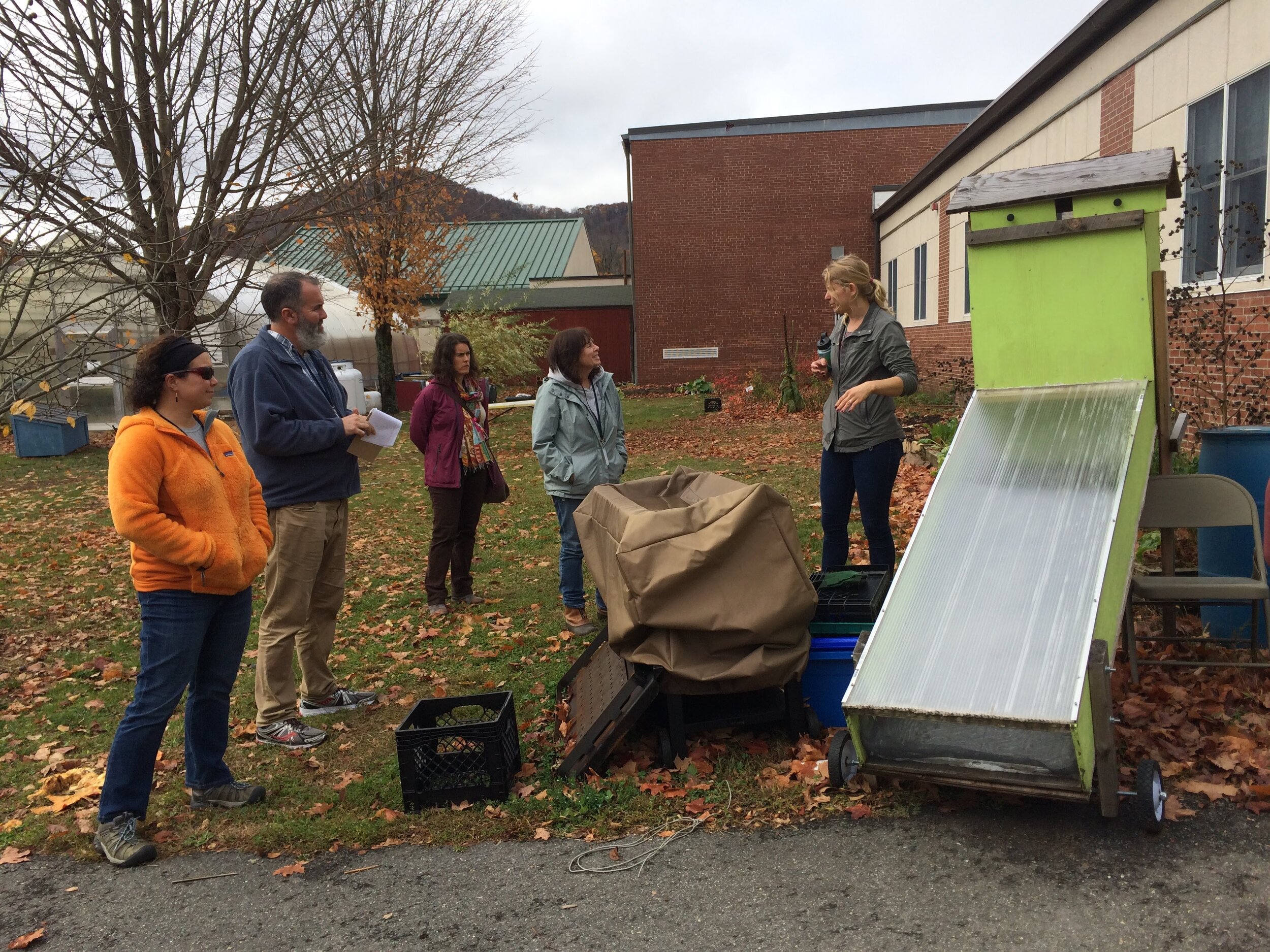
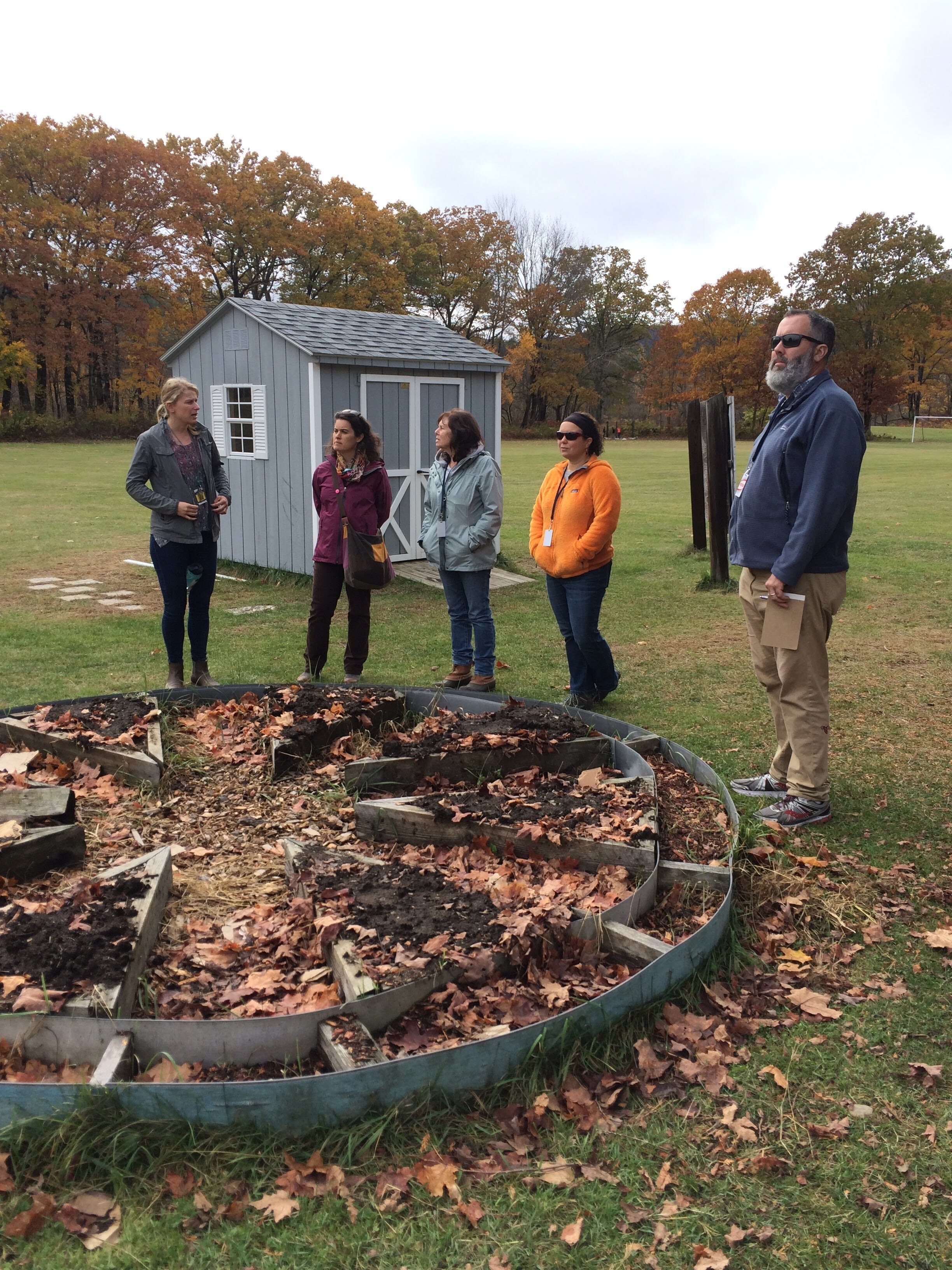
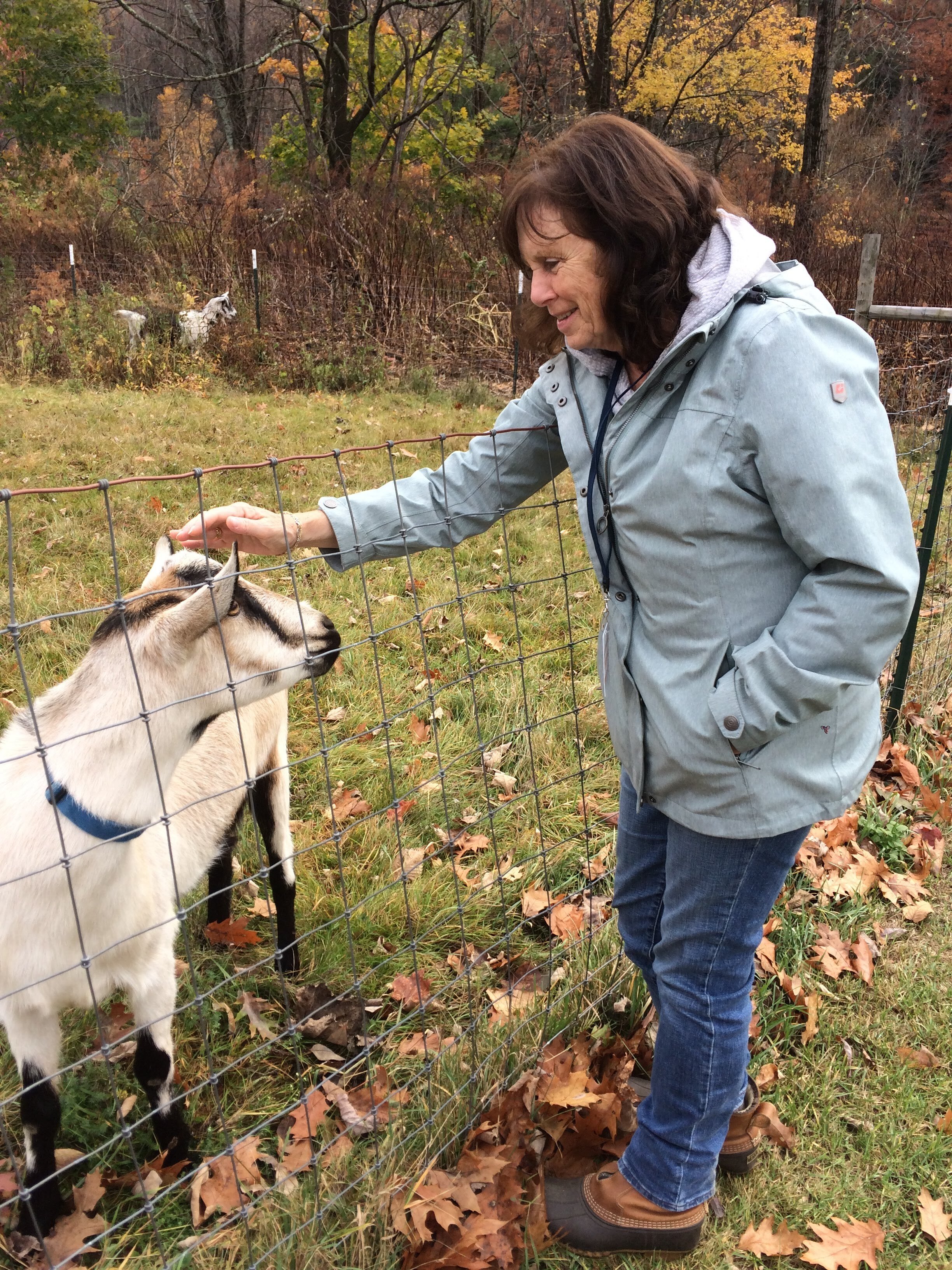
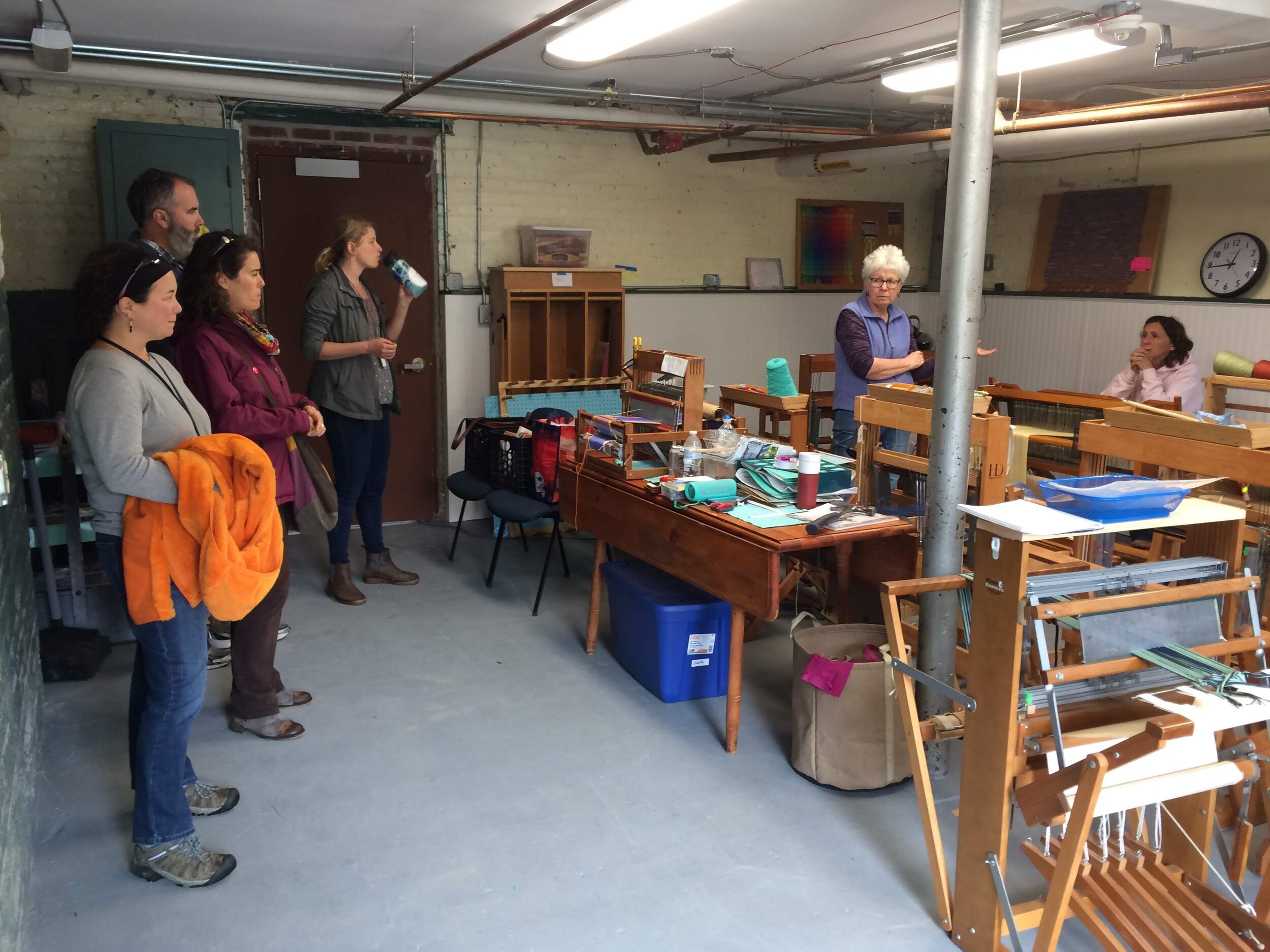
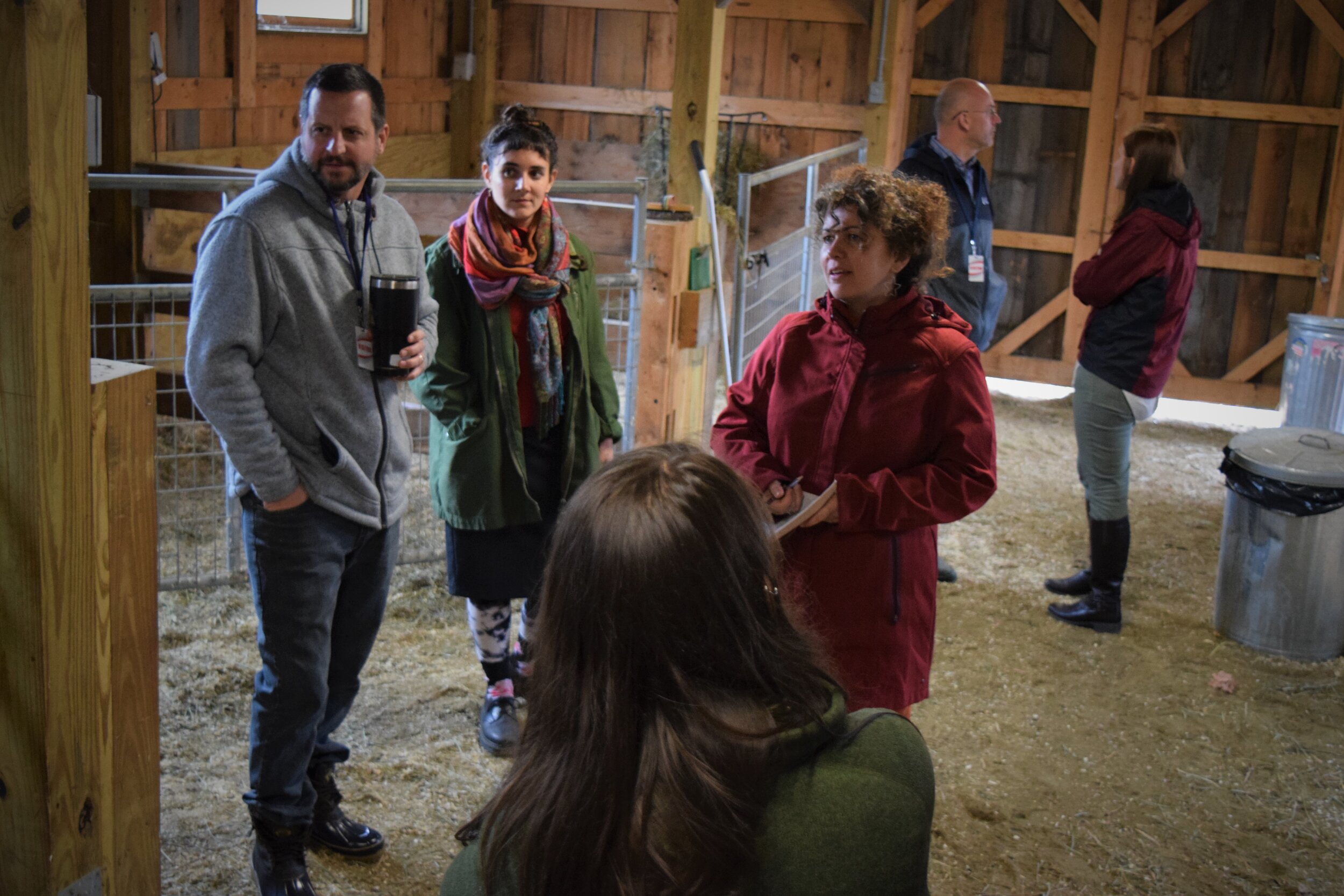
As the rush of back to school started to slow down, Food Connects Farm to School coaches, Conor and Sheila, reconnected with their NEFTSI teams, excited to kick off the new school year with a strong Farm to School focus. Still energized by the summer retreat, both teams wanted to make sure they stayed connected with the larger Farm to School community while also working to improve the programs in their own schools. Luckily for everyone, southeastern Vermont and western Massachusetts are home to a number of leaders in the Farm to School movement. At Sheila’s suggestion, Food Connects helped to coordinate personalized learning journeys for both teams to visit two robust Farm to School programs in the area. 


Hawlemont Regional School

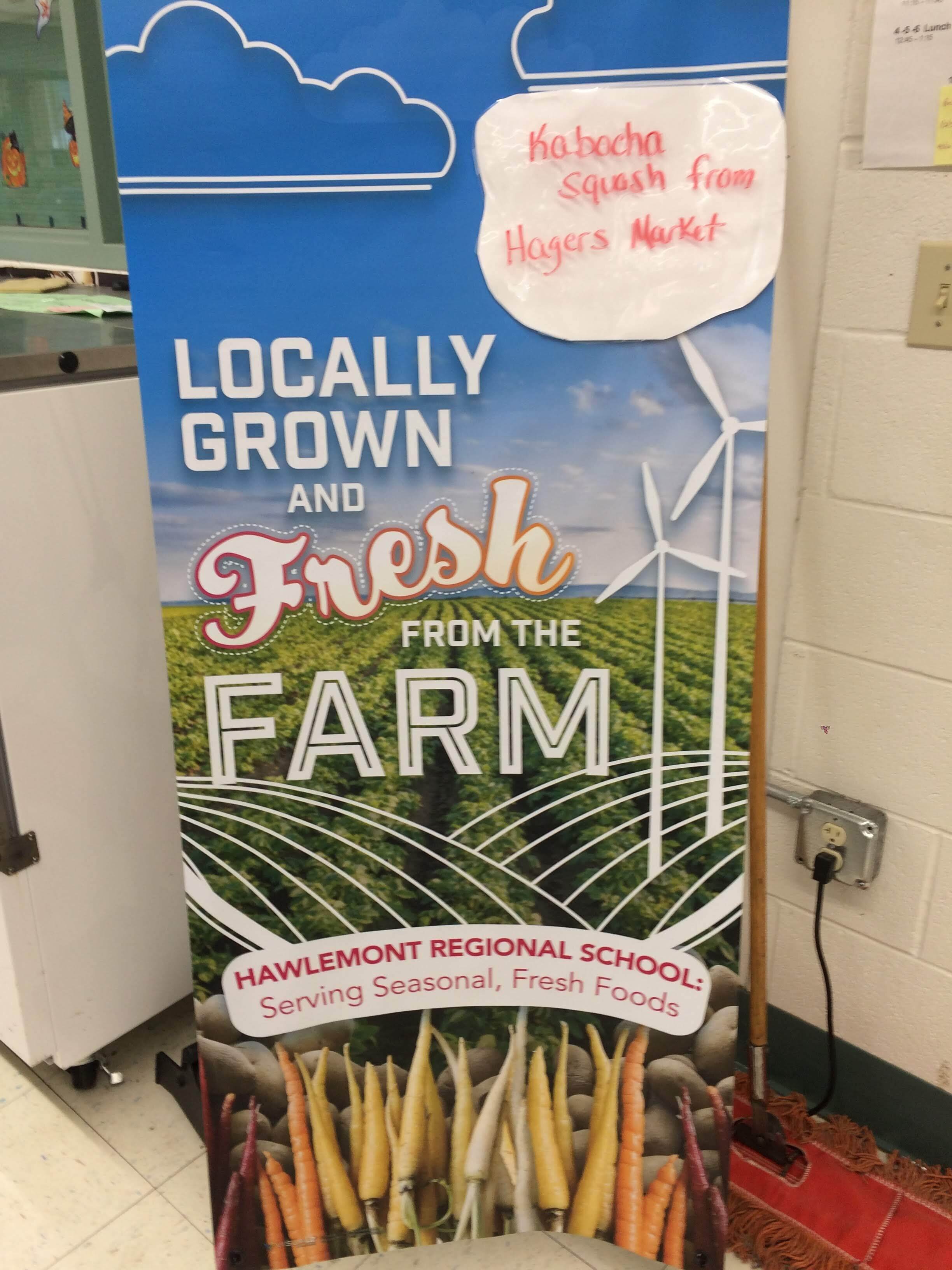
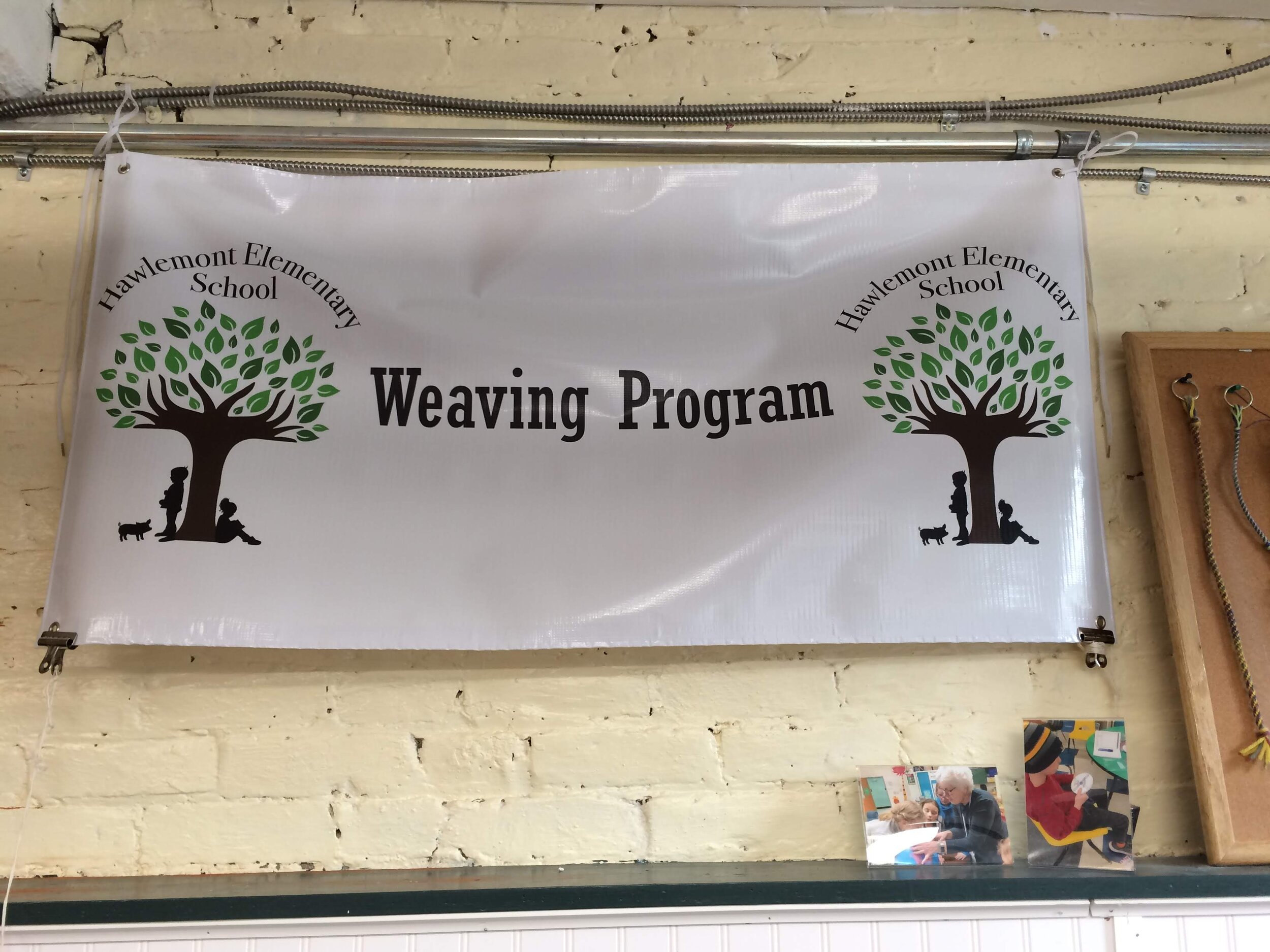
Hawlemont is a public pre-K through 6th-grade school in the rural community of Charlemont, MA. Hawlemont was struggling to stay open after school choice resulted in declining enrollment.  In an effort to save the school, staff and local community members decided to reinvent the school with a “farm-flavored approach to learning.” The HAY (Hawlemont, Agriculture, and YOU) program is now in its fifth year, and during that time the school has doubled its enrollment and now has a waiting list.

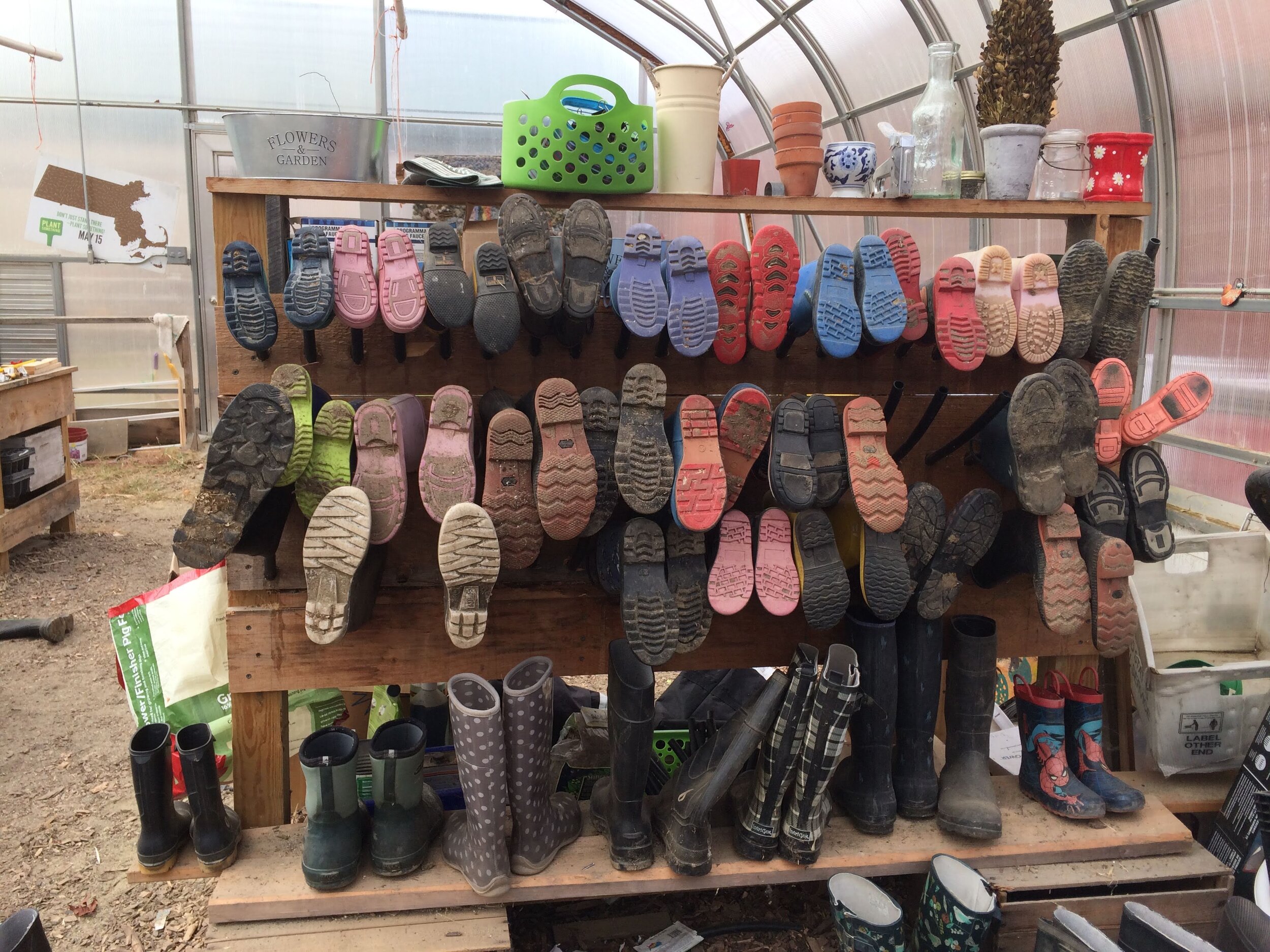
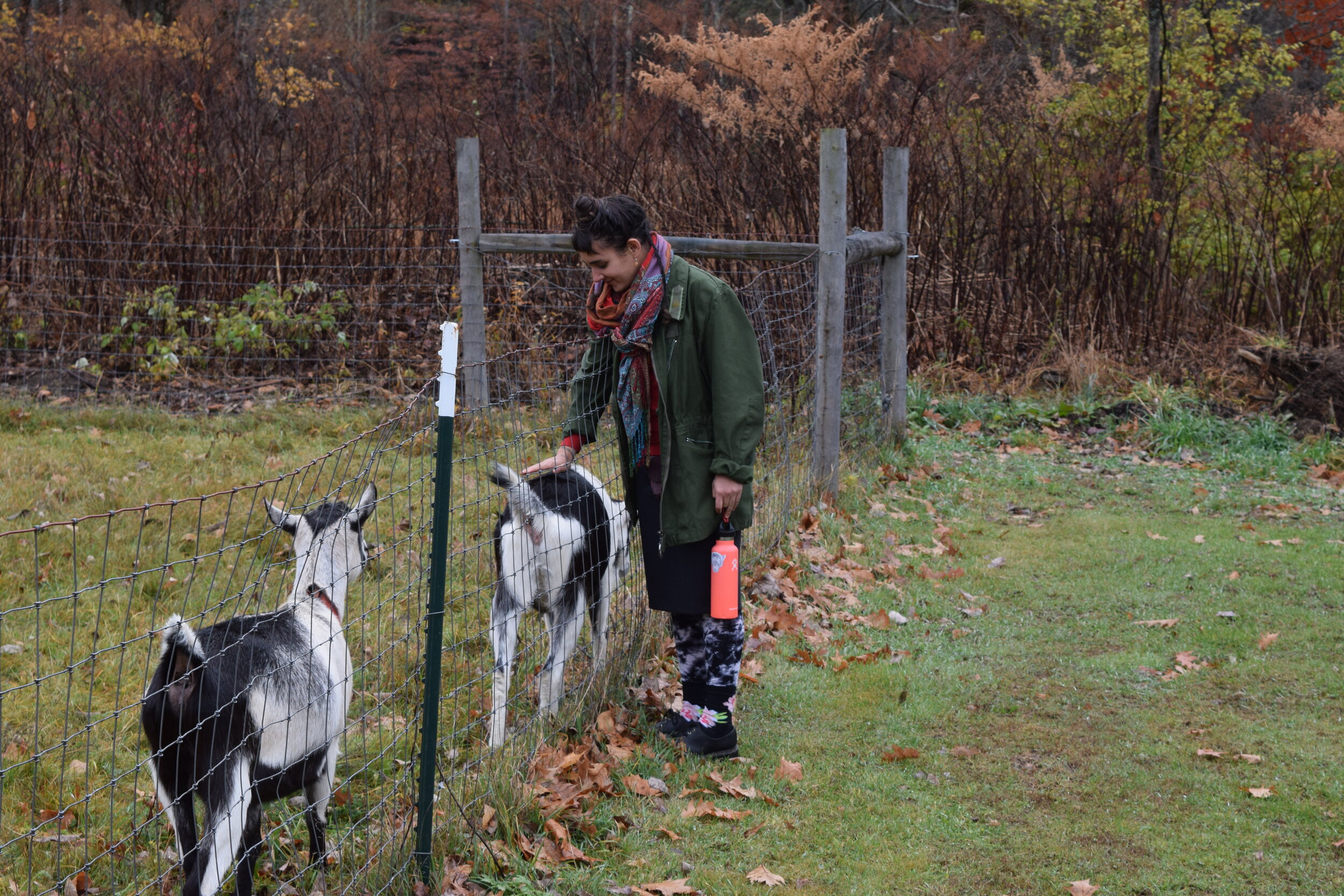
Hawlemont received grant funding and leveraged community support to build their program, using grant funds and donated supplies and labor to build a greenhouse, barn, and garden beds, and teachers worked together to create an integrated farm and food curriculum. The result is a complete reimagining of the school, featuring successful collaborations with local farmers and community members where Hawlemont students engage in hands-on learning as they care for animals, nurture gardens, and develop new skills in a real farm setting.

Hawlemont added a new staff position, HAY teacher, and all students have HAY class each week for 30-45 minutes, just like music, art, and PE classes. Each class has daily barn chores and learns cooking, canning, and preserving, as well as beekeeping and running a weekly in-school farmers market where produce from the school garden and value-added products like pesto, canned tomatoes, salsa, jelly, and freshly baked pies all made by students are sold to parents and the community.

Hawlemont is working hard to get more local food into its independently run lunch program. In addition to purchasing from local farms, when budgetary constraints allow, all of the jelly used for PB & J’s for the entire school year comes from jelly students in the HAY program make from either grapes grown on the school property or from fruit picked by students from local farms.

Guilford Central School

For years, Guilford has worked hard at building its Farm to School program and they have been a partner of Food Connects since 2014. In her second year, Sarah Rosow is the school’s Farm to School Coordinator. As both teams saw during their visits, Farm to School programming is strongest when there is a consistent collaboration between a dedicated coordinator and a team of champions from throughout the school. At Guilford, Sarah works with all the teachers to find time to incorporate Farm to School lessons into their existing curriculum as well as additional enrichment activities. She works with Dan, the school’s food service director, to integrate taste tests and Harvest of the Month items into the menu. Through this collaboration, Sarah is able to stay focused on Farm to School and keep projects moving forward, while the team of faculty and staff ensure that there remains a strong culture of Farm to School throughout the building.

So what does Farm to School at Guilford look like for the students? Getting dirty in the gardens, cooking up delicious Harvest of the Month recipes in the Farm to School room, and working in their classrooms to design and make market-ready products for the school gardens. From pre-K all the way to the 6th grade, students engage in Farm to School through classroom learning and extension activities. 

Farm to School also reaches the cafeteria, where Chef Dan is an active member on the Farm to School team and works with Food Connects to increase local purchasing and track trends over time. This past Thanksgiving, Dan put on a feast for the entire community that highlighted many local items. Now, he’s working with Sarah to highlight many of the dishes students make in the Farm to School classroom by incorporating them into his lunch menus. 

The Guilford Farm to School program made a particularly large splash this past month when they hosted their inaugural Holiday Market, where local vendors joined students in selling different crafts. Of the money made by each classroom by selling their items, half is being donated to a charity of their choosing and the other half is going to be reinvested in Farm to School programming for the students. 


After two inspiring days of learning and sharing, there were definitely some themes the teams walked away with when thinking about program longevity and sustainability. In both schools, there was a balance between team collaboration and a main coordinator. Oftentimes, Farm to School programs grow their roots in a school thanks to the devoted efforts of a single champion. While that helps keep the momentum going, it’s important to quickly build a diverse team of support. Otherwise, when that champion leaves or becomes too busy themselves, all the work they did can get lost in the shuffle. 

The community support both schools have is also one of their greatest strengths. In Hawlemont, community members rallied to save their school, build a barn, and help care for the animals. Guilford partners with local farmers to source beef for lunches, handle their food scraps, and support events like the Holiday Market. In addition to gathering a diverse team of school staff, another first step for a fledgling Farm to School program should be to think about what makes their community special and ways to involve community members as much as possible. 

Lastly, both programs are actively involved in parenting their financial sustainability. Grants and fundraising are inevitably a big part of Farm to School. Having dedicated coordinators to work on larger projects and support from organizations like Food Connects goes a long way in supplementing school budgets. Each program has its own needs, but having a variety of funding sources for staff and materials is key in creating robust programs that carry on for years.

Addressing Food Waste in our Schools

Food Connects begins a two-year project aimed at reducing food waste and increasing food access in local schools.

Food Connects has worked with schools for over 10 years to support Farm to School programs that bring together the cafeteria, classroom, and community. Oftentimes, when working with Food Service Directors, we focus on the procurement and preparation of local food in school cafeterias. Until now, less attention was given to food waste and food recovery, despite it being an essential part of Vermont’s food system. Thanks to the support of a two-year $55,550 grant from the Claneil Foundation, we now have the capacity to greatly build upon our current efforts to address food waste and better support our partners.

As a community, our awareness of the urgency and magnitude of climate change has grown. Farm to School programming is already linked to sustainability education in the classroom and carbon reduction in the cafeteria through local food procurement. We want to strengthen our commitment to these efforts and our work in cafeterias is the prime location for this increased focus. Reducing food waste and increasing food access are two sides of the same problem—this project supports the work we’ve done around trauma-informed approaches to Farm to School. All of which led us to the Claneil Foundation, whose Critical Issue Fund is currently focused on food waste.

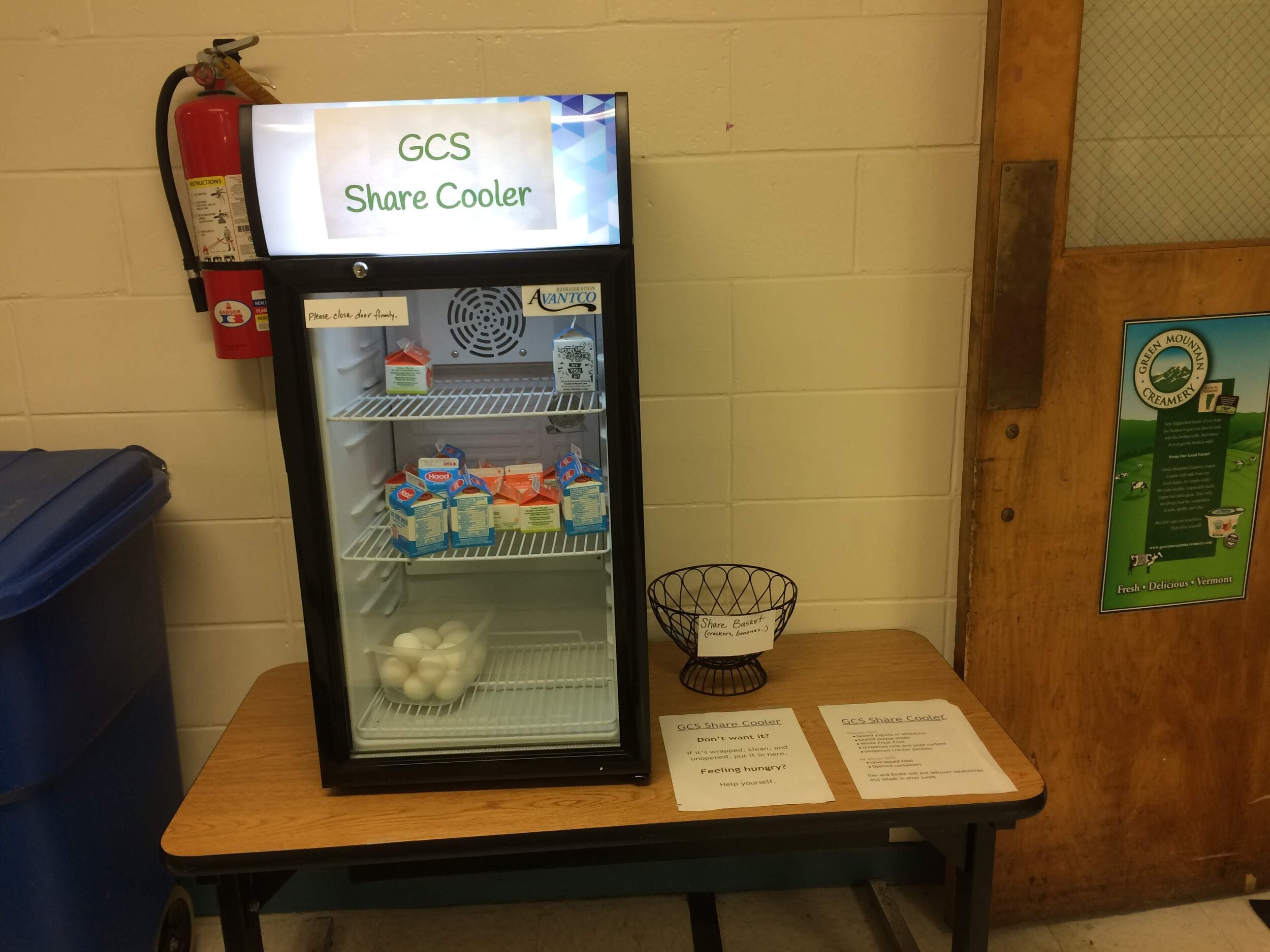
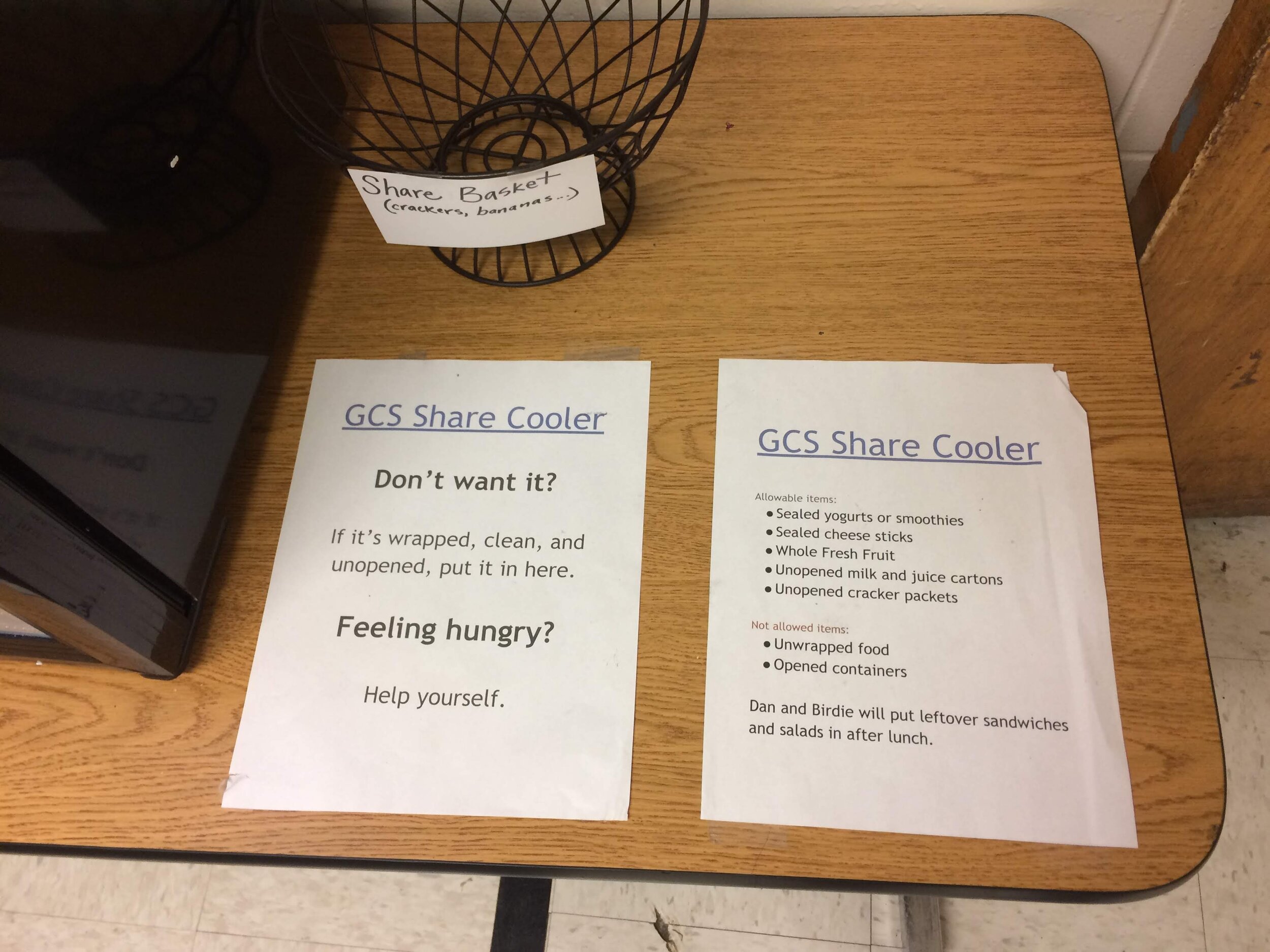
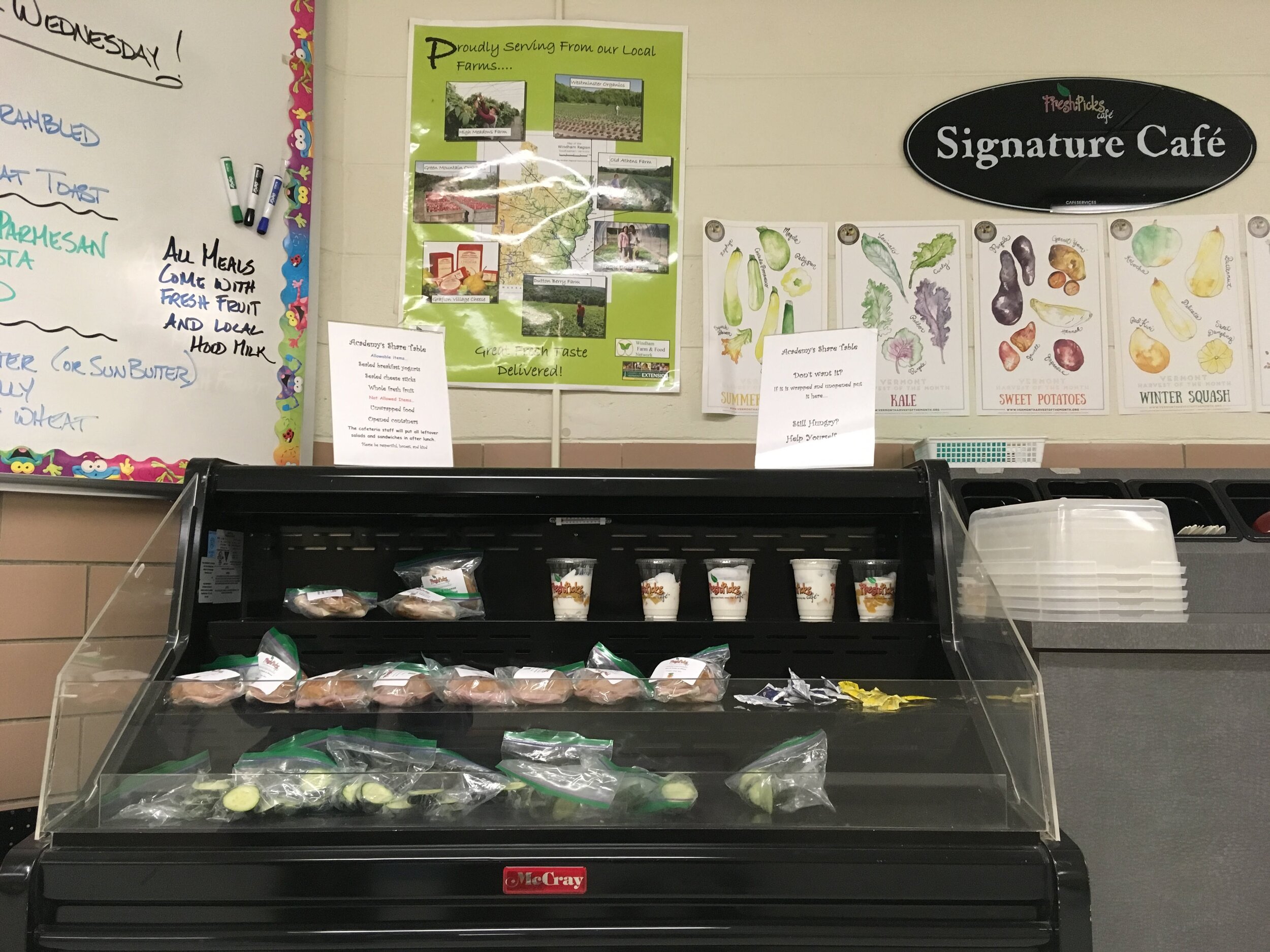
Share Cooler at Academy School.

Share Cooler at Academy School.

We’re excited to work with Food Service Directors to tap into the captive audience each cafeteria presents. Some schools we work with have already taken big steps to reduce food waste, notably Seed2TrayWindham Central Supervisory Union’s nutrition program—and the Windham Southeast School District. At Seed2Tray, Chris Parker and his staff repackage leftover food to give students the option of taking an additional meal home with them. In the WSESD, share coolers are a common sight in cafeterias and Putney Central School replaced milk cartons with reusable cups and a milk dispenser.

Despite the promising progress, we anticipate obstacles along the way. The biggest of which is that change is often slow to happen and difficult to enact. This is especially true in middle and high schools. With fewer daily routines and more student autonomy, it becomes crucial to reach students with positive messaging and clear steps they can take to be a part of the solution. We anticipate student environmental groups in secondary schools to be our partners in implementing some of these changes. Research indicates that the longest-lasting interventions are those focused on teachers and staff in the school (as opposed to students). As the main implementers of new systems and the setters of culture in schools, co-opting school staff will be essential. We’ll need to ensure that our best practices are streamlined and easy for busy staff to incorporate into their daily routines.

With these potential challenges in mind, over the next year, we will work closely with schools to refine their current practices and pilot new ones. By the end of this stage of the project, we will engage with at least ten schools in southeast Vermont and the Monadnock Region of New Hampshire. The list of potential interventions includes share coolers, repackaging meals, composting systems, school-based food shelves, improving cafeteria environments, and continuing to improve meal quality. We’re also excited to discover new interventions along the way!

In the second phase of the project, we’ll refine this list and highlight the three best practices which have the largest impact relative to their ease of implementation. We will collaborate with state agencies to make sure the practices are aligned with relevant regulations and interview staff from pilot schools to better understand their perspectives. Finally, we’ll take all this information and create a toolkit and workshop to be shared with stakeholders throughout New England.

What I’m most excited about regarding this new project is how it connects strongly with the work we already do in schools and approaches that work through a new lens. I’m sure that in addition to new food waste reduction strategies, new interventions and practices will be uncovered that support other aspects of Farm to School programming. Collaboration is an integral part of this project. I’m looking forward to deepening the relationships we already have with our partners and beginning work with new stakeholders as well.

By Conor Floyd, Food Connects Farm to School Program Manager

We would like to work with you!

  • Are you a teacher, administrator, school nutrition staff, or parent in southeast Vermont or the Monadnock Region and would like to see your school take up this work with Food Connects?

  • Does your school have innovative practices in food waste reduction and increasing food access?

Email our Farm to School team today to be part of our work: farmtoschool@foodconnects.org.

Food Connects and Fresh Picks Cafe to Present at National Conference

Sheila Humphreys, Food Connects’ Farm to School Coordinator, and Ali West of Fresh Picks Cafe and the Brattleboro Town Schools’ Food Service Director, will present at the 10th National Farm to Cafeteria Conference. The conference will take place from April 21 to 23 in Albuquerque, NM.

The National Farm to Cafeteria Conference is a biennial event hosted by the National Farm to School Network. The conference convenes stakeholders throughout Farm to School to “source local food for institutional cafeterias and foster a culture of healthy food and agricultural literacy across America.”  

Sheila presenting at a recent Trauma & Nutrition training for local schools, hosted by Food Connects.

Sheila presenting at a recent Trauma & Nutrition training for local schools, hosted by Food Connects.

Sheila and Ali will present on the work they’ve done to incorporate a trauma-sensitive lens into Farm to School programming. With an increased awareness of the importance of trauma-informative practices in schools, teachers and staff are discovering the strong role food plays in the conversation. “Food and trauma are intertwined,” says Sheila. “Food can establish a strong sense of community but can also be a point of stress and anxiety, especially in an overwhelming cafeteria environment, and for students experiencing food insecurity at home.” 

Ali is an invaluable partner in this work and a Farm to School champion within the district and through statewide advocacy. She is instrumental in the implementation of new programs such as Share Coolers in the Brattleboro Town Schools, which allows students to share what they don’t eat, provides a quick and easy snack for others who may still be hungry, and reduces food waste. Through programs like these, and shifting the focus in the cafeteria to trauma-sensitive practices, Ali and Sheila work to reduce stigma around food, increase food access, and bring awareness to implicit biases. 

Food Connects’ intensive work on developing a trauma-informed approach to education in the Brattleboro Town Schools wouldn’t be possible without their partners within the district and a two-year grant awarded by the Thompson Trust

Cafeterias Unknown: Thanksgiving Extravaganza

November is a time when Farm to School comes alive in the cafeteria. As the Vermont growing season comes to an end and excitement grows for Thanksgiving break, school nutrition staff across the state are hard at work preparing feasts for hundreds. Turkey, mashed potatoes, stuffing, gravy, and roasted veggies fill students’ trays as each school celebrates the holiday in their own unique way. I was able to visit a few schools, lend a hand in the preparations, and enjoy some delicious food. Did I mention, Thanksgiving is also my favorite meal of the year? 

Guilford

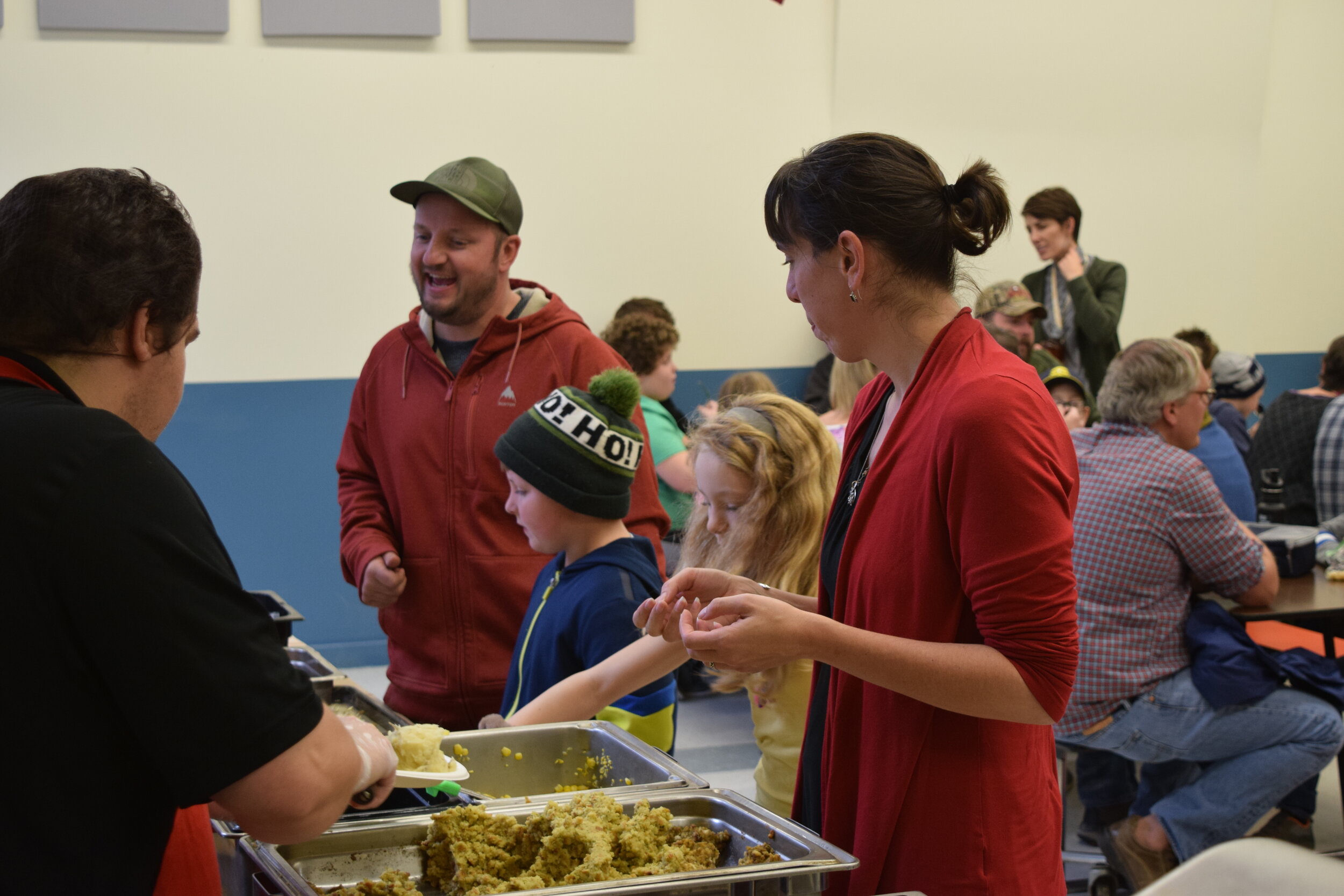
Chef Dan serving up stuffing and mashed potatoes.

Chef Dan serving up stuffing and mashed potatoes.

Guilford Central School hosts a Thanksgiving lunch for staff, students, and parents and this year over half the dishes being served were local—the turkey, sweet potatoes, mashed potatoes, and apple crisp to be exact. Pulling into the parking lot, it was clear that word of the menu had gotten out and I ended up having to park on the street!

After trekking across the parking lot, I made my way through packed hallways to find Chef Dan in the kitchen. Kindergarten through third grade had just finished up and he was getting ready for the second wave of hungry customers. I washed my hands, put on some gloves, and jumped in the buffet line. The staff volunteers and I served up heaping plates of food to grateful students and their teachers and parents until the tables were packed full. 

After the rush, it was time for me to load up a plate for myself and revel in the delicious food. The sweet potatoes in particular were a highlight—perfectly cooked and accompanied by a medley of spices that brought the dish to another level. Kudos to Chef Dan for pulling off an amazing meal, I’ll definitely be back next year! 

Full house in the Guilford Central School cafeteria during their Thanksgiving lunch.

Full house in the Guilford Central School cafeteria during their Thanksgiving lunch.

Westminster

At Westminster, their community meal diverts from the traditional Thanksgiving dishes, and instead keeps the spotlight on local. I arrived the day before to see what work went into hosting the community. Student ownership is what it’s all about at WCS and at around 1pm, the whole school gathered in the gym to break into their respective “longboats” (the school mascot is a Viking). From there, students set off on their tasks. Some groups were prepping the silverware, while others were decorating the rows of tables laid out in the gym. I followed a large group to the cafeteria, where 40 students equipped with peelers, knives, and cutting boards would be prepping produce for the meal.

Students washed, peeled, and chopped the produce themselves (with adult supervision!)

Students washed, peeled, and chopped the produce themselves (with adult supervision!)

Local carrots and potatoes and onions grown in the school garden before being prepped by the students.

Local carrots and potatoes and onions grown in the school garden before being prepped by the students.

With food from the school garden and local farms spread across the tables, students in the cafeteria broke up into stations. Three groups peeled and washed potatoes, others chopped carrots, while the last two groups were tasked with dicing onions—four quarts of diced onions later, there was a fair share of onion-induced tears. To say the cafeteria was calm would be a lie, but a teacher-led each group of students and modeled safe knife skills. The whole room remained in a state of controlled chaos while students engaged in real work and helped the school’s nutrition staff prepare for the upcoming feast. 

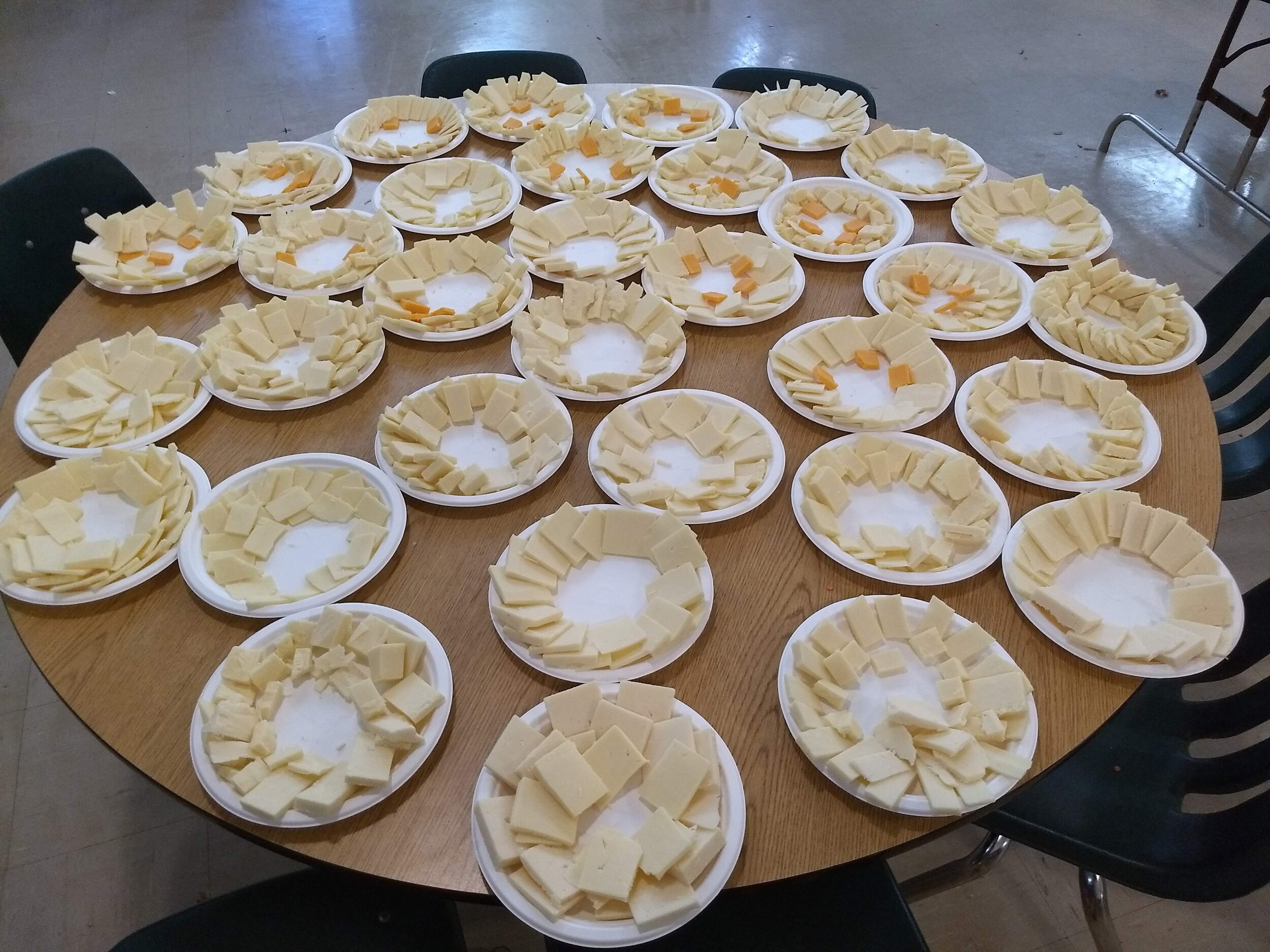
At the end of the hour, everyone was able to admire their handiwork. Cheese plates ready for eating and the veggies prepared for Melissa—WSC’s site nutrition manager—to transform into delicious chowder. The following day, students would be able to invite their families and friends into the school to share a meal they truly had a part in creating.

Cheese plates arranged for the next day’s big event.

Cheese plates arranged for the next day’s big event.

Does your school have a community feast, holiday meal, or local day that you’d like to celebrate? I’d love to highlight your traditions in our newsletter—email me at conor@foodconnects.org!

By Conor Floyd


Taste Tests: From Garden to Classroom to Cafeteria

Taste tests are an integral part of Farm to School programming and an easy way for newer schools to jump into FTS while making some “3 C’s” connections (classroom, cafeteria, and community). Guilford Central School has been at it for a while and their FTS Coordinator, Sarah Rosow, works with each grade to make dishes for the rest of the school to sample. Back in October—before there was 2 feet of snow on the ground—I joined Sarah and a group of fourth-graders to harvest some kale for their monthly taste test. 

Sarah and two fourth graders cleaning a bed in preparation for winter.

Sarah and two fourth graders cleaning a bed in preparation for winter.

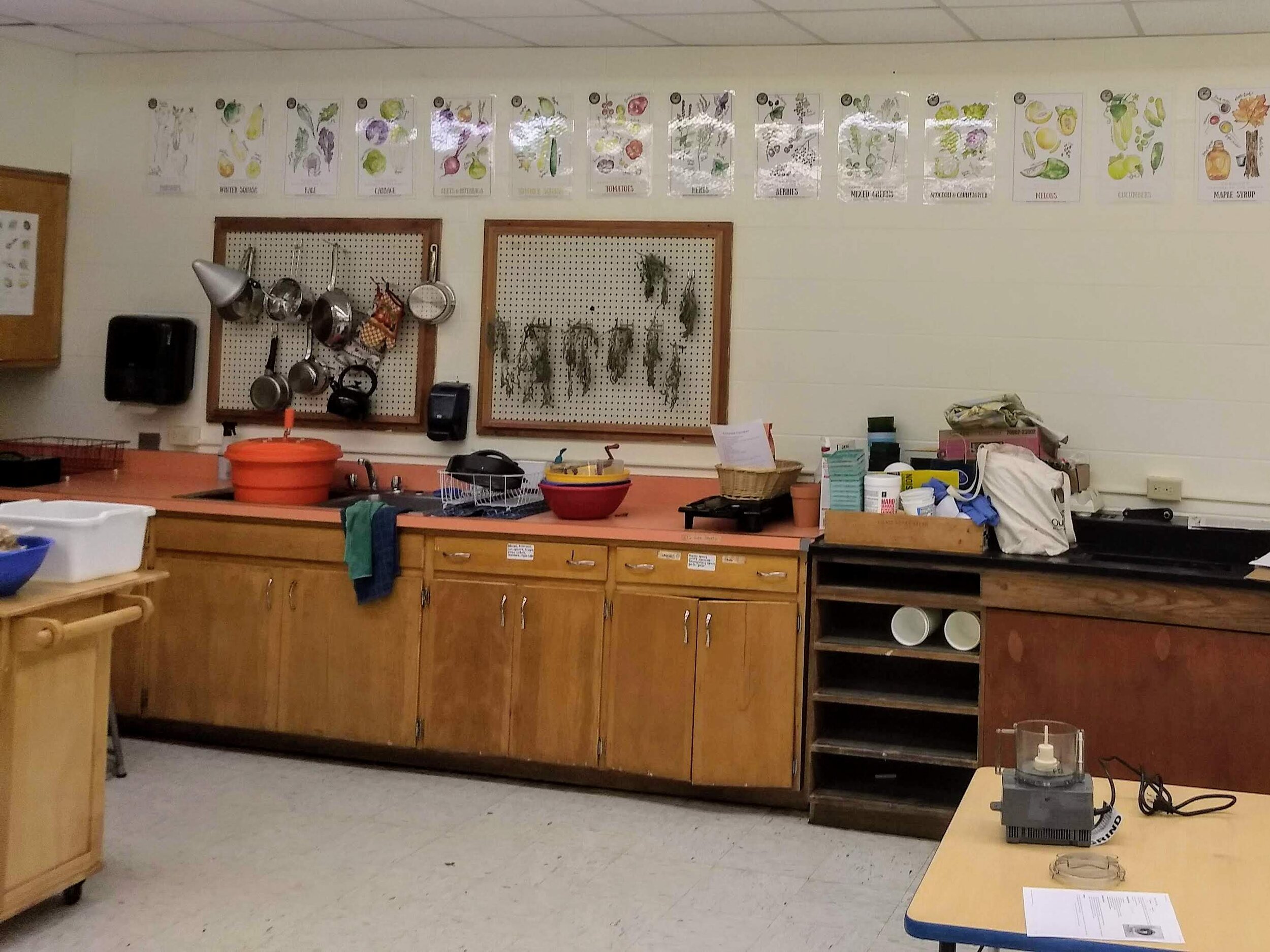
I met the group in front of the school in their vegetable garden. As it was nearing the end of the season, many of the beds were cleared out. But there was still plenty of kale and this was one of the last harvests of the season. Students collected bunches of curly and dinosaur kale that all went into the salad spinner. Back in the classroom, some students washed the kale while others prepped the other ingredients that would go into the pesto recipe. Guilford is lucky to have a Farm to School classroom (a repurposed science classroom) that gives students more space to work and store their projects, making the preparation of the taste tests a bit easier. But, all that is really needed is a clear working surface and some kitchen utensils for students. 

The Farm to School classroom at Guilford Central School.

The Farm to School classroom at Guilford Central School.

The finished product before mixing with pasta for the taste tests.

The finished product before mixing with pasta for the taste tests.

During the taste test preparations, students were not only learning about growing vegetables but also building culinary skills as they read the recipe and washed and chopped the ingredients. The last step was to combine everything in a food processor and taste the end product themselves before bringing samples to each of the school’s classrooms.  

Ideally—once all the students get a chance to taste the pesto—the next step is to coordinate with the school kitchen to get the new item on the menu. That way, students will already be familiar with the dish and there will be excitement stemming from the student involvement. 

Interested in starting taste tests in your school? Check out these resources to get started:

Food Connects HOM page- links to both VT and NH HOM materials

VT HOM Facebook page

HOM Calendars (contact Conor for a copy)

By Conor Floyd

Scaffolding Sustainability Education in the Classroom: NewBrook’s Ladder of Responsibility 

How can we teach about large-scale problems—such as climate change—without discouraging students? This question vexes many educators as climate change and sustainability become a more integral part of classroom curriculums. Climate change is a big problem, and our initial instinct may be to lay out all the facts and urgency to our students. Not so fast though, if we only arm our students with the knowledge without also building their capacity to act, we may be discouraging future positive actions to address these important problems.

David Sobel, Director of Certificate Programs at Antioch University New England, has a solution to this dilemma—what he calls a Ladder of Environmental Responsibility. The purpose of this tool is to provide students with concrete tasks which demonstrate that their behaviors can have a positive impact on the environment. These tasks should gradually become more difficult as students move through the grades, be tied in with the existing curriculum, and provide students with nature experiences that help connect them to the environment.

sobel ladder of responisibility.png

As a part of a recent grant from the Vermont Agency of Agriculture, Food & Markets, Newbrook Elementary’s faculty came together last year to design their own Ladder of Responsibility. They were able to take the principles laid out by Sobel and adapt them to the specific context of their school. Now, Sam Kilmurray, NewBrook’s Garden Educator, is using the ladder as a framework for her Farm to School education. 

In addition to a host of shared tasks, there is now a specific track for students as they move from grade-to-grade. For example, Kindergarten is in charge of the pollinator garden, second grade learns about medinicial gardening, and fifth graders are the school’s waste stewards. Not only does this scaffold environmental education for students, but it can also help teachers incorporate Farm to School education—which for some may feel intimidatingly broad—into their classroom curriculum by providing a defined list of tasks for students to participate in. 

The Ladder of Environmental Responsibility can easily be adapted to fit within your school’s Farm to School program, provide clarity to your curriculum, and—most importantly—help students grow into empowered environmental stewards. If you’re looking for help to develop a Ladder of Environmental Responsibility for your school, feel free to contact Conor, conor@foodconnects.org

Student investigates the classroom worm bin. There are six bins in classrooms throughout the school which are a part of the 5th grader’s waste stewardship responsibilities.

Student investigates the classroom worm bin. There are six bins in classrooms throughout the school which are a part of the 5th grader’s waste stewardship responsibilities.