Central Elementary Embraces Farm to School

Central Elementary in Bellows Falls is excited to be able to expand their Farm to School (FTS) programming by joining the Northeast Farm to School Institute this year! In October, second graders took on a leadership role as they taught their peers about carrots. The students were wrapping up an ongoing project in which they harvested, researched, and painted carrots, and then presented what they learned to students in grades kindergarten through fourth! At the end of the week, Food Service Professional Erica Frank cooked up a carrot cake breakfast cookie as a special breakfast item highlighting carrots grown in the school garden. 

This deep dive into project-based learning and authentic teaching is one example of the exemplary Farm to School programming happening at Central Elementary School. This Bellows Falls area school is the latest in Windham County to join the Northeast Farm to School Institute. The Institute, which runs from Summer 2021-Summer 2022 is a year-long professional development opportunity offered by Vermont FEED. It gives school teams the time and guidance to form a Farm to School Action Plan and decide how they want to implement Farm to School in their community. The Institute also provides schools with a grant and coaching to get their programs off the ground.

Asked about why they were interested in joining the Institute, 2nd-grade teacher Judy Verespy remarked, “I think FTS helps students make the connection that eating well supports their learning and their health. I am also hoping they learn that it connects us with farmers in our community and helps support their important businesses. It truly is a win-win!”

This fall students have also harvested vegetables, planted garlic, and prepared the garden for winter. Future plans include hosting farmers as guest speakers, expanding their growing capacity, and continuing to create community through student-to-student teaching. And this work is already showing an impact. As Verespy shared, “One way FTS has impacted our school thus far is generating excitement and interest in fuelling our bodies properly. I see students reading nutrition labels and bringing or choosing fresh fruits and vegetables for snacks more often!”

Thank you to Vermont FEED for supporting so many schools with this program and Chroma Technology for sponsoring Central Elementary’s attendance at the institute this year. And, thank you to Central Elementary for your inspiring work!

Want to try those tasty-sounding Carrot Cake Breakfast Cookies? Check out the recipe below!

Carrot Cake Breakfast Cookies

*adapted from “Love Real Food” magazine

1 cup oats

1 cup white whole wheat flour

1 teaspoon baking powder

1 teaspoon ground cinnamon

½ teaspoon salt

¼ teaspoon ground ginger

1 ½ cups peeled and grated carrots

1 cup toasted sunflower seeds

¼ cup raisins or dried cranberries

½ cup honey or maple syrup

½ cup oil-coconut or vegetable

  1. Preheat the oven to 375 degrees.  Line a large rimmed baking sheet with parchment paper.

  2. In a large bowl, combine oats, flour, baking powder, cinnamon, salt, and ginger.  Whisk to blend.  Add in the carrots, raisins, sunflower seeds and stir to combine.

  3. In a medium bowl, combine honey or maple syrup with the oil.  Whisk until blended.  Pour wet mixture into the dry, and stir until just combined.  The dough will appear very wet.

  4. Drop a small spoonful of the mixture onto the baking trays; leaving 2 inches between each scoop.  Using the palm of your hand, gently flatten the cookie to about ¾ inch thickness.

  5. Bake until the cookies are golden and firm around the edges, about 15-17 minutes. Allow to cool on a baking sheet for 10 minutes, then transfer to a baking rack to cool completely. Leftover cookies will keep, covered, at room temperature for about 2 days; 5 days in the refrigerator, and 3 months in the freezer.

Westminster Center School Celebrates Farm and Field Day

Stuffing scarecrows, painting pumpkins, cooking lunch over hot coals, and playing musical chairs… These are not your everyday school activities. But this is how the students at Westminster Center School spent the morning of October 29, when they celebrated their first Farm and Field Day. 

Students from grades K-6 took part in six different activities crafted to link students to the outdoors and celebrate the harvest season. In addition to the excitement of scarecrows, pumpkins, and musical chairs (renamed “Boo-tiful Music!” in honor of the holiday), students went on a story walk, harvested kale from the garden for lunch, watched working farm equipment in action, and watched as the chicken for their kale salad cooked over coals in the outdoor cinder block kitchen, the “Cinder Cafe,” built especially for this event.

Despite the frigid temperatures, students were excited to be outside. “The best part is you get to have fresh air!” remarked Scarlett, a second-grader. “I’m having fun! It’s very fun!” exclaimed first-grader Anthony Lakeside. And fourth-grader Jenny said her favorite activity of the day was harvesting kale. “You get to peel all the leaves off!”

The librarian and Garden Coordinator, Mandy Walsh, said she was inspired by a similar event at Newbrook Elementary several years ago. Mandy has been growing the Farm to School program at Westminster for years and was excited to host her first Farm and Field Day. “We are so lucky to have the resources of gardens, animals, woods, and fields, and we live in a historically agricultural community. The day was about celebrating what's around us, coming together as a school community, and being joyful.” In reflecting on the success of the event, Mandy remarked, “I think that in the big picture, the best student learning happens when students get to be outside, working together, trying new things (food and activities). These are the days our students remember with fondness when they think back on their elementary school days.”

The Farm to School Team at Westminster is already planning future events and is flush with ideas of building on the tradition they’ve started. One thought was that perhaps next year, the sixth-graders could lead the stations rather than the teachers. Cheers to Westminster Center School for growing and cultivating leaders in the Farm to School Movement!

Cross-Pollination Gathering for School Garden Coordinators

Sarah Rosow searches for a cukamelon in the students snacking garden.

Garden Coordinators from five Windham County Farm to School programs gathered at Guilford Central School for a “Cross-Pollination” event in late October. Garden Coordinators, often somewhat isolated in their unique roles, had the opportunity to share ideas, challenges, and successes with each other as they prepare for winter activities in the classroom.   

More and more area schools have hired Garden Coordinators in recent years, finding that they are a key component to a thriving Farm To School program. In addition to taking care of the gardens with support from students and volunteers, they also plan and execute educational activities around gardening and cooking and facilitate teacher and student involvement in FTS programming.  

Sarah Rosow explains to Mandy Walsh how the Kelly Kettle works—a wonderful tool for making tea in the garden!

Sarah Rosow, Guilford’s Garden Coordinator since 2018, hosted the event, showing the visitors the school’s three different garden areas, the outdoor classrooms, and concluding with a “show and tell” of sorts where Coordinators discussed useful equipment for cooking outdoors, curriculum guides, and sample lessons. Everyone was inspired by Sarah’s “snacking garden” where students are able to snack freely on mint, cherry tomatoes, and adorable cukamelons growing on her archway. 

As they toured the campus, Garden Coordinators discussed their roles at their schools and what makes their programs unique. While Guilford’s program excels at innovative outdoor teaching, Mandy Walsh of Westminster Center School offered the details of her upcoming Farm and Field Day—an event 3 years in the making, where students will participate in six different Farm to School stations. Kathy Cassin of Academy School spoke about her after-school cooking and gardening club while also gathering ideas about deterring the deer that had been eating all of Academy’s beautiful greens. After hearing that Mandy had some success with growing a border wall, she remarked, “that's good to know because it’s been so frustrating losing our greens!” 

Sarah Rosow demonstrates using a pull chopper, which she uses to make fresh salsa and pesto in the garden.

Erica Frank of Central Elementary, a registered dietician and current Food Service Professional at the school, spoke about the value of getting kids involved in cooking.  Amy Duffy, the new Garden Coordinator at Newbrook Elementary, agreed. “Giving kids a little more control over their eating then leads to better choices.” Amy also shared that she works with each grade once per week. Sarah Rosow responded, “I’d like to pick Amy's brain a little more in terms of the scope and sequence, and also just learning how she works in every grade level every week and how she manages that because I’d like to move toward that model.”

Everyone gained new ideas from this gathering, and it was clear at the end of the event that everyone had so much more expertise to share and so many more questions to discuss. In response, Food Connects looks forward to hosting more Cross-Pollination for Garden Coordinator events for our member schools throughout this school year.

Meet Our New Farm to School Coach—Jenny Kessler

Food Connects is excited to introduce Jenny Kessler as the newest member of the Farm to School (FTS) team. Jenny joins the team as the newest Farm to School Coach. Jenny previously worked as an educator in NYC for 13 years, where she integrated Farm to School throughout her curriculum.

Jenny took some time to answer some of our questions, so you could get to know her better!

What sparked your interest in Food Connects and why are you excited to be here?

Working as an educator in NYC for 13 years, I integrated FTS projects and curriculum wherever possible. I noticed right away that my high school students were always asking about my experiences working on farms, being a vegetarian, and raising chickens in the city. These questions deserved more time than a quick chat in the hallway. Kids are curious about the real world, and it doesn’t get any more real than the food we put into our bodies every day. FTS can allow students the time and space to dive deeper into the complex questions of where food comes from, why we eat the things we do, and who benefits from these choices. But equally important, it allows students time to work with their hands, be outside, work with real tools, be exposed to new foods, and have a voice in what they grow and feed themselves. I believe these to be essential learning experiences that sometimes get overlooked in the traditional American classroom. 

FTS is at the center of all the issues I’m most passionate about—sustainability, education, and social justice issues. I feel incredibly fortunate to have a job where I can integrate all of these topics into my daily work. 

Why is the local food movement important to you?

There are so many reasons to get behind local food—supporting farmers, making fresher and healthier food available to everyone, putting more power in the hands of individuals rather than corporations, sustainability, and energy savings, and because I love seeing and visiting small farms. 

Working with small farmers in Belize, I learned how important small farms were to cultural and ecological preservation. And saw how finding a market for local products enabled Mayan families to thrive in their communities and on their land.  In each of the places I’ve lived (and there have been many!) it was abundantly clear how important local food is. It connects people to their land, their culture, and their communities, and it’s under threat everywhere. Local farmers are the heart of a thriving community. 

What do you see for the future of Food Connects and what you will do here? What are your hopes/dreams for this position?

My hope is to support school staff, food service directors (FSDs), and administrators in doing the work they’ve begun, to celebrate that work, and to make it easier for them to do more. I also hope to expand the reach of FTS to reach more students and more communities, including the West River Valley where I live. 

I’d love to continue to build on the sharing and networking that Food Connects has already started—making it easier for our Garden Coordinators, administrators, and FSDs to connect with and learn from each other. As a teacher, learning from my colleagues and visiting other schools was the most valuable experience in my own professional development. 

How will your previous Farm to School and education experience impact your work at Food Connects?

In my previous teaching career, I was able to see the direct impact of FTS activities. I’ve had high school students who had never tasted a raspberry, 4th grade students who were amazed the first time they tasted real maple syrup, and watched many of my students who were least engaged in the classroom become leaders and role models during FTS activities.

But, I’m also very familiar with how incredibly difficult it can be to integrate anything new or “extra” into the teaching day. Teachers, administrators, and Food Service Professionals need support and encouragement, and time! I’m hoping that I’ll be able to figure out creative ways for them to practice FTS that make their lives feel easier, rather than more difficult.  

How do you spend your time outside of work?

Exploring Vermont, gardening and cooking with my son, battling woodchucks and slugs, watching our hilarious flock of chickens, local hikes and walks, fixing up our very very old house, antiquing, and of course, taking trips back to NY to eat all the amazingly delicious food you can find from every corner of the world. Oh, and sitting on the floor in front of our woodstoves all winter—a woodstove is such a luxury to a Brooklynite. 

What is your favorite or least favorite food?

Could never have a favorite.  Ice cream, cheese, fresh-baked bread, salads…

What are three things still left on your bucket list?

I have a Vermont bucket list which includes: buying and using cross country skis, hiking at least some of the Long Trail, visiting the Northeast Kingdom, and camping on/biking around the Champlain Islands.  

Moving to the country was something on my bucket list for years, and I can finally check that off! 

FREE innovative Farm to School module & educator resources at the Monadnock Farm to School Network virtual forum in November!

2021 Monadnock Farm to School Network - Fall forum

Saturday, November 13, 2021

9:00 - 11:00 AM, virtual event

Cornucopia Project and Stonewall Farm have teamed up to form a new regional branch of the NH Farm to School Network (NHFTS) here in the Monadnock Region. Monadnock Farm to School (MF2S) is gathering for the first time on Saturday, November 13, 2021, 9:00 - 11:00 AM. This virtual forum is an opportunity for teachers, school board members, school staff, parents, and individuals passionate about Farm to School, to learn about how they can incorporate Farm to School (FTS) activities in their school. 

National Farm to School programs sprouted in 1996-1997 to change food purchasing and education practices to improve student health. NHFTS Network was established in 2003 as a pilot program to introduce local apples and cider into NH K-12 schools.

Examples of FTS implementation include locally sourced food served in cafeterias and taste tests, hands-on learning in school gardens, or education activities related to food, health, nutrition, or agriculture.

Cornucopia Project has brought FTS programming to Symonds and Fuller schools in Keene over the last few years, even though the organization is based in Peterborough. According to Lauren Judd, Executive Director, "We are available to support schools and groups as they explore FTS learning. Our aim in establishing the MF2S Network is to create broader access to these fun and healthy activities."

MF2S members will share a free FTS teaching module with participants during the forum. Originally developed by the Vermont Farm to School Network, "Nuts & Bolts of Farm to School: Gardening, Cooking, and Farm Field Trips" will, according to Sheila Humphreys of Food Connects based in Southeastern Vermont, "liven teacher's existing curriculum with a multi-sensory FTS approach. We are excited to expand our FTS programming to the Monadnock Region." A Q & A will follow the module presentation. Teachers will receive professional development credits for their participation in the forum.

"Our students are the most important piece to this puzzle, representing the future of policy and agriculture," adds Rebecca Lancaster, education director, Stonewall Farm. "The MF2S Network will facilitate this mission by arming educators with the resources they need to successfully integrate Farm to School programming into their classrooms."

The Monadnock Farm and Community Coalition is the coordinator of the event and works behind the scenes to build capacity for FTS curriculum and activities throughout the region.

Monadnock Farm to School (MF2S) Network members include Cornucopia Project, Food ConnectsStonewall FarmMonadnock Farm and Community Coalition, and NH Sustainability Institute. 

To register or find out more, go to: https://monf2school.eventbrite.com, or call 603.852.3198.

###

Cornucopia Project's mission is to plant seeds for a lifetime of healthy eating through garden, kitchen and farm education.

Food Connects is an entrepreneurial nonprofit that delivers locally produced food through its Food Hub, and offers farm to school educational and consulting services.

The Monadnock Farm and Community Coalition is a coalition of 140 member organizations who come together regularly to build a sustainable local food system by cultivating community action and building collaboration to implement effective programs, projects, and policies.

Stonewall Farm offers a variety of farm-based education programs for schools, homeschool, and youth groups. Additionally, it teaches and demonstrates regenerative farming to people of all ages to ensure food security, vibrant communities and a healthy planet.

The Sustainability Institute’s mission is to be a catalyst, convener, and champion of sustainability ideas and actions across and beyond the University of New Hampshire. The institute fosters a culture of sustainability that permeates the civic, professional, and personal lives of members of the UNH community.

Expanding Farm to School Throughout Windham County

Chroma Technology Supports Growth of Farm to School in the WNESU

Chroma Logo.png

 Chroma Technology is growing Farm to School programs across the Windham Northeast Supervisory Union (WNESU) this school year by being the lead Farm to School donor for Food Connects, a Brattleboro-based non-profit serving schools in Windham County.

The Food Connects Farm to School program focuses on the “Three C’s” of Farm to School—classrooms, cafeterias, and communities. The generosity of Chroma Technology allows Food Connects to continue and strengthen its work in the WNESU. “We are incredibly grateful for the support that Chroma Technology is providing us this year,” says Sheila Humphreys, Food Connects Farm to School Coach. “Their dedication to Farm to School initiatives in our community ensures that more students can access locally grown food and can experience engaging Farm to School curriculum.”

“One of Chroma's core values is to be an active and caring member of our community,” says Newell Lessell, CEO of Chroma Technology. “Chroma supports Food Connects’s Farm to School program because helping develop healthy eating habits through education and access to nutritious, locally farmed food is good for children’s health, supports Vermont farmers, and builds healthy communities.”    

So how do these funds impact schools and, more importantly, the students in the WNESU? 

School Food

BFHS Meal Kits (1).jpg

Bellows Falls Union High School students, and other students throughout the district, saw lots of local food throughout the summer through the Farm to School Cafe’s summer meal box initiative. This program provided students and their families with fresh, nutritious food throughout the summer, regardless of their financial circumstances. As part of Vermont Act 67 and the local food purchasing incentive, students will begin to see more local food on their trays this school year. The Food Connects Farm to School team is working hard to help school nutrition programs navigate this new incentive, in conjunction with offering Vermont grown and made foods through its Food Hub.

School Gardens

IMG_1450.JPG

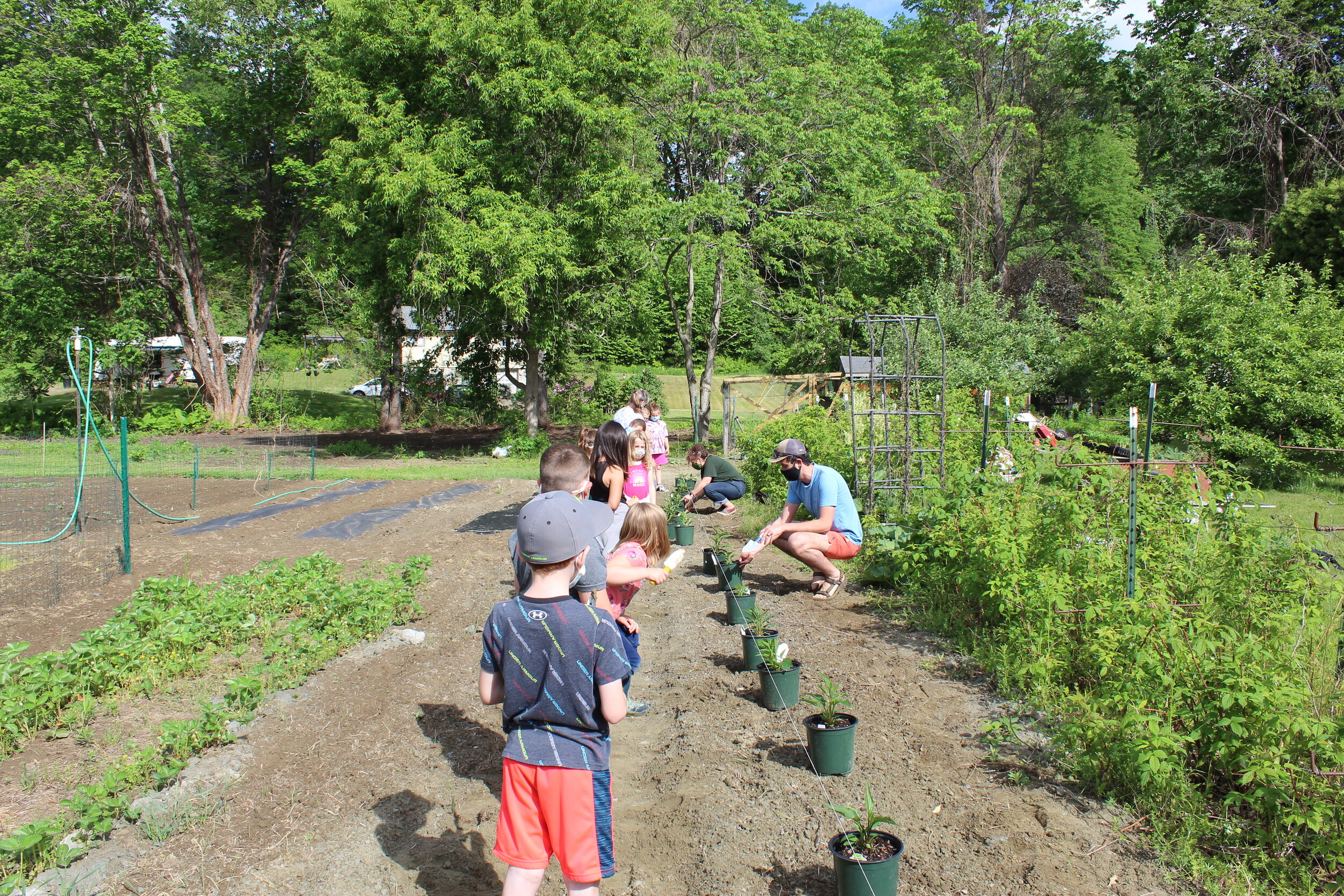
School gardens are an essential tool for hands-on and outdoor learning. Westminster Center School is a shining example of how school gardens can be done right. In May, the entire school participated in their Garden Day—a day where students plant seeds and seedlings in the school garden. As students harvest the final fruits of their labor, the garden continues to see an increase in infrastructure. Most notably, a frost-proof water spigot, a chicken coop, a small outdoor prep station, fire pits for outdoor cooking this winter, and blueberry bushes. Food Connects provided the school grant support, marketing materials, and hands-on support in the garden—and looks forward to supporting future garden projects, including the annual Farm and Field day later this month.

Farm to School Teams

IMG_20210611_115649060.jpg

Food Connects works with Farm to School teams throughout the region. This task is essential to help develop, guide, and implement Farm to School action plans, provide curriculum and grants support, and create materials and marketing for these programs. Central Elementary School formed a new Farm to School team this year that is participating in the Northeast Farm to School Institute. This school year, the school plans to expand its gardening and do more hands-on cooking in the classrooms, including monthly taste tests organized by the 2nd grade. Food Connects looks forward to working with Central’s Farm to School team to help bring in best practices for gardening and cooking with kids.

Grafton Elementary School is also deepening its Farm to School programming this year, with plans to add new grow labs, a hydroponic fish tank, and cooking tools, including a new oven to make it easier to teach cooking to students. Food Connects will continue to support these new initiatives through coaching and curriculum resources.

The Lunch Monitor: Vermont’s New Local Purchasing Incentive

We are thrilled to highlight the new Local Purchasing Incentive, which passed into law in Vermont this past spring. This exciting new grant program available through the Vermont Agency of Education incentivizes schools to buy more foods grown or produced in Vermont. Offering a reimbursement of 15 cents per lunch served during the 2020-2021 school year and up to 25 cents per lunch served in subsequent years, this grant has the potential to transform school lunch in great ways by getting more fresh, local food into the lunch program while supporting the Vermont agricultural and food production economy.

BFHS Meal Kits (3).jpg

Linked here is an FAQ Food Connects has put together about the new program. This FAQ is not an official Agency of Education policy. Still, it is a tool that Food Connects created to help schools begin to strategize about this while the AOE works out how to implement the program in the coming months.

We are working closely with school nutrition directors and administrators on this. Please reach out to farmtoschool@foodconnects.org if you would like to learn more!