Back to School During COVID-19
Shifting the Narrative Around Charitable Food
Summer Garden Reflections
Food Connects Gives
Who Feeds Our Kids

Back to School During COVID-19
Shifting the Narrative Around Charitable Food
Summer Garden Reflections
Food Connects Gives
Who Feeds Our Kids
Leaves are starting to change and there’s a hint of fall in the air, and during this most unusual year, students are learning and growing in schools and homes throughout Windham County. One of the benefits of working as a Farm to School team coach is that we get to experience the many diverse colors and flavors of back to school throughout the region. Here are a few from schools and districts across the region.
At schools throughout the Windham Southeast School District (WSESD), teachers and students are spending more time than ever in school gardens as they learn to maximize their time outside and use school gardens as outdoor learning spaces.
At Academy School, plans are being made to add a new pumpkin patch where students can grow pumpkins for the school’s annual pumpkin festival. Teachers are working together to see what’s possible in terms of building an onsite composting system as part of hands-on science for 6th grade, and Academy welcomes back Kathy Cassin for her second year in the role of Garden Coordinator. The gardens are looking great, and Food Connects’ summer garden coordinator Tara Gordon froze basil for fall cooking projects with students. The school is hoping to find funding this year to buy 2 or 3 mobile cooking carts to enable them to cook more with students.
Oak Grove School’s garden is bountiful this year with watermelons, tomatoes, acorn squash, Aronia berries, and kale. Normally the school community gathers together each October to celebrate the harvest with a community meal made by students using produce grown in the garden. Instead, this year teachers are getting creative and finding ways for students to enjoy the harvest during their in-person learning days throughout the fall. The first farm to school meeting of the year included conversations about the best recipes for kale chips and what to do with dehydrated tomatoes. Students will make signs for the garden to identify the variety of foods they’ve grown, and thanks to a grant from Blue Cross Blue Shield, garden coordinator Tara Gordon and pre-K teacher Jamie Champney plan to buy more kitchen equipment for the school’s cooking cart.
At Guilford Central School, Sarah Rosow, the Farm to School Coordinator, continues to work with students in the garden. She hopes to grow the garden and replace aging infrastructure—a grant was submitted for new raised beds and more supplies. The Guilford community is busy supporting the school by expanding the outdoor learning spaces. They are constructing two beautiful pole barns and work on their forest classrooms continues.

Twin Valley Elementary School is wrapping up a School to Farm project with NOFA-VT in which they built connections with Boyd Family Farm in Wilmington. The project was interrupted this spring by COVID-19 and will continue this fall with farm-fresh taste tests for students and a virtual tour of the farm filmed by NOFA staff to share with the school community.
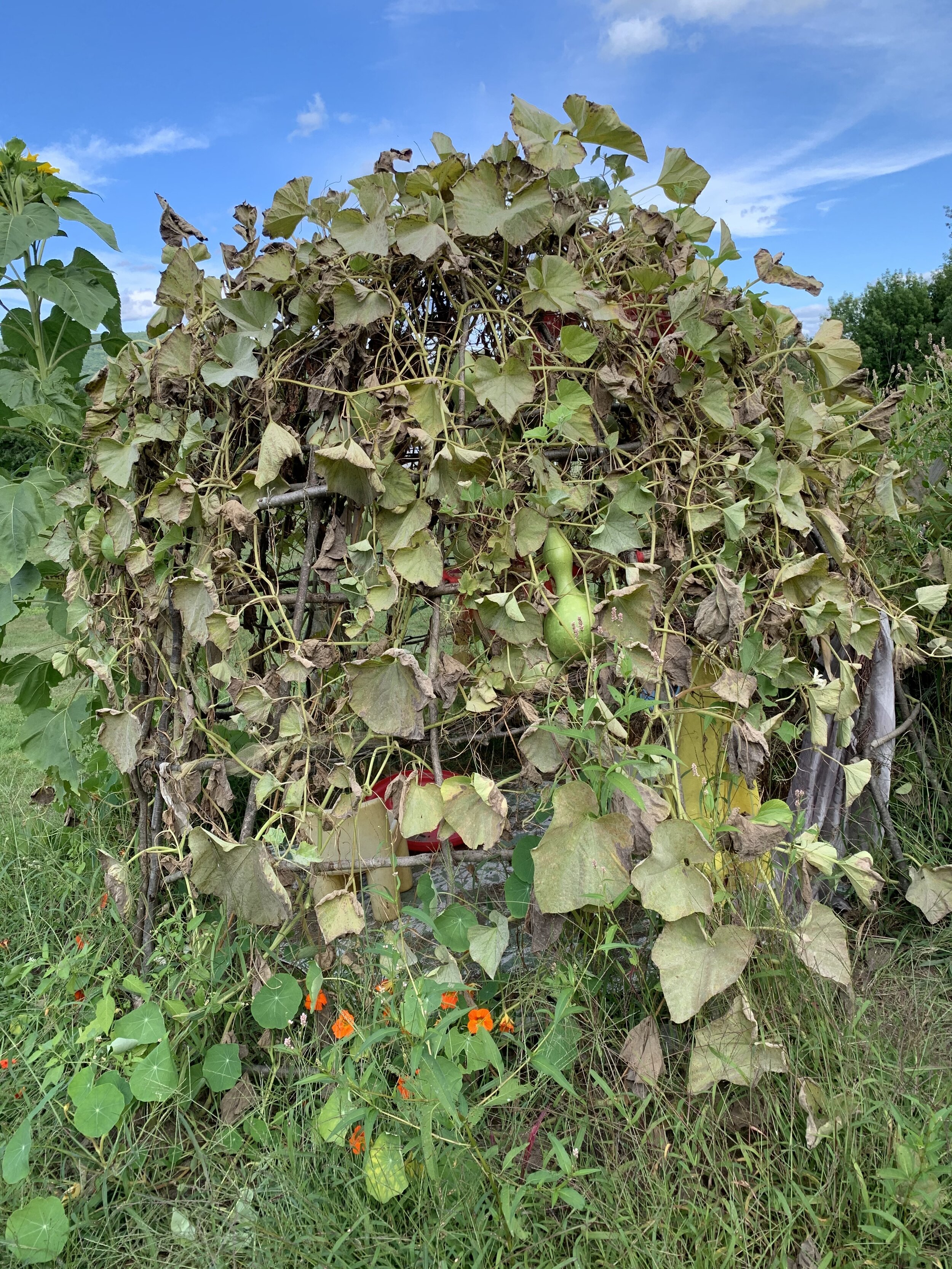
The newly formed Farm to School Team at Winston Prouty’s Early Learning Center is excited to use produce from their garden to make homemade baby food this fall to feed to their youngest students. The first recipes use mashed squash from their plentiful butternut squash crop. The students thoroughly enjoyed playing in the gourd house throughout the summer, which became more and more magical as the gourds grew above their heads!

At Riverside Middle School the Farm to School team worked with students to collect pumpkins from the nearby church garden. The garden club will put Greenies Garden to bed this month and plan for next year. The last funds from a Vermont Agency of Agriculture, Food, and Markets (VAAFM) Nutrition Grant were used to buy two Jora brand composters for the school. Cliff Weyer, the Design and Technology teacher, is working with his Community Engineering class to assemble both units.
In the Windham Northeast Supervisory Union (WNESU), a new commercial veggie peeler at the high school kitchen means the food service team can process more local produce and include it in lunches! Harley Sterling, the School Nutrition Director, recently processed a large batch of potatoes from Westminster Center School’s (WCS) garden. WSC built a chicken coop over the summer and a flock of chickens has now officially moved in! Now, in addition to a bountiful garden, students can collect fresh eggs for classroom cooking projects and share them with the nutrition program, Farm to School Cafe.
At Newbrook Elementary School, the community harvested potatoes, squash, corn, and herbs from the garden. Some of the produce will go right into the school nutrition program while others will be saved for activities with students throughout the year. Teachers are getting ready for students to return to the classroom and thoughts have turned to the annual Farm and Field Day celebration. While it won’t look the same as in years past, there’s still hope that an adapted version can be held for the students to celebrate their school community.
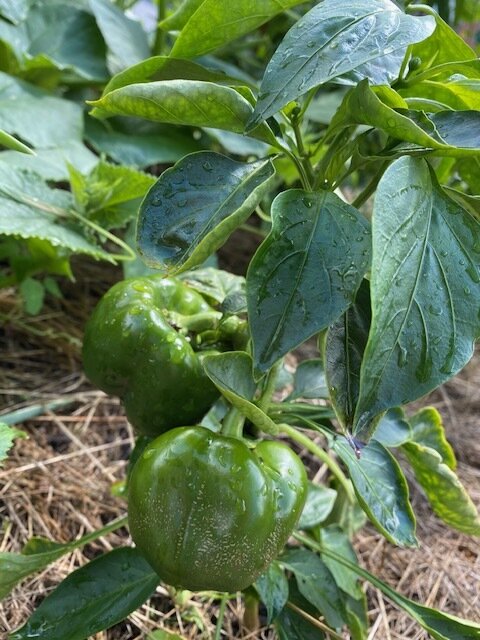
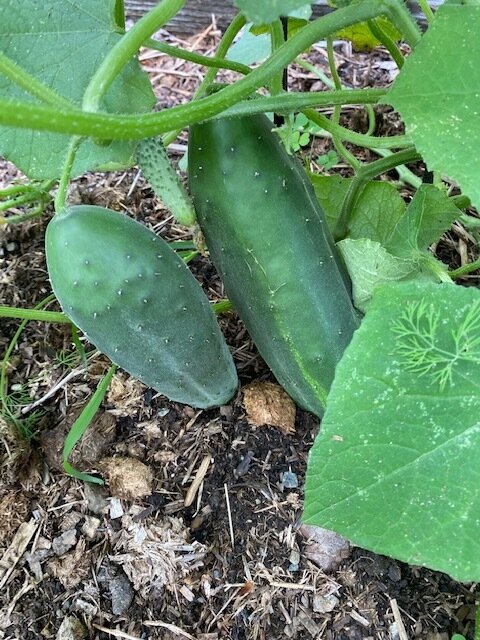
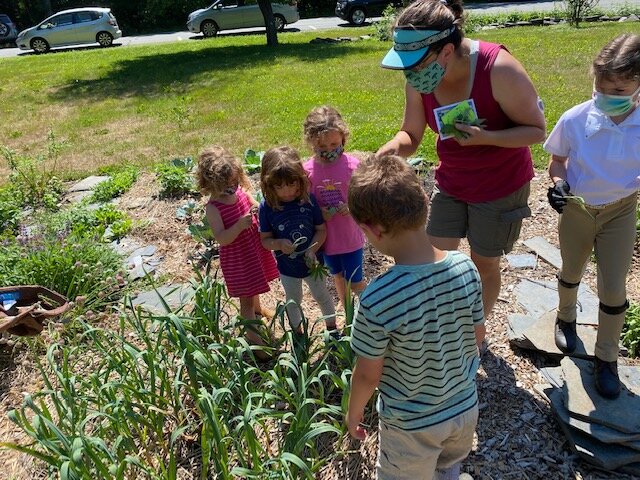
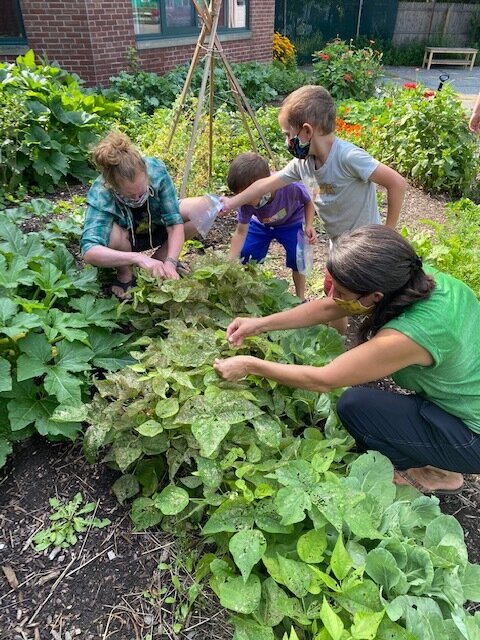
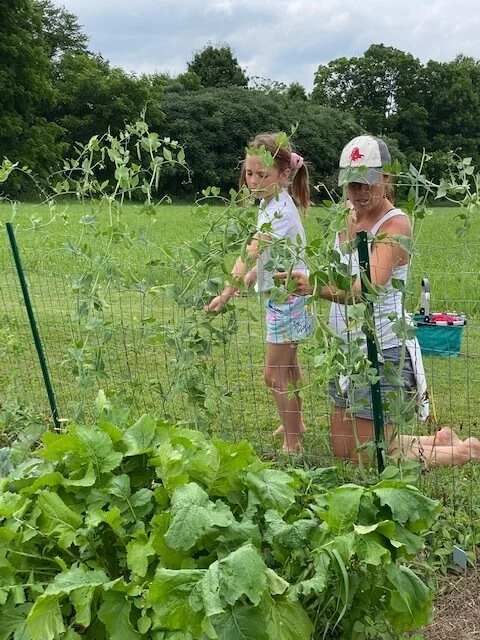
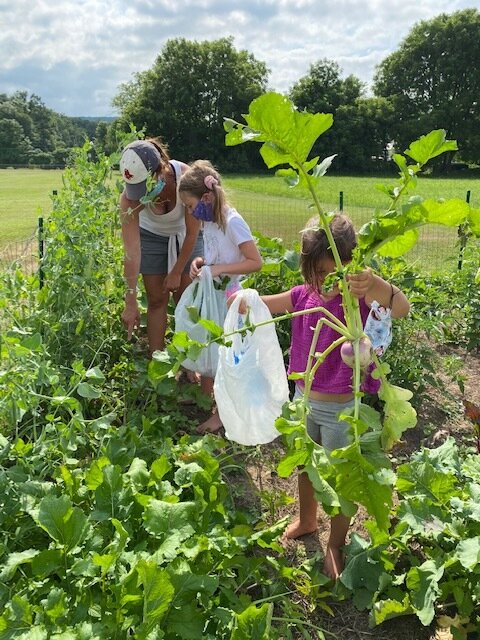
Despite the uncertainty around school this past spring, and even now in the fall, Food Connects Summer Garden Coordinator, Tara Gordon, spent her summer caring for six elementary school gardens in the Windham Southeast School District (WSSD) and welcomed students and families throughout the season. Participating schools were Guilford, Dummerston, Oak Grove, Green Street, Academy, and Vernon. New this year, Food Connects and RiseVT partnered with three local arts organizations to provide free programming alongside the open garden hours. Insight Photography, River Gallery School of Art, and the Human Art of Play were fantastic partners and added a new element of fun to the program!
Things looked a little different this year—masks, social distancing, and pre-registrations all ensured that students and families stayed safe. Nationwide, there was an uptick in gardeners and a surge in interest in outdoor ed. Our community was lucky enough to have strong garden programs already thriving before the pandemic arrived. This allowed families to stay connected to schools and get outside even after school buildings closed in March.
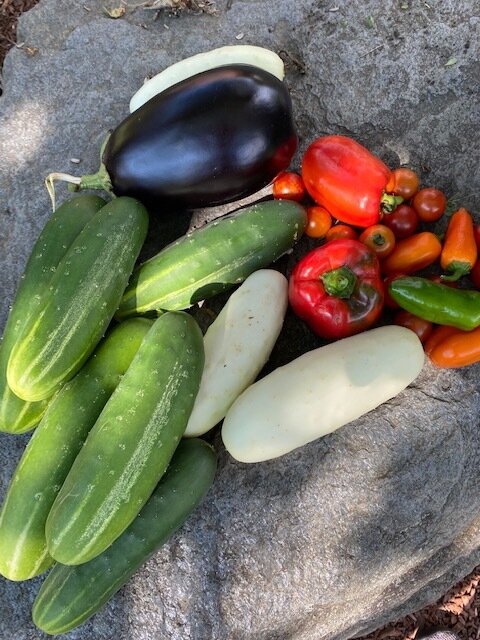
As always, the gardens were bountiful and there was plenty of produce for participants to take home at the end of each open garden session.
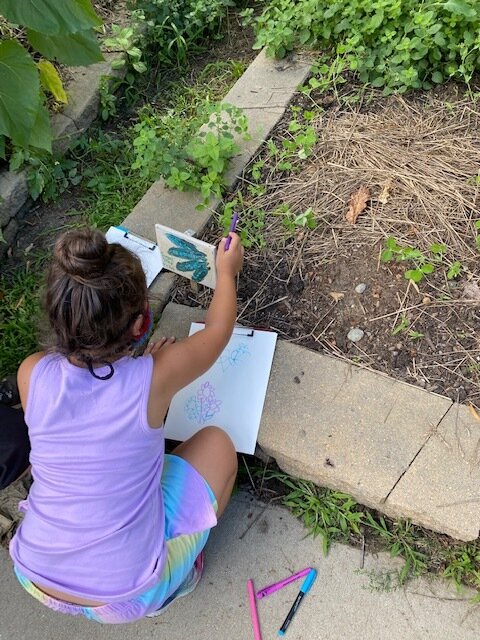
Thanks to supplies from Insight Photography, students made cyanotypes. During this activity, students gathered materials from the garden and placed them on light-sensitive paper. The shadow that was then created turned into beautiful art for the students to take home.

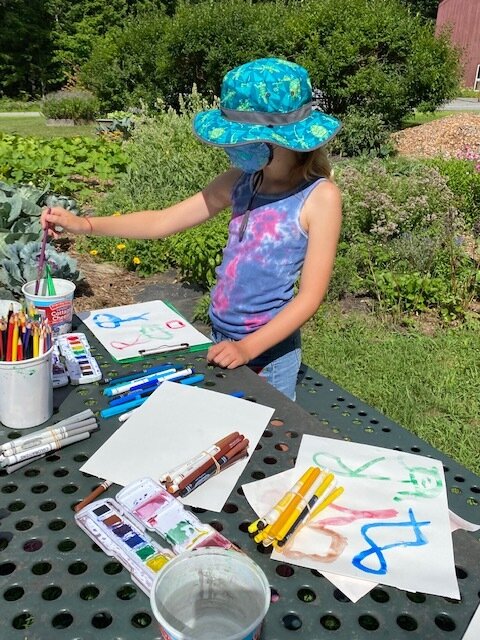
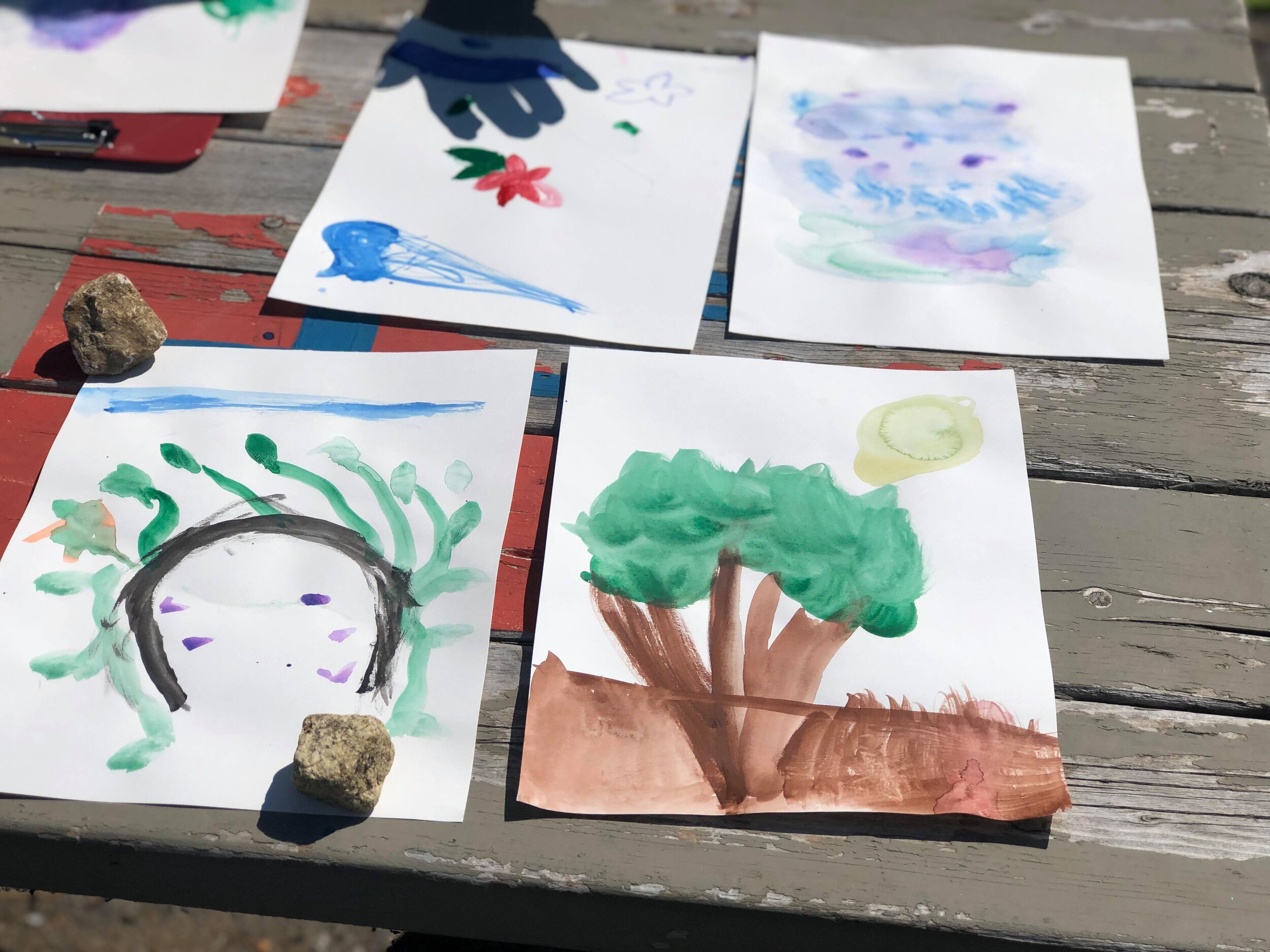
Along with Lauren from the River Gallery School of Art, students explored different mediums—such as watercolors—using the garden as their natural subject.
And Erin from the Human Art of Play got kids moving through circus yoga. Kids (and adults!) channeled their inner sunflower, grew their bodies like vines, and posed like grasshoppers.
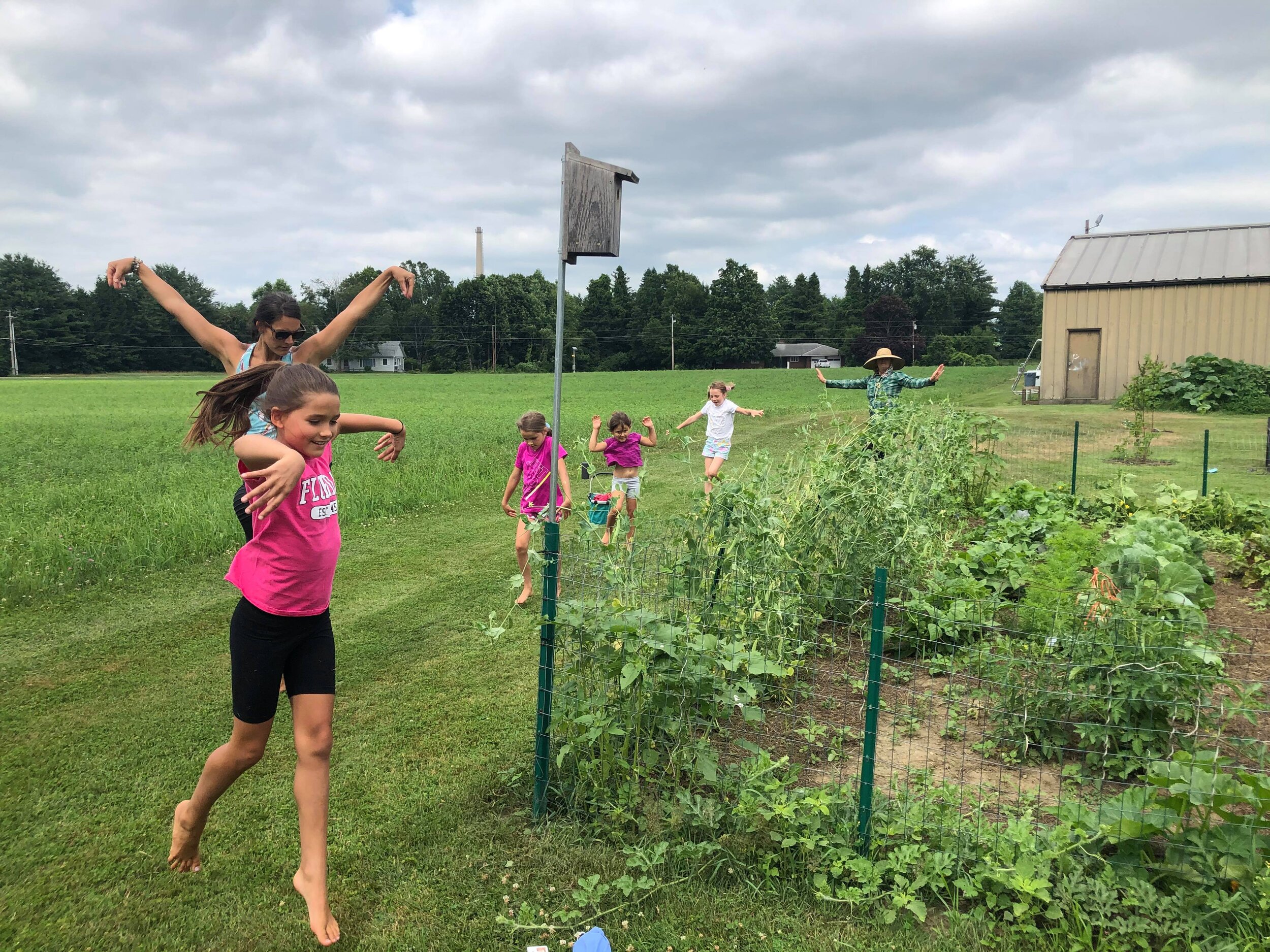
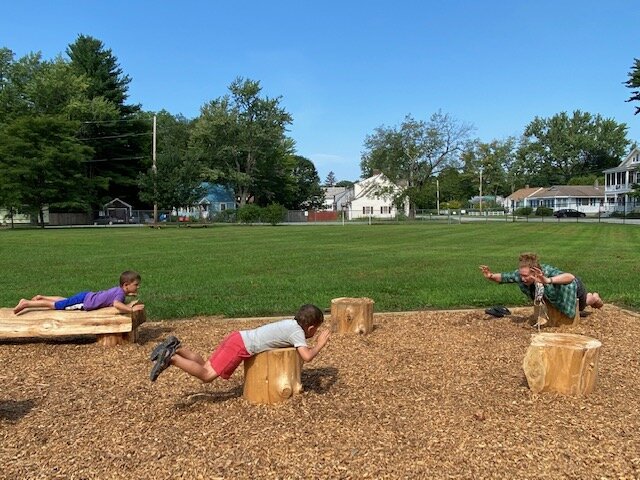
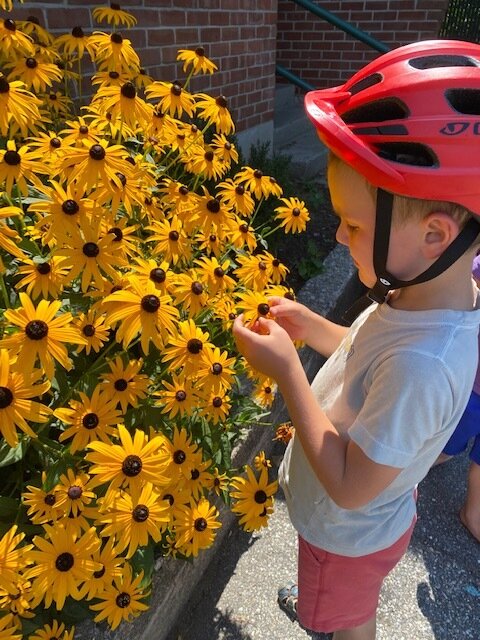
Throughout it all, students were finding new plants and discovering wonder in their school’s gardens. We saw lots of incoming kindergarteners, excited to check out their new school before the first day, and families enjoying the beautiful summer weather.
Thanks to Tara’s diligent work throughout the season, each school has returned to a beautiful garden—ready for students to harvest fall veggies, incorporate into a science lesson, or just use as a quiet space to read.
We’re thankful to all of the families who participated, our arts partners, and school administrators who remained flexible as we developed new protocols.
We’d love to hear your stories from the garden this summer or ideas for improvements for next year. Shoot us an email at farmtoschool@foodconnects.org.
Nearing the halfway mark for the program, Everyone Eats! grew from a far-fetched idea to a wildly successful COVID-19 relief program that is now replicated throughout the state. With over $600,000 of funding coming from the Federal Coronavirus Relief Fund to southeastern Vermont’s regional economy, the program is a huge support for restaurants, local producers, and residents.
Developed through conversations with the Vermont Department of Housing and Community Development and the Downtown Brattleboro Alliance (DBA) on how to use FEMA funds to support local restaurants, the Everyone Eats! Brattleboro (EE!B) coalition now represents a diverse, cross-sector team consisting of nonprofits, state agencies, and local businesses. Modeled off of preceding programs, such as The Skinny Pancake’s Shift Meals program and mutual aid groups that popped up nationwide, the radical idea was to pay local restaurants to feed their neighbors in need.
That seemingly simple idea ended up being more complicated than originally thought. Those complications, along with road bumps in securing funding for the program, pushed a June start date back to August. Despite the setback, that gave the new coalition time to meet, plan, and develop the relationships that would prove essential for success. In an article from earlier this year, Food Connects highlighted the importance of starting with existing connections and celebrated the strong partnerships that exist between charitable food organizations in the area thanks to the Windham Region Hunger Council. The EE!B benefited from these connections as well, but also included new organizations and businesses, opening the door to new opportunities.
The program has had three major pillars guiding it throughout its creation—supporting local restaurants, supporting our neighbors, and supporting the community. It’s a win for everyone, whether you’re making the food, receiving a meal, or are a producer selling to the restaurants. Currently, participating restaurants are spending about $2,000 a week total on local food. This is helped by a 10% local purchasing requirement built into the program and restaurants are going far beyond that, with 20% of spending often staying local.
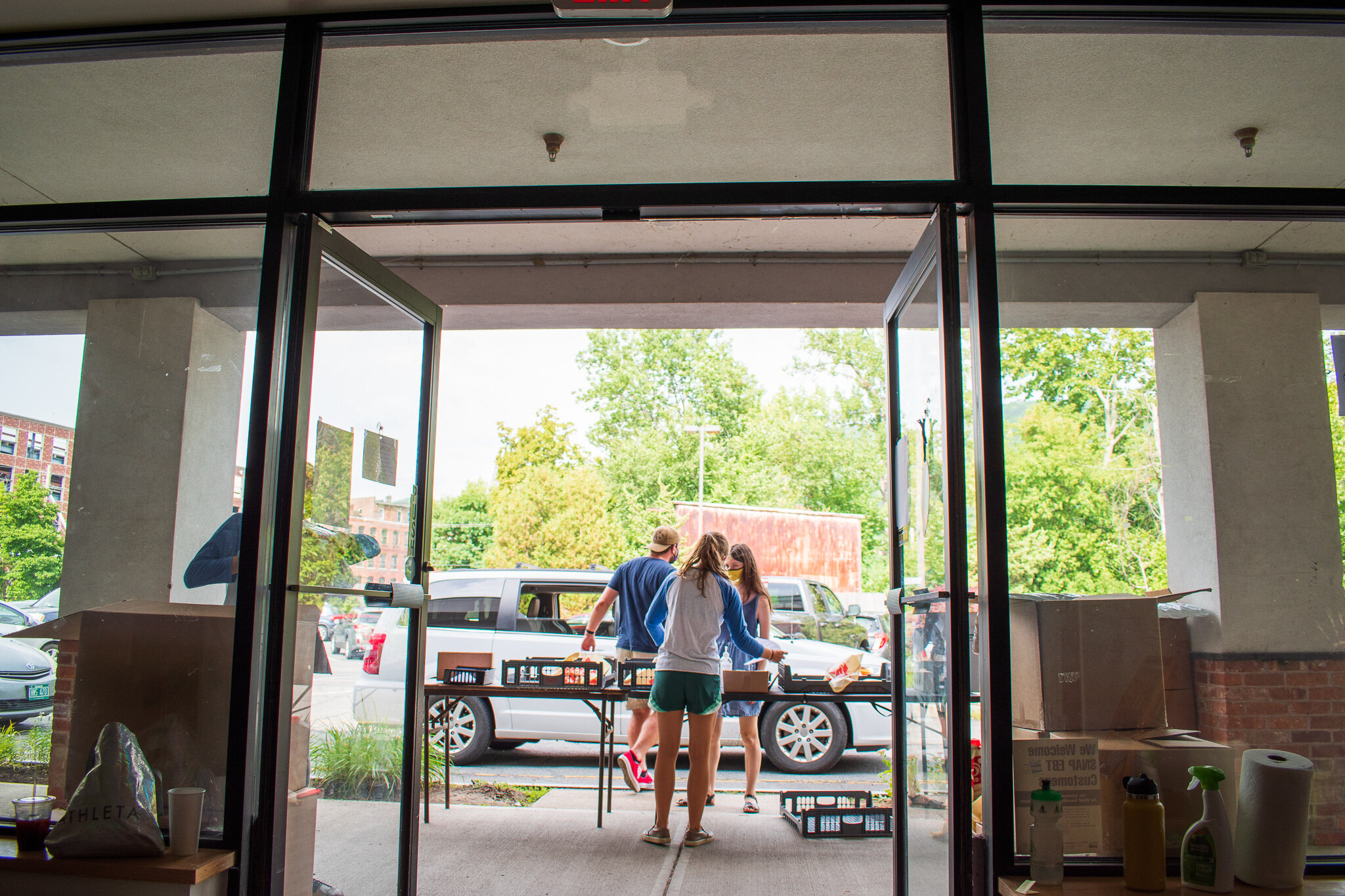
Photo credit: Stephanie Bonin
The EE!B coalition saw this program as an opportunity to build compassion in the community. Food shelves and food relief is often stigmatized which creates barriers for families in need of support to access the programs. With many new people accessing support for the first time, we wanted to ensure that the program was equitable for all participants. That meant that those who were experiencing homelessness and long time users of charitable food were able to access the program alongside the newly unemployed and community members picking up meals for the first time.
We strove for equity through two different approaches. First, we provided an alternative channel for organizations to pick up meals for their clients. By doing this, we made meals accessible to homebound residents, families without cars, or neighbors who had tight schedules and couldn’t make the pick-up times. Next, we created language about the program that made it clear that everyone was welcome—foregoing means-testing, income identification, or other class-based demographics meant that it was easy for anyone to pick up meals.
Our hope is that by opening up the program to the entire community, a stronger collective recognition and compassion for charitable food has been developed. People who never before had waited in line for a free meal or so clearly been the recipient of community support now have new experiences to draw from.
So what does this mean moving forward? EE!B will run until December 10. Participation is strong and new restaurants continue to join the program. Looking to the new year, we hope to shift how charitable food is thought about and accessed in our community. Foodworks started this long before the pandemic, adapting their programs to be more trauma-informed and accessible. The new partnerships formed between Foodworks, the Vermont Foodbank and the Downtown Brattleboro Alliance could lead to even more innovation. Services are more often accessed when they’re in central, welcoming, and high-use locations. EE!B saw an increase in users as it mixed traditional charitable food with a more general community support program. What’s next is for the community to decide, whether that be pay-what-you-can markets, mixed-use community spaces where services are also provided, or something yet to be thought of.
‘Vermont Everyone Eats’ is funded by the federal Coronavirus Relief Fund and made possible through a grant provided by the Vermont Agency of Commerce and Community Development to Southeastern Vermont Community Action (SEVCA).

Everyone Eats! Brattleboro Extended
Meet Our New Farm to School Coordinator
The Lunch Monitor: It Pays to Buy Local
Who Feeds Our Kids?
Who Grows Our Food?
Creates a tiered local purchasing incentive for Vermont schools and correctional facilities.
Reimburses schools annually for local purchasing. Reimbursements would start at 15 cents per plate when at least 15% of ingredients are purchased locally. This would go up to 20 cents per plate at 20% and top out at 25 cents per plate at 25% and above.
Defines the broadest definition of local as grown or produced in Vermont or within 30 miles of Vermont. Processed foods would need to be made in Vermont and contain at least 75% locally sourced ingredients.
Provides an additional full-time position in the Child Nutrition Programs at the Vermont Agency of Education to assist schools in purchasing more local foods.
Schools in Vermont have a lot of buying power. $15.5 million was spent on food by School Nutrition Programs in 2018 and over half that money comes from outside the state via federal funding. If we’re able to create a stronger incentive to purchase food locally, we can keep more of that $15.5 million within our communities. This translates to higher quality meals and a stronger economy. The case for local food was apparent during the pandemic when shocks to national food chains demonstrated the resilience of local food. Leveraging schools to buy more local can help farms grow and develop a more robust local food system to protect our community against future uncertainty.

Local purchasing incentives are gaining traction regionally as well. New York currently has the most generous program in operation—any district that spends at least 30% of their food dollars within the state gets their state reimbursement quadrupled, from 6 to 25 cents per meal. A similar proposal is currently being crafted by a working group in New Hampshire. Nationally, the Small Farm to School Act was introduced in July and would take the incentivized local purchasing model nationwide.

Senator Balint and Sheila Humphreys of Food Connects chat with kindergarteners during breakfast after the bell at Green Street School.
In the Vermont Senate, there are 12 co-sponsors of the bill, including Senator Becca Balint from Windham County, Senators Dick McCormack and Alison Clarkson from Windsor County, and Senator Brian Campion from Bennington County.
The bill passed the Senate Committee on Agriculture with a favorable report and is now being reviewed by the Committee on Appropriations. Last action was taken on March 12th, 2020, and as normal Senate procedures resume we hope to see more action.
To learn more about how money is currently spent on school nutrition and what the impact could be if redirected locally, check out this info booklet from VT FEED and VT FTS Network.
Everyone Eats! Brattleboro (EE!B)—a restaurant stimulus and community food program—will continue through the end of 2020 thanks to a $654,210 grant from the state. The program brings nutritional relief, care, and comfort to the community and vital financial support to local restaurants.
To date, the program—which served as the pilot for a statewide rollout—has distributed over 11,950 meals to over 3,000 households while directly paying local businesses $120,000. These strong numbers enabled EE!B to ramp up to 850 meals per day for September through December 10, broadening the reach of the program.

The initial 4-week pilot worked with 9 Brattleboro restaurants to prepare meals four days a week. With the extension of the program, Shin-La and Echo Restaurant have been added to the line-up and its Program Director, Stephanie Bonin, is working to add others.
Residents in Brattleboro, Putney, Dummerston, Guilford, and Vernon can continue to pick up meals at 80 Flat Street in Brattleboro, Monday through Thursday until December 10th. Pick up is from 4 - 6 pm daily. Meals are free for everyone and no registration is required. Local social service organizations can also sign up directly for meals to provide to their clients. Please see https://www.brattleboro.com/EveryoneEats for more information.
New Everyone Eats! programs are cropping up statewide, with 10 “hubs” already created. As new programs get started, organizers look to Everyone Eats! Brattleboro for best practices. The program gained national recognition with coverage from NBC shining a spotlight on Vermont’s successful community response to the pandemic.
Restaurants involved: Dosa Kitchen, Yalla, duo Restaurant, Echo, A Vermont Table, The Porch, Masala House, Hazel, Shin-La, Mama Sezz, and The Works.
Downtown Brattleboro Alliance (DBA) is a non-profit whose mission is to promote the vitality of downtown, the primary center of commerce, culture, and community life for Brattleboro and the surrounding area. DBA is the official non-profit Designated Downtown Organization for the Town of Brattleboro, providing access to grants, technical assistance, and networking opportunities.
Food Connects is an entrepreneurial non-profit that delivers locally produced food as well as educational and consulting services aimed at transforming local food systems.
The Hunger Council of the Windham Region is a group of community leaders and organizations dedicated to ending hunger and malnutrition in the Windham Region. The Hunger Council of the Windham Region is part of the Hunger Councils of Vermont, which are coordinated by Hunger Free Vermont.
Vermont Foodbank is the state’s largest hunger-relief organization, providing nutritious food through a network of more than 300 community partners. The mission of the Vermont Foodbank is to gather and share quality food and nurture partnerships so that no one in Vermont will go hungry.

Steve is the head custodian at Putney Central School, where he has worked for 10 years. When schools closed in March, Steve rolled up his sleeves and went to work helping get meals out to students. We sat down in June and had a chat about his work and how things have changed for him. Here are some highlights from that conversation:
Sheila Humphreys (SH): How has your work changed due to COVID-19?
““In the beginning, it was an eerie feeling but we knew we had to get the meals out because this is what we do, we take care of the community.””
Steve Napoli (SN): In normal times, I work during the school day and usually the kitchen is pretty set unless someone is sick, then I’ll jump in and do dishes or something, but usually I just clean the cafeteria, put tables away and stuff like that. Ever since the first day we started serving meals after schools closed, I’ve been involved with it. Now we’re numb to it, but in the beginning it was an eerie feeling, but we knew we had to get the meals out because this is what we do, we take care of the community. It’s been a long road, preparing about 100 bags every day with 2 meals in them.
SH: What has kept you going during these unusual times?
SN: My faith is #1, and #2 is the appreciation that the community has shown. They really appreciate it. They are out there getting their lunches every day, and sometimes they drop off surprises here for us, it feels good. It’s a great, great community, unlike any other in this country. For example, we do the lantern supper every year and it’s magnificent. No where else do you see that, it’s pretty unique.
SH: Do you have children at home?
SN: I have an 18 year old who just graduated from high school in Keene. He enlisted in the Navy and is shipping out August 4, so I have 2 weeks to spend good time with him before he has to quarantine. He will be stationed in Florida. He is excited.
SH: What has been your biggest challenge during this time?
SN: I don’t feel like anything is challenging here at work. It’s been going pretty smoothly. We get here every day, we get it done, and we go home. After I get home sometimes I actually have to take a nap because it’s kind of stressful to think of the big picture, but other than that, I stay pretty busy and that’s helpful.
SH: How can the community support you and other food service workers during this time?
SN: This community is supportive because they show their appreciation. When I see someone in the general store or something, the first thing they say to me is thank you. And that’s because of this community. I’ve seen communities where you don’t get that, but we do, so we are very fortunate.
SH: What advice would you give to someone who is interested in this career?
SN: We are very fortunate at Putney Central. The meals, the food, the freshness, you won’t see this anywhere else. It’s not frozen, it’s all fresh and our cooks are #1. It’s unbelievable to taste the product that comes out of this kitchen. It could be a quinoa salad or a homemade mac and cheese or a beet salad, things you don’t see anywhere else. It’s top grade, good food, and you don’t see that in many schools across the country where it’s more commercialized. We’re one of very few schools that run our own kitchen and it makes a difference. During the year when school is open, we serve 3-4 meals a day, with breakfast, healthy snack, lunch, and after school meals. This kitchen is unreal. A lot of people don’t realize what their kids are getting.
SH: What brings you joy? What are some things that you do outside of work that bring you joy?
SN: People. Life in general.
SH: What are you grateful for?
SN: My job. I’m very grateful for this work. I have a wonderful girlfriend that I’m grateful for, and I’m grateful for my son. I’m very fortunate. I’ve been working here for 10 years and it seems like yesterday. I think about how many kids I’ve seen come through here in 10 years. With 200 kids in the building, there are some kids that I don’t even know their names, and other kids who won’t leave my side. They want to learn, learn, learn from me. Everyday normally during school I have a group of kids who work with me after lunch, they help wipe tables and help sweep, so I miss that. These kids are amazing. It’s like one big family. It’s weird not having them here, and I’m happy to know that we are opening up in September. I can’t wait!

Food Connects is excited to introduce Michelle Pinter-Petrillo as the newest member of the Farm to School team.
Michelle joins the team as the newest Farm to School Coordinator. Michelle comes to Food Connects with a variety of experience teaching and getting people excited about cooking food. She will support Farm to School teams in the Windham Northeast Supervisory Union and Windsor Central Supervisory Union. Most recently, she designed and taught garden, nutrition, and food justice education in public schools in Oakland, CA. She has also served as a private chef, culinary school instructor, and teaches online under her brand, That Vegetable Lady.
Michelle took some time to answer some of our questions, so you could get to know her better!
What interested you most about Food Connects and why are you excited to start working here?
I am really excited about the opportunity to serve as part of a network to support schools, farmers, and local organizations working in communities around this region. Food Connects works alongside so many incredible people and I am excited to expand my own knowledge and understanding of the local food system through this network.
I grew up in Springfield, VT, and was looking to get involved in local school food. I had been following projects in southern Vermont for a few years and I was really drawn to the way that Food Connects brings together different community groups, partners, and individuals to share resources and collaborate. I’m excited to be here!
What do you see for the future of Food Connects and what you will do here? What are your hopes and dreams for this position?
The future of Food Connects will ebb and flow with the future of our food system and that is one of the main reasons that I am excited about being part of this team. Right now everyone is rapidly learning how to best support families in our community through the COVID-19 pandemic and I am sure our work will continue to change.
Growing up in a small town in southern Vermont, food was a way that I learned about different parts of the world and people who didn’t look like me. Food was a way that I learned about what healed my body and how to love and nurture my family. My hope is during my time here at Food Connects, I can continue to push our team to think about how the topic of food can be used to teach anti-racism, body positivity, team building, and connect youth with community service.
Tell us a little bit more about your online brand, That Vegetable Lady.
I created That Vegetable Lady initially to share my work teaching garden and food education in Oakland schools. During that time, I was diagnosed with celiac disease and even though I had been working in public health education for 8 years, my personal health struggles drastically changed my understanding of food as medicine. It was at that point that I got a certification in holistic nutrition and started to develop online educational programming to share with others.
One common thread that I have found in different states, different schools, and different families is that many Americans are intimidated by cooking veggies. So through my brand, I address that by serving as what I call a Vegetable Promoter. I share my enthusiasm for vegetables, efficient prep techniques, and strategies to get the most flavor out of each bite. I create videos, teach online classes, and design E-books to share ways to increase self-esteem and efficiency in the kitchen. I currently only work with a few private clients but I look forward to creating more videos soon.
What are some of your hobbies?
I love to play soccer, spend time in the sunshine, and read with my dog, Roxy, at my feet. This winter I am hoping to take my sewing to the next level and start making clothes!
If you had to be shipwrecked on a deserted island, but all your human needs—such as food and water—were taken care of, what two items would you want to have with you?
As a millennial, I would have to say an e-reader so I can read thousands of books while I wait to be saved and then a ball of some sort. Soccer? Basketball? Bouncy? It depends on the type of surface we’re working with.
What is your favorite or least favorite food?
Vegetable Lady Confession: Celery is not my cup of tea.
I don’t have a favorite food, but after many years away and I so excited for my first macintosh apple right off the tree.
When you were little, what did you want to be when you grew up?
I bounced around from wanting to be a firefighter to astronaut to a math professor but after reading my first book by Ruth Reichl, I knew I wanted to eat, cook, and write about food. I went on to write articles critiquing the school nutrition policy in my high school paper and I taught my first cooking class in my freshman college dorm so I like to think I am still pursuing that dream.

Making Reopening Easier with Farm to School
School Meal Enrollment
Indigenous NH Harvest Calendar Curriculum
Who Feeds Our Kids?
USDA Grants Awarded to Food Connects