Producer Spotlight: Winter Moon Roots

It’s root season and that means Winter Moon Roots’ operation is in full swing. Based out of Hadley, MA, Winter Moon Roots specializes in just that—winter roots. These hearty and often sweet vegetables store well throughout the cold winter months and provide a much-needed pop of color (and source of vitamins) when the days are short and dreary. We were able to talk with the Winter Moon Roots team to learn more about this longstanding and environmentally focused farm.
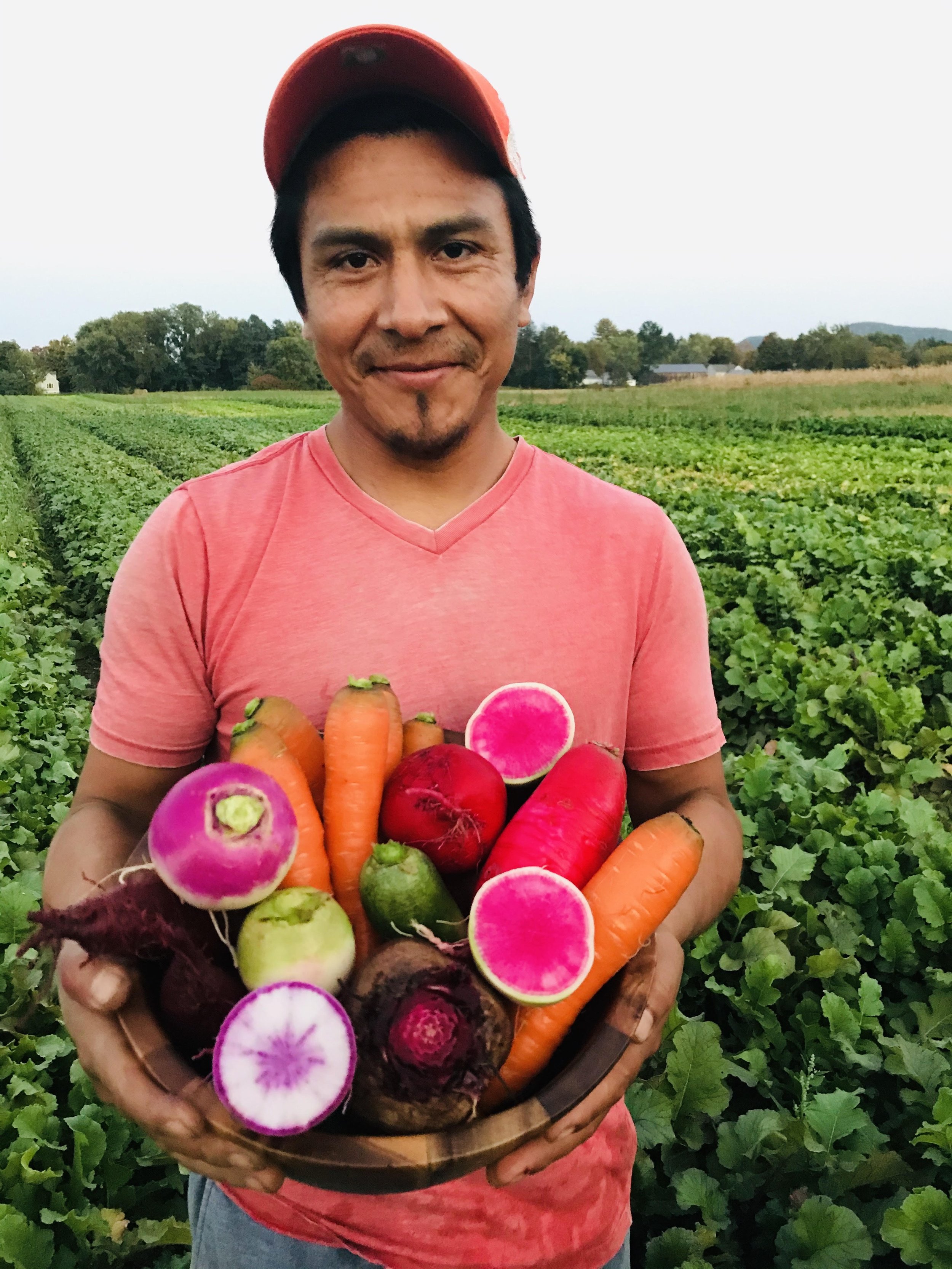
Can you share some of the history of Winter Moon Roots and how it started? And what inspired you to start farming?

Michael Docter started Winter Moon Roots almost 15 years ago with the goal of providing premium quality local Organic roots while minimizing their carbon footprint. We built a storage facility designed to use winter nighttime temperatures to cool the crop instead of energy-intensive refrigeration. Michael and his buddy Merve Brussard have consistently delivered over 20,000 lbs of roots every year by bicycle (sorry they don't bike to VT!)

Rosendo Santizo began working for Winter Moon Roots in 2009, harvesting, washing, and packing roots, and slowly taking over production responsibilities. Originally from Guatemala, Rosendo had worked on many farms throughout his life and was happy to put down roots (no pun intended!) at Winter Moon. Within the next year, the ownership of Winter Moon will transfer to Rosendo and his wife Genevieve, who are excited to continue providing roots to Winter Moon customers.

What makes your produce unique?
Winter Moon root vegetables are super sweet and super fresh. We harvest all of our roots as late as possible in the season, in November, right up until the ground freezes. These cold temperatures allow for sugars to accumulate in the roots, giving them amazing flavor. We choose our varieties carefully for flavor, and also take great pride in caring for our amazing Hadley loam soil, which supports our Certified-Organic production. Our roots are stored dirty and washed up to order, which keeps them fresh all winter long. Roots are our specialty - we don't grow any other crops - so we are able to give our roots the time and attention needed to produce high-quality harvests.

Environmental sustainability is also a driving mission of Winter Moon Roots. Our storage facility uses cold winter air to keep our roots cool, and solar panels on our storage barn offset any electricity we do use. Michael also delivers to our local customers by bike, pulling up to 1000 lbs of roots on a bike trailer throughout Hadley—see photo!

What is one of your favorite vegetables you grow?

It's hard to choose just one! Our carrots are really special—they are nothing like a grocery store carrot from California. They are sweet from the cold fall temperatures, thin-skinned so you don't have to peel them, and even the largest carrots remain tender. You may find some unique shapes in our bags of carrots—intertwined or branched roots. We focus on flavor and our customers have grown to love a few unique shapes in combination with the premium flavor of our carrots.

One of our other favorites is our purple starburst radish. This is the radish for people who don't like radishes. It has beautiful purple skin and a striking flash of purple inside. It's super mild, very juicy, and crunchy, with a little sweetness. They're a staple in the fridges of many of our customers— they're great sliced up and drizzled with lime juice and salt for an appetizer or snack, they make great toppings for tacos or other savory dishes, and of course, they're perfect for salads or dipping.

Do you have any recipes you recommend for your produce?

Often, we find that complicated recipes aren't necessary to produce tasty dishes with our roots. Some of our favorite ways to prepare our roots are:

  • Parsnips sliced thin and sauteed on medium heat in butter + a little oil until tender and golden. This is great with our fall parsnips but even better with our spring-dug parsnips, which remain in the ground all winter and are unbelievably sweet when we harvest them in March. No joke, they taste like fried plantains when fried in butter!

  • Starburst salad (see photo!): Chop into 1-cm-square pieces: starburst radish, tomato, avocado. Mix, and add finely chopped onion and cilantro, fresh lime juice, and salt to taste. The colors and fresh flavor in the midst of a gray winter are invigorating!

  • Root vegetable tacos: The key to a great setup of tacos is to get all of your ingredients prepped, heated, and ready to go. Then heat corn tortillas on a hot skillet - top with any combination of cheese, beans, roasted root vegetables (carrots, parsnips, rutabaga, turnip - anything is great!), grated fresh carrot or radish, salsa, cilantro, sour cream.

Why is buying and selling locally and the local food movement is important to you?

Food is a central part of everyone's lives and it brings folks together. COVID opened many people's eyes to weak points in our national and global food distribution system, and we are really proud to be part of the local food system that works to provide the Northeast with fresh, Organic produce all winter long. Buying local means supporting individuals - farm owners and farm workers—in your community, and that support makes real, substantial differences in the lives of small farm owners. And, if you taste one of our carrots compared to one shipped from California...you'll never go back!

How does working with Food Connects help your business/what are you excited about in this partnership?

We've been so happy to work with Food Connects over the last year. We share a common goal - to increase access to local, healthy, delicious food throughout the Northeast. Food Connects has helped us efficiently reach customers that we can't deliver directly to, and we're excited to expand those markets and get more local, Organic produce to more people through our relationship with Food Connects.

Any events coming up or fun facts about your business/products?

The big next step for Winter Moon within the next year is the transition of ownership from Michael Docter, who started the farm, to Rosendo Santizo, who has worked at Winter Moon since 2009. Rosendo and his wife Genevieve are excited to carry Winter Moon into its next chapter and to continue growing and distributing roots to all of of you!

Anything else you would like me to feature? Anything that you are doing to respond to the COVID-19 crisis?

We had a great harvest in fall 2020, and we were proud to be able to donate around 20,000 lbs of roots to the Greater Boston Food Banks as well as several non-profit, food access organizations throughout MA. The 2021 growing season was more difficult with the persistent rains, but we were still able to make sizable donations to the Food Banks and other non-profits and we are proud to continue working with them in future years as well.

SHOP WINTER MOON ROOTS

Food Connects Fresh Bites: January 2022

Dublin & Dairy: How Dublin Christian Academy is Honoring Its Roots

Monadnock Food Co-op Farm Fund

Food Connects and the Vision of New England Food Systems

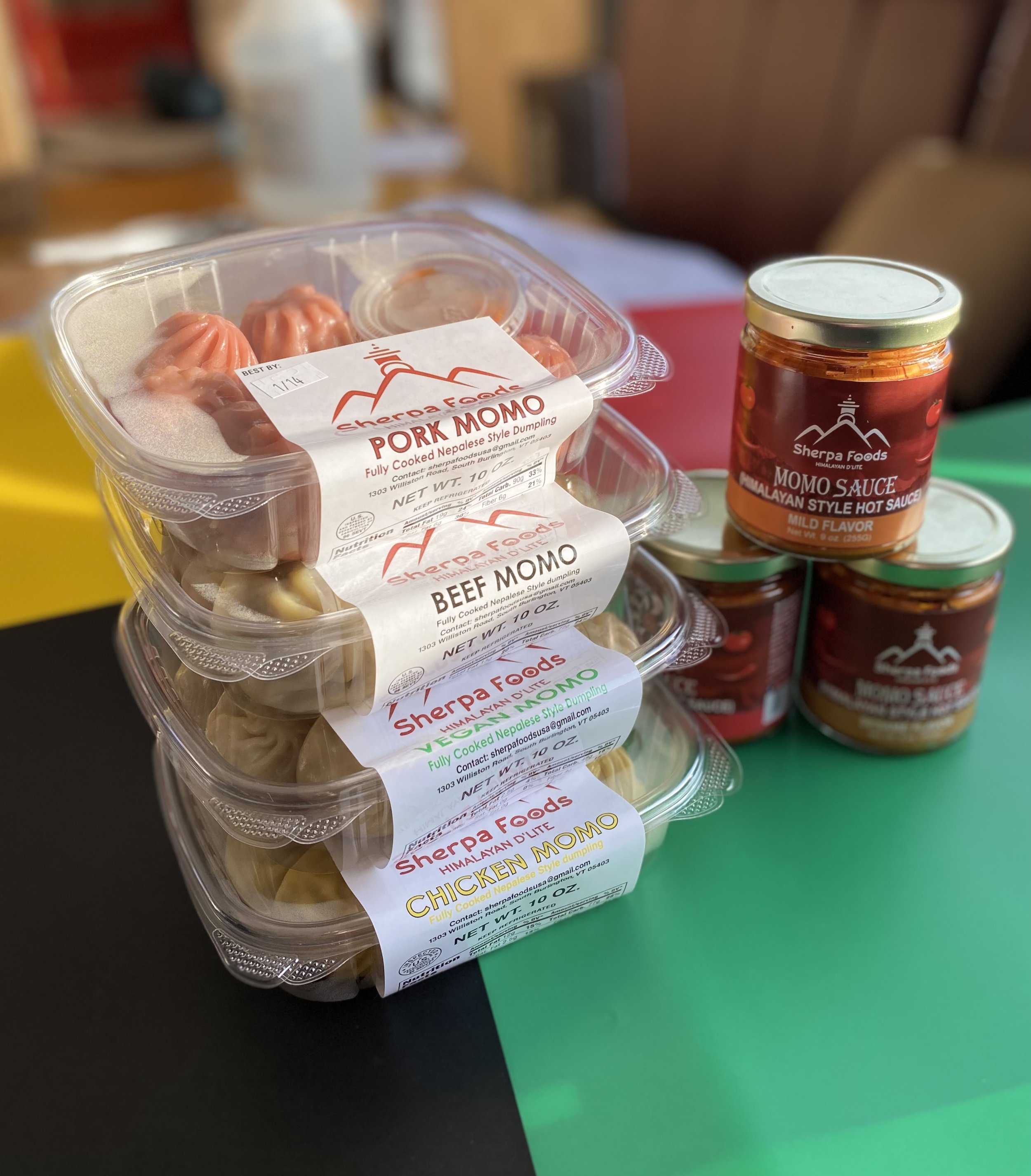
Producer Spotlight/Promos: Sherpa Foods

Essex High School Partners with Food Connects

Producer Spotlight: Sherpa Foods

Food Connects is delighted to introduce one of our newest producers, Sherpa Foods. Founded in 2015 with the mission of bringing traditional Nepalese delicacies to its customers, Sherpa Foods provides delicious flavors you won’t want to miss. Sherpa Foods uses local, fresh, and natural ingredients in their prepared foods, showing their commitment to quality. We were able to chat with Nurbu Sherpa about the company and their outstanding products.

Can you share a little about Sherpa Foods and how you started?

My wife and I were living in NYC. I was working at Macy's as a business manager and my wife worked at JFK airport cargo division. Our parents were already living in Vermont and we used to visit them at least once a year. We always thought Vermont was a great place to live due to its environment, people, and laid-back nature compared to NYC. Once we had our son, our parents wanted their grandson near them. So we were asking them to move to NYC and they were trying to get us to move to Vermont. After many back-and-forths, we decided that Vermont would be a great place to raise a family. So, before we moved to VT, we came up to see what we could do here once we moved here.

I had always wanted to start my own business even when I was going to college at the University of Texas. So, I felt like this was a blessing in disguise. When we came here to look around we saw an opportunity in the food supply industry. There were not a lot of ethnic food options in stores like in big cities in NYC, Dallas, etc. There was just 1 Nepalese restaurant but nothing in retail stores. Most people usually think about opening a restaurant but I wanted to try something different. So, I thought maybe we can combine my family's delicious cooking and my business background and start a Nepalese food supply startup. There were no businesses that supplied Nepalese food to retail stores so we became the first company to do so in the U.S.

Some of our readers might not know a lot about Nepalese foods, could you share some information about it, its highlights, and its flavors?

Nepal has a very diverse culture, tradition, food, etc. Nepal's national foods are rice and lentils but the unofficial and the most popular food is momo. If you ask any Nepalese what their favorite food is, the majority will say “momo.” There is this joke that there are more momo restaurants in Kathmandu (capital of Nepal) than McDonald's and Starbucks combined in NYC. Nepalese food has a lot of flavor as most of the Nepalese food consists of turmeric, coriander, ginger, garlic, curry powder, and other spices.

What makes your products unique?

Momos are fairly new products in the US. It is the Nepalese version of dumplings. Our ingredients make it and give a unique taste than other dumplings from other cultures.

What is one of your favorite products (we know it's hard to choose)?

Vegan momo and beef momo.

Why is selling locally and the local food movement important to you?

The local food movement is very important to us as it helps our local farmers, producers, and local economy.

How does working with Food Connects help your business?

Food Connects has been a tremendous help in expanding our market and introducing our products to stores which would have been impossible for us to do on our own.

I know that right now you don't sell in bulk, but we would love to know your experience with working with institutional buyers (like schools and hospitals).

We actually used to sell our products in bulk by the pound to City Market, Healthy Living, and other stores for their hot bars. But after the pandemic, stores closed their hot bars and stopped supplying bulk products for the time being. We are hoping to restart selling bulk again soon.

Any events coming up or fun facts about your business?

We are hoping to start our own brick and mortar cafe that is right next to our production facility. It has been ready since last July but due to shortage of labor we have not been able to open the cafe yet.

Anything else you would like me to feature? Anything that you are doing to respond to the COVID-19 pandemic?

We are not allowing anyone to come into our production facility except for USDA inspectors with masks. All the delivery drop offs and pickups are done curbside only at the time being.

SHOP SHERPA FOODS

Dublin & Dairy: How Dublin Christian Academy is Honoring Its Roots

If you’re from New England and read the news often, you have probably caught wind of how dairy farms in the region are struggling. And they’ve recently hit an even deeper blow when Danone announced they would stop purchasing dairy from over 90 Northeast dairy farms. In our role as a food distributor, we have a responsibility to our farmers to help them find solutions to problems like these. 

When Pete Miller of Miller Farm (you might remember reading about them last year) came to Food Connects looking for ways to get his Vermont dairy into schools as another market for his high-quality product, we were a bit stumped at first. Schools often have milk available for students in single-serving small bottles. For many public schools, purchasing local milk every week just wasn’t financially feasible—making it a tough sell for Pete to invest in the special bottling equipment needed. 

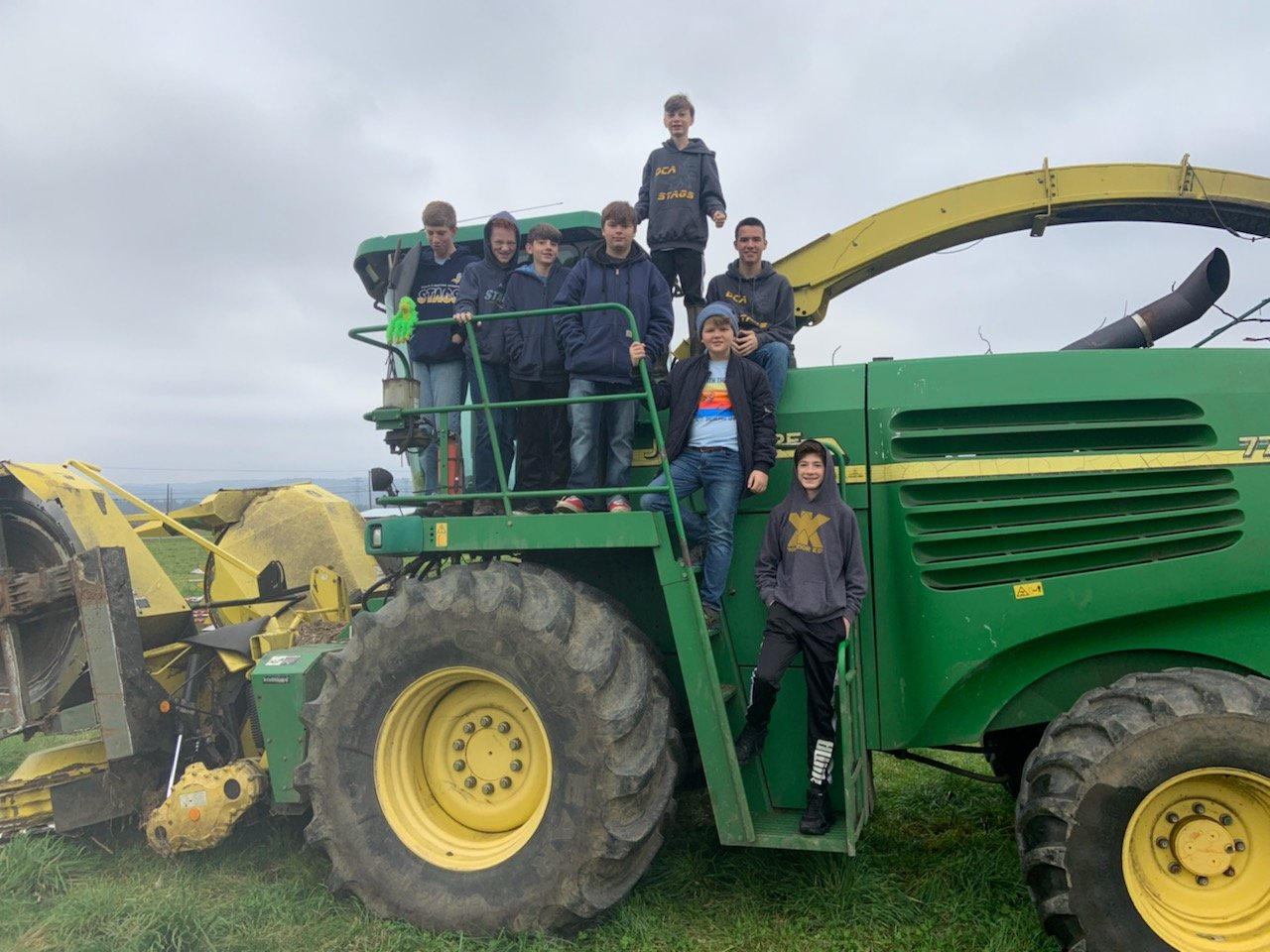
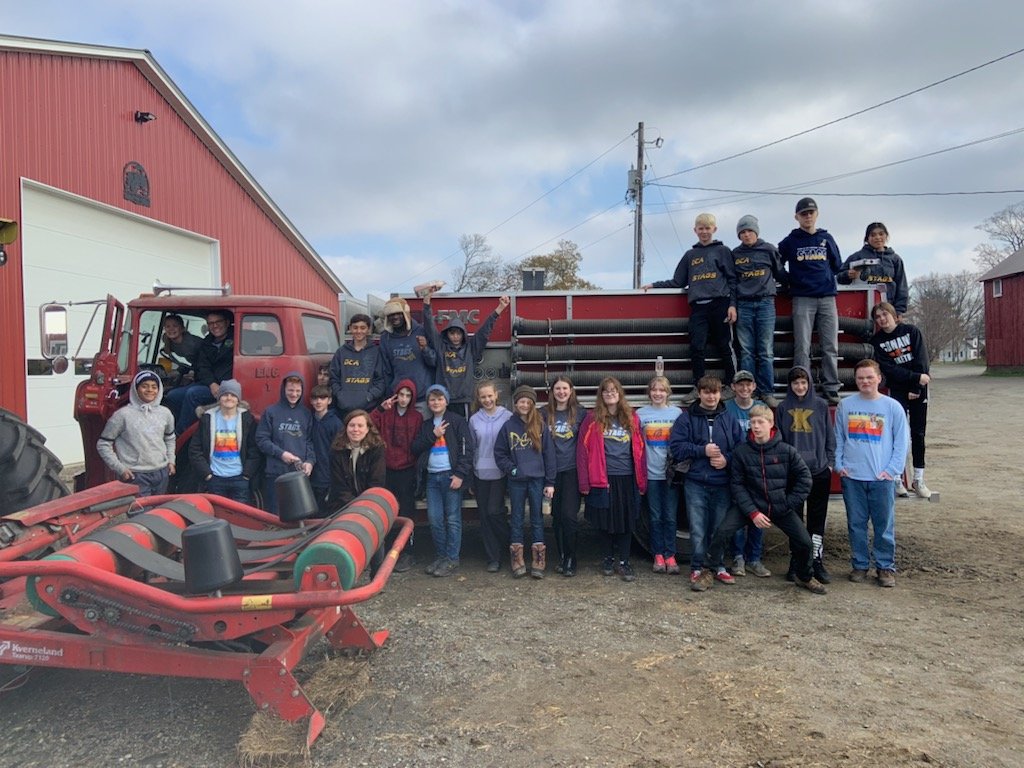
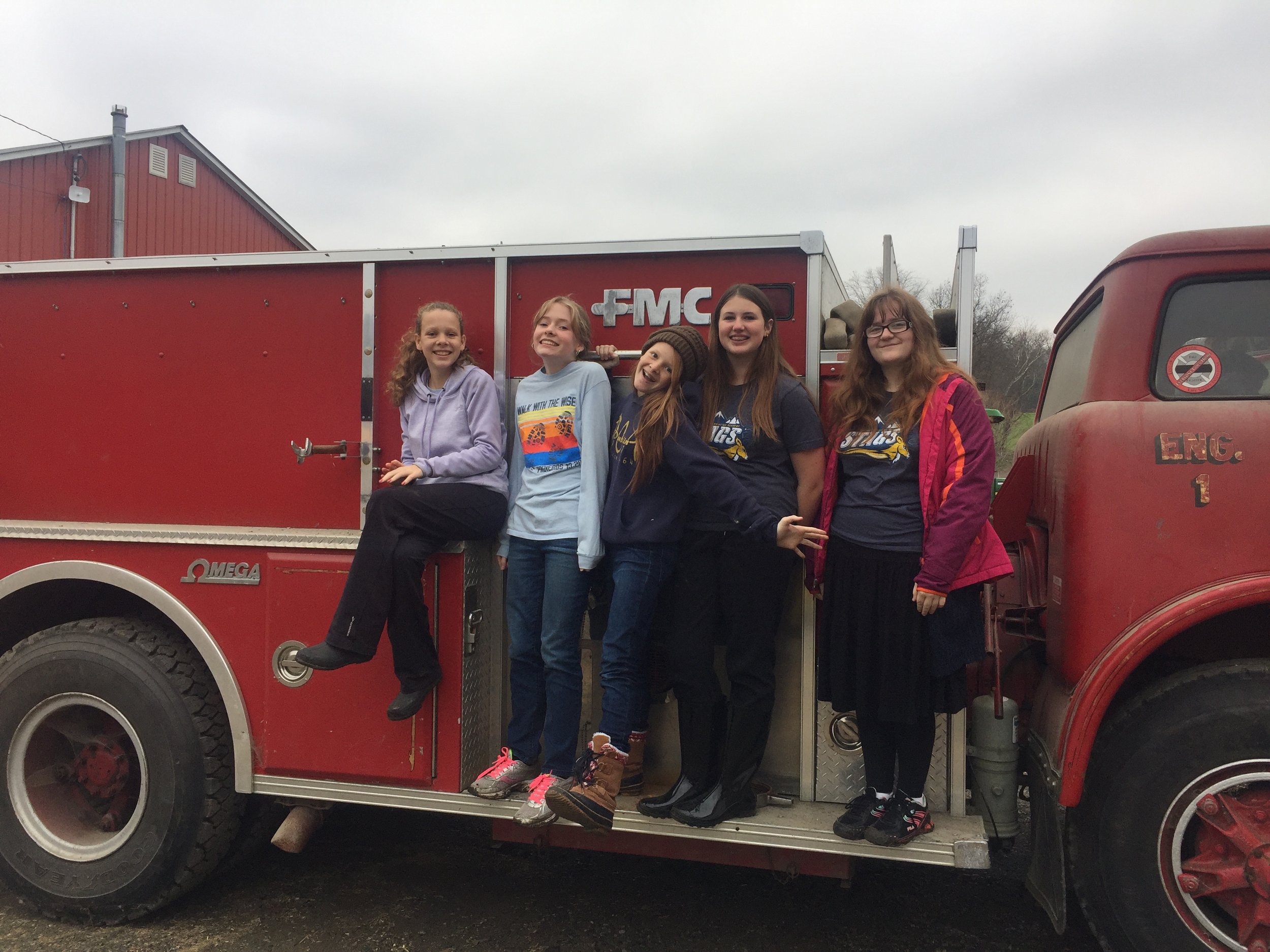
Enter Dublin Christian Academy (DCA). DCA is a local pre-K through 12th-grade private school in Dublin, New Hampshire. And a staple of most private schools is their school nutrition programs are often independently run, are not limited by the same USDA purchasing standards, and have larger budgets. When we approached DCA about purchasing Miller Farm milk, it was a no-brainer—the school itself used to be a dairy farm. And now, they have a standing order which makes creating the 8 oz single-serving bottles more sustainable for Pete. Knowing that he will have a consistent buyer for the products makes it easier to sell to other schools with less frequent purchasing schedules.

And since August 2021, DCA has purchased more than 2,600 8 oz bottles of Miller Farm milk!

We chatted with Bethany Paquin, Director of Development, to learn more about the school. We wanted to get to know DCA a little bit better and why they’re on board to help local dairy farmers like Pete. 

What made you decide to work with Food Connects?

In 2020-2021 we weren’t able to offer a foods service program to our students because of COVID-19—we provided food to dorm students, but not our normal mass lunches. This gave us the opportunity to look at how our meal service worked. We wanted to offer different food choices and responsibly grown and raised products.

Our values align with “community,” and we love to source our food from farms and local producers. The campus was originally Staghead Farm, before the lands and buildings were donated to become a Christian school in 1964. At first, students were running the farm, which wasn’t sustainable for the school, but our early experiences have left us with very nostalgic feelings about that part of the school’s heritage.

How has the students’ response been to the Miller Farm milk? Are they excited that it is sourced locally?

The students are really enjoying having the local milk available. The younger students are especially enthusiastic about the maple and chocolate milk, which they haven’t had in the past. 

Is there any feedback from the field trip to Miller Farm? What did the students learn? 

Our seventh, eighth, and ninth-grade classes visited. The students are at a point where they are thinking more about where their food comes from and how it is produced. The students said they had a lot of fun and enjoyed learning about the milk bottling process and seeing all the animals, especially the cows that produce the milk. Silas Paquin, an eight grade student, said he drank a whole pint of milk and it was really good. Seventh-grader Sarah Ryan was amused by watching the chickens jump on the cows!

How has this benefitted your students?

There are certainly all the nutritional benefits. But it also develops connections for them in the community. More and more, the students get to recognize the businesses in the community where they get their food from—deepening their sense of place.

Anything else that you would like to share?

This past fall, we had an alumni dinner and featured some Food Connects producers, like Grafton Village Cheese. And this is just another opportunity to build some connections between these farms and the extended DCA family which includes alumni, former faculty, and former parents and grandparents.

Our parents are also really glad to see this partnership—knowing that their kids are getting good quality food from farms and businesses in the community that they trust. It’s a win-win!

Essex High School Partners with Food Connects

When you were in school, did you know where your food was coming from? Was your cafeteria sourcing from a local farm? Were you excited about food and learning more about it? Luckily, the answer to most of these questions for students throughout the Essex Westford School District is a resounding “yes!”

Essex High School, and the district at large, started purchasing local food from Food Connects in late 2021. The school nutrition program started with products like cheese from 5 Generations Creamery (over 80 lbs already!—that’s a lot of cheese!) and sparkling beverages from Samara. As they continue to experiment with more local foods, the students are the ones who will see the real benefits.

To learn more about the program and where they are heading with local foods, we chatted with Meghan Martin, the Child Nutrition Administrative Assistant.

What made you decide to work with Food Connects?

We were looking to expand our local food purchasing. Food Connects has direct connections with farms in Vermont and it makes it easier for us to put a name to the food that we’re serving our students. We have had that direct connection to farms in the past and we are excited to be able to continue highlighting a wider variety of local food producers. Starting slow but hoping to expand the local offerings in the future.

Parfaits made with Narragansett Creamery yogurt.

What products have been successful so far?

We purchased Narragansett yogurt and beef from Boyden Farm. Because the high school is a larger kitchen they can do more cooking with different local products and try out more recipes to see what works best. Those two items worked well!

Right now, the local food we are purchasing is just going to the high school and occasionally gets sent out to other schools. We tested out yogurt at the 3rd through 5th-grade school which was successful. With the larger kitchen size and student body at our high school, we find that it’s easier to start there with our scratch cooking products with the goal of then expanding our offerings into our other schools to the roughly 4,000 students district-wide.

Why are you interested in having regionally-sourced foods in your cafeteria?

The Farm to School movement is so prevalent right now. We have dabbled in it here and there. What we really want is to bring whole fresh foods into the district while supporting the local economy. As much as we are able, we want to close the gap between our students and the local food system and create a lasting connection between the two. It’s exciting that we are able to expand their horizons with their culinary palette and teach them what types of food we have available in our area. 

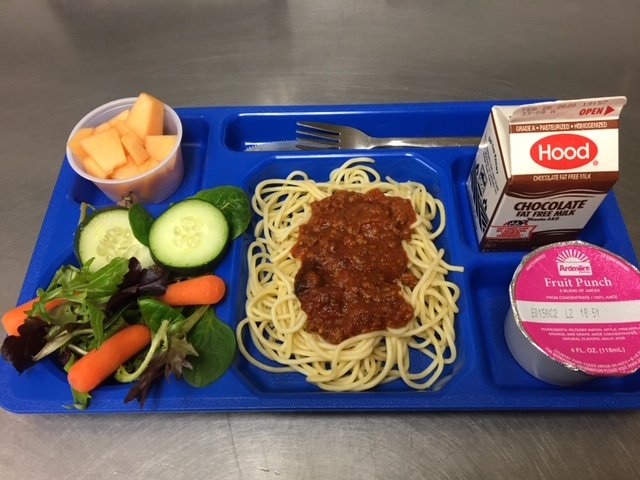
Spaghetti and meat sauce made with Boyden Farm beef.

We saw that this year meals in the Essex Westford School district are free for all students 18 and under. How has this impacted your meal program?

This was through USDA waivers. With the help of these waivers, we have been able to put more focus and resources back into our meal program and we’ve seen that on average 67% more students are choosing school meals. That’s significantly more engagement and more bellies full with high quality and nutritious foods.

Additionally, Scott Fay, Senior Child Nutrition Manager, and Andrew Peet, Child Nutrition Site Manager, really wanted to work with Food Connects because of the Vermont Local Purchasing Incentive. Both this incentive and the USDA waiver put more funds back into the program and the food we provide, which allows us to get higher quality products.

How has this benefitted your students?

The students are able to access more food through the school. The more nutritious food the kids eat, the more they are ready to learn and be active throughout the day. There is already lots of positive feedback about the meals we serve—the students and staff are excited about the fresh, local food they are getting each day.

Anything else that you would like to share?

This year we have tried to revamp the menu, with the hope that it will bring in more participation and therefore revenue for the program. This includes more scratch cooking with fresh, whole produce and ingredients and so far, we are getting lots of positive feedback from changes especially when we can serve foods like Shepherd’s pie using beef from Boyden Farm. It has definitely been a process doing it on a large scale and district-wide but we have an amazing team and we’ve been working out all the details with staff over the years. We’re very excited about all the new menu changes.

Additionally, we have a Farm to School program and have done cooking activities with students and taste tests in the past. Most of that has put that on hold due to COVID-19 but we have started small again by doing more school-wide taste tests with the younger students. Our hope is that we can do these taste tests to gather feedback from students and update our menu with their input. We are also looking forward to the possibility of incorporating more Farm to School and nutrition content into the curriculum.

Producer Spotlight: Katalyst Kombucha

Introducing one of our newest beverage producers—Katalyst Kombucha! Located in Greenfield, MA Katalyst Kombucha is part of the Artisan Beverage Cooperative whose mission is to produce the highest quality beverages possible taking into account the social and economic impacts of all decisions of the cooperative, and to demonstrate, through their success, the viability of worker cooperatives and fairly traded goods. We are excited to have them on board and that they are sourcing their ingredients from other New England food producers. Jeff Canter took some time to answer a few questions about their business.

Can you share a little about Katalyst Kombucha and how you started?

Katalyst was started as a super small operation, by two friends and kombucha enthusiasts at the Sirius community in Shutesbury, MA. Fast forward 12 years later and Katalyst Kombucha is now half of our brand identity here at Artisan Beverage Cooperative, the other half is our alcoholic ginger beer line, Ginger Libation.

Some of our readers might not know what kombucha is, can you share a Kombucha 101?

Absolutely, kombucha is a fermented probiotic functional beverage that is brewed using a culture that you’ll often hear referred to as a SCOBY, or a symbiotic culture of bacteria and yeast. After supplying the culture with tea and sugar, the end result is a delicious effervescent drink that is lower in both sugar and caffeine than many drinks on the shelf today, with the added benefit of probiotics from the fermentation process!

What makes your products unique?

We strive to use good ingredients, and to support small coops like ours whenever possible. We pride ourselves on using organic, ethically traded tea and sugar in a market where large mass produced corporate kombuchas with lower quality ingredients are becoming increasingly more available everywhere. As one of the country’s original founding commercial companies, we now have 12 years of experience producing consistently delicious kombucha, because we know what works.

What is one of your favorite kombuchas (we know it's hard to choose)?

We love our hopped kombucha! It’s a crisp and refreshing non-alcoholic alternative to a hoppy IPA that can be enjoyed alongside a meal in place of a beer, or just on its own as a refreshing functional beverage.

Why is selling locally and the local food movement important to you?

As a worker owned cooperative, our foundation has always been in maintaining relationships with surrounding small businesses. We value investing in food security and jobs right here in our surrounding community, especially in uncertain times filled with supply chain and logistical issues on a national scale.

Anything else you would like me to feature? Anything that you are doing to respond to the COVID-19 panedmic?

Check out our curbside pickup on Friday 4-6pm and Sat 12-2PM online at: https://artbev.square.site/

SHOP KATALYST KOMBUCHA

Behind the Scenes: Driving is more than getting us from point A to point B

If you know anything about food distribution, you know drivers are absolutely critical to the operation. At Food Connects, our Food Hub drivers are our front-line workers—picking up from the people who make and grow our food and delivering that food to co-ops, schools, hospitals, and more. Five days a week, they are out on the road representing Food Connects and, more importantly, our values. As the people who are physically delivering New England food to New England customers, they are indispensable in achieving New England's 30-by-30 Vison. We are grateful for the critical part they play in building a better food system.

So, what is it like to work for an entrepreneurial non-profit Food Hub? And who are the drivers that make our work possible? Meet two members of our driving team, Elisa and Tracy. Their hard work and dedication over the past few years has significantly fostered and shaped the growth of our Food Hub.

Elisa and Tracy have both been with our team for quite a while and have seen us through some major transitions. Fun fact: Tracy has technically been with us for more than 5 ½ years—he worked for the Windham Farm & Food Network (WFF) (which eventually became Food Connects) while he was at Harlow Farm in Westminster, VT.

What is your professional background? 

Elisa (E): I started in landscape architecture (residential in CA) and got into edible landscaping, which ultimately helped me transition into farming and urban farming.

Tracy (T): I worked for Paul Harlow, at Harlow Farm, for a while. My daughter is a farmer too—Sweetland Farm in Norwich, VT!

Are you doing other work outside of Food Connects? How do you split your time? 

E: Farming takes up a lot of my time outside of Food Connects. I enjoy pickup sports like soccer, ultimate frisbee, and basketball, and also play Settlers of Catan.

T: I’m not doing other work outside of Food Connects. When I’m not driving, I like to cross-country ski and maintain.

Why did you choose Food Connects? 

E: I had heard lots of good things on the street about working here. When I started working at Food Connects, I was new to the Brattleboro area. This was an opportunity to get to know people and Windham County—I got to know the roads and culture a little bit more. I also have done a lot of networking with producers and wholesale buyers for my farm.

T: My job melded from one to the other. I went to high school with Paul Harlow and was loyal to Paul and his farm. As I did more and more work for WFF, I even insisted on working for Paul in title only. But eventually, it made sense to be a member of the Food Connects team and I switched. There are good people all the way around, on the staff, on the farms, and on the receiving end. 

What do you like about your job? What is hard about it? 

E: The hardest part is definitely driving in the dead of winter because of the weather and New England roads—the managers are very reasonable around driving expectations in poor conditions. My favorite thing is that Food Connects is a successful nonprofit as it continues to grow and avoids mission creep—some nonprofits do go beyond their original mission and purposes, and do too much of it. Food Connects has two main enterprises (the Food Hub and our Farm to School Program) and does it better and better each passing season.

T:  To reiterate Elisa, winter driving can be tough—but I never feel unsafe. I would have to say that this is probably the most social I’ve been in my entire life—connecting with all the farmers and customers through the region. I like that Food Connects can also be a resource—I can inform my daughter about interesting news and opportunities from other farms.

Have you driven for any other businesses before? If so, how is Food Connects different from a normal driving job? 

E: In the past I have driven for farms going to farmers’ markets. It’s similar, but different because when you go to a farmers’ market it is very full when you go and empty when you come back. Plus that it’s just one stop versus constantly stopping to make deliveries. I drove around the San Francisco Bay area which also had a lot more, and often unpredictable, traffic. Here… it might be a cow in the middle of the road and I definitely would rather have that than urban traffic.

What would you tell a potential driver who is looking to work with us? Why should someone want to drive with Food Connects?  

E: Good people and good management—the people are really genuine here. It’s also good pay for relatively easy and consistent work that’s reliable. Plus there are great systems in place and good food and discounts on it! If you live in Windham county, it’s close to downtown Brattleboro and centrally located.

T: Good people. Plain and simple.

Any fun stories to share with us about being on the road? 

E: I wasn’t joking before. A literal cow crossed the road and I had to wait! 

T:  It can sometimes be scary with the snowstorms but I grew up around heavy equipment and respect the machinery.

Are you or someone you know looking for a driving job? Apply today!

Producer Spotlight: Blue Ledge Farm

Food Connects is incredibly lucky to work with some amazing cheese producers in New England. One such dairy is Blue Ledge Farm in Salisbury, VT. Blue Ledge Farm specializes in goat’s milk cheeses that are creamy and a cheese lover’s dream come true. Owner Hannah Sessions took some time out of her busy schedule to share with us a little more about the farm.

Can you share a little about Blue Ledge Farm and how you started?

Greg is from the Philadelphia area of Pennsylvania while Hannah grew up in Cornwall, Vermont, just a few miles from their farm. We met while studying at Bates College, but mostly while abroad in Florence, Italy our junior year. It is there that our dream of an artistic and food-based life and business blossomed! The Italian culture had a wonderful influence on us. After graduation we spent a year in Brattleboro where we were working members of the Coop, Greg was a teacher and Hannah worked at Lilac Ridge Farm in West Brattleboro, where her love of dairy farming really took root. We began looking for our farm and happened upon this piece of land, a retired cow dairy farm, in 2000. When we saw the ribbon of rock ledge (hence the name “Blue Ledge”) we knew this little parcel was perfect for goats. We preserved our farm with the Vermont Land Trust and used these proceeds to build our first cheese plant-the smallest in the state at that time—in 2002, also the year our first child was born! Those were some busy times! We now employ ten people, milk a herd of 150 goats, and purchase milk from a local family cow dairy. Blue Ledge Farm now produces about 60,000 lbs of cheese annually. We have sized up but some things remain the same: our animals all have names, our curds are poured by hand, and we love what we do.

What is your favorite thing about farming?

We love knowing that what we do is important. As farmers, we feed people and support life. In addition, we are learning more and more that various farming practices can have a major impact on mitigating climate change, so it’s nice knowing that we are on the front lines of some exciting developments there. We also love watching things grow. To raise an animal from birth and see her develop into a part of the herd is pretty amazing. We have some “lines” of goats that extend back generations, and we can point to certain traits and remember that doe’s great-great-great grandmother, Marcy, for example.

What makes your products unique?

The gentle handling of curds make for a lighter texture, and the quality and freshness of our milk (we process every one to three days) make for our signature clean flavor. Blue Ledge is also an Animal Welfare Approved farm and I feel contentment in the animals come through in great milk and therefore delicious cheese. Our cow’s milk comes from the grass-fed Ayrshire cows at MoSe Farm, a breed known for their exceptional creamy milk due to smaller particles of components (protein and butterfat). We are lucky to be able to source milk from this relatively rare and beautiful breed of cow.

What is one of your favorite cheeses (we know it's hard to choose)? Or a recipe you like to make with them?

It's hard to choose a favorite cheese when you make 14 types! We love all of our cheeses, and there is a season for each. If we had to cheese a “desert island cheese”- as in one that we would choose were we stuck on a desert island—it has always been the Crottina. It’s a classic, simple and lovely cheese.

Why is selling locally and the local food movement important to you?

It is in our mission statement to always sell half or more of our cheese in Vermont, the state that we love and that was there for us at the onset. Loyalty is bred locally. Also, we enjoy direct feedback from customers. As a food producer, we also feel a connection to creating a sense of place, and that comes from emphasizing local. We have a farmstand on our farm that serves both locals as well as tourists and seasonal folks. As food producers, we feed our communities but also create an experience and sense of place that can make an impression on visitors as to what Vermont embodies. In this way, food producers are able to provide a double boost to our economy: via food and tourism.

How does working with Food Connects help your business?

Food Connects provides an important service as perhaps the greatest challenge for business in a rural state like Vermont is getting your product from “point A to point B”, especially when the product is perishable! We collaborate with a local farm to get our product to Food Connects and they consolidate orders and deliver from their warehouse. Recently we have gone from being a special order item on the Food Connects docket to a regularly stocked item, so that has been exciting! 

Anything else you would like me to feature? Anything that you are doing to respond to the COVID-19 crisis?

The pandemic has highlighted more than ever the value of local food feeding your community. When store shelves are bare whether due to a nationwide pandemic or labor shortage, it’s the local farms and processors that you can rely on that keep you fed! If you support them, they will in turn support you!

SHOP BLUE LEGDE FARM

Food Hub Special Schedule: November-December 2021

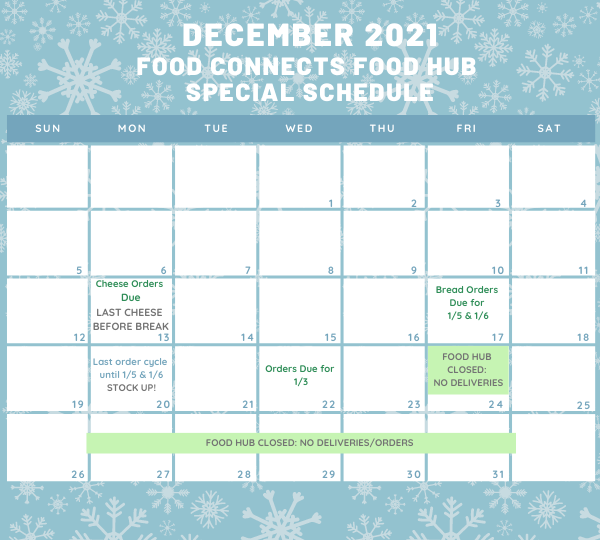
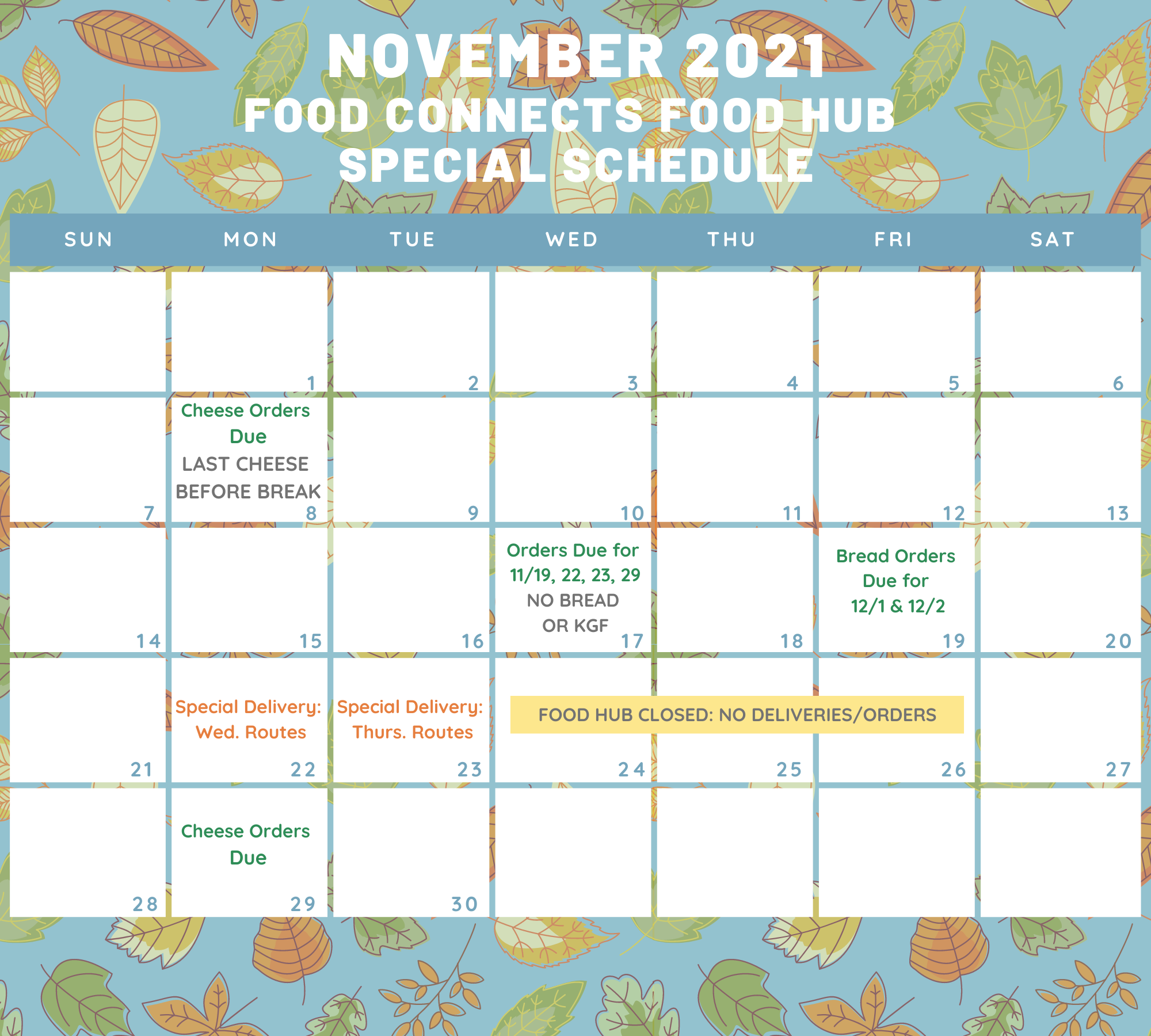
To accommodate holidays and Food Hub holiday closures, we have created a special November and December Order and Delivery Schedule. This includes an added route to Burlington and Montpelier and special cheese orders! Download the schedule below!

2021 Food Connects Food Hub December Schedule

Monday customers, see schedule below.

DECEMBER:

  • Friday 12/24 - Friday 12/31: CLOSED, no deliveries.

But how does this change the special cheese orders?

  • Orders due Monday, 12/13 for delivery week of 12/20

Plan ahead for Christmas & New Year’s Cheese Platters!

  • Orders due Monday, 1/3 for delivery week of 1/10

What about bread?

  • Bread orders are due by Friday, 12/17 for delivery on Wednesday, 1/5/2022, and Thursday, 1/6/2022.


MONDAY CUSTOMERS

DECEMBER:

  • Wednesday 12/22: Orders due for Monday, 1/3/2022 delivery.

Friday 12/24 - Friday 12/31: FOOD HUB CLOSED.

  • Monday 12/27: No deliveries this week.

  • Monday, 1/3/2022: Only inventoried products are available for delivery—check with your sales representative.

Questions?

Contact sales@foodonnects.org.

2021 Food Connects Food Hub November Schedule

Monday customers, see schedule below.

NOVEMBER:

  • Wednesday, 11/17: Orders due early for Thanksgiving week deliveries.

  • Monday, 11/22: Special delivery day to replace Wednesday, 11/24.

  • Tuesday, 11/23: Special delivery day to replace Thursday, 11/25.

  • Wednesday, 11/24-Friday 11/26: CLOSED, no deliveries.


MONDAY CUSTOMERS

NOVEMBER:

  • Wednesday, 11/17: Orders due for BOTH Monday, 11/22, and Monday 11/29.

  • Wednesday, 11/24 - Friday 11/26: FOOD HUB CLOSED.

  • Monday, 11/29: Only inventoried products are available for delivery—check with your sales representative.

Bringing Local Food to Schools

It’s National Farm to School Month, and our Food Hub is excited to celebrate our partnerships with local schools. Did you know that we deliver regionally grown food to more than 30 schools in our area? Each new school we work with means more students have access to local and nutritious foods.

Since July 2021, K-12 schools have purchased nearly $100,000 in local products from Food Connects—that’s more local dollars going back to our community and farmers! Vermont public schools alone totaled over $70k, $43k of which came from Vermont producers.

The Windham Northeast Supervisory Union’s (WNESU) Farm to School Cafe is a major contributor to this success. Over the summer, Harley Sterling, the School Nutrition Director for WNESU, and his team made weekly food boxes for hundreds of kids, ensuring all students had access to food throughout the summer. Stay tuned for more about this project! Or check out their holiday highlight or Cafeterias Unknown feature.  

BFHS Meal Kits (3).jpg

Other than these great stories, we’ve introduced some new, school-focused products to schools.

  1. The Bread Shed: “Humble Whole Wheat Loaf”

    • At 54% whole wheat, this product meets USDA regulations for the National School Lunch Program.

    • We distributed samples to schools and sold over 200 loaves since the start of the school year.

  2. Miller Farm: 8 oz bottles of whole milk

    • Since late August, Food Connects has already sold more than 600 bottles to school. 

    • The bottles work well in private schools and as a special feature or part of “a la carte” sections in public schools.

If you haven’t heard already, there is a new local food purchasing incentive for schools in Vermont. “Act 67 created a pilot program that would temporarily establish a tiered incentive for public schools to purchase food from Vermont’s farmers: buy 15% local products, receive 15 cents back for every lunch served. The law also creates 20% and 25% tiers.” This means that the more local food purchased and the more students served, the more school nutrition programs benefit. And our Food Hub is ready to help by providing a plethora of quality Vermont products through our wide network.

IMG_1860.jpg

Since the start of September, Vermont public schools have purchased over $14k food from Food Connects. Between already established purchasing practices and the new local purchasing incentive, $11k of these sales are from Vermont producers—totaling over 75% of purchases. Some of the farms and producers that are seeing sales to local schools include:

We also have a new partner in Karen Russo, Director of the Child Nutrition Program at Orange Southwest School District. Karen started ordering from Food Connects at the start of the 2021-22 school year, and her passion to feed her students nutritious and local foods has been evident from the start of our partnership. In her first month of deliveries alone, she has purchased a wide variety of fruits and veggies, including local apples, pears, carrots, corn, peppers, tomatoes, and so much more! In partnership with their Farm to School Coordinator, they will be making kale chips to serve over 400 kids across all of their elementary schools. 

We’re so excited that the school year is off to a great start. We can’t wait to see where our partnerships and local food purchasing incentive take us this school year!

Producer Spotlight: Joe's Kitchen

It’s soup season and we are ready to celebrate one of our newer producers—Joe’s Kitchen at Screamin’ Ridge Farm. Joe makes delicious soups that will certainly warm you up on these cold fall days. Read more to learn about Joe and his soups!

Can you share a little about Joe's Kitchen and the farm? 

Joe's Kitchen was founded 15 years ago. At the time, our family farm—Screamin’ Ridge Farm—had grown from a small truck farm to a 250 member CSA, delivering produce to many of the major employers in the Montpelier and surrounding area. We had an idea to create a healthy, value-added product from our surplus produce—soup! We began including soup within the CSA shares (as well as our passive solar spinach). It was a huge winter market hit! Soon after, Red Hen Bakery asked us to make soups for their cafe, becoming the first big wholesale customer for Joe’s Kitchen. 

What inspired you to start making soups?

Soup is healthy and nutritious, and it aligns perfectly with the cycle of farming. In the middle of winter, even far outside the growing season, storage vegetables can be used to make delicious and hearty soups. Soup also stirs a bit of nostalgia. I have many childhood memories of my grandmother's soups—she was a great cook. I imagine most of us have comforting memories attached to bowls of soup. 

What makes your products unique?

The taste really separates our products from other soups. Our lists of ingredients are simple and clean. We take the time to develop the flavors in the key ingredients, ao we can use a minimal amount of salt and still pack a ton of flavor. We even make our own stocks. For example, our Ginger Chicken soup actually tastes like ginger and chicken, nothing artificial. We also believe it is important to purchase ingredients locally—not just vegetables, but our meats, tortillas, tofu, tempeh, butter, cream, and (of course) cheddar cheese. Purchasing locally not only supports our local farmers and businesses, which is a mission of ours, but it ensures that fresh ingredients are used in our soups. We know that fresh translates to a better quality, better tasting, healthier soup. 

What is one of your favorite soups (we know it's hard to choose)? Or one you highly recommend our customers to try?

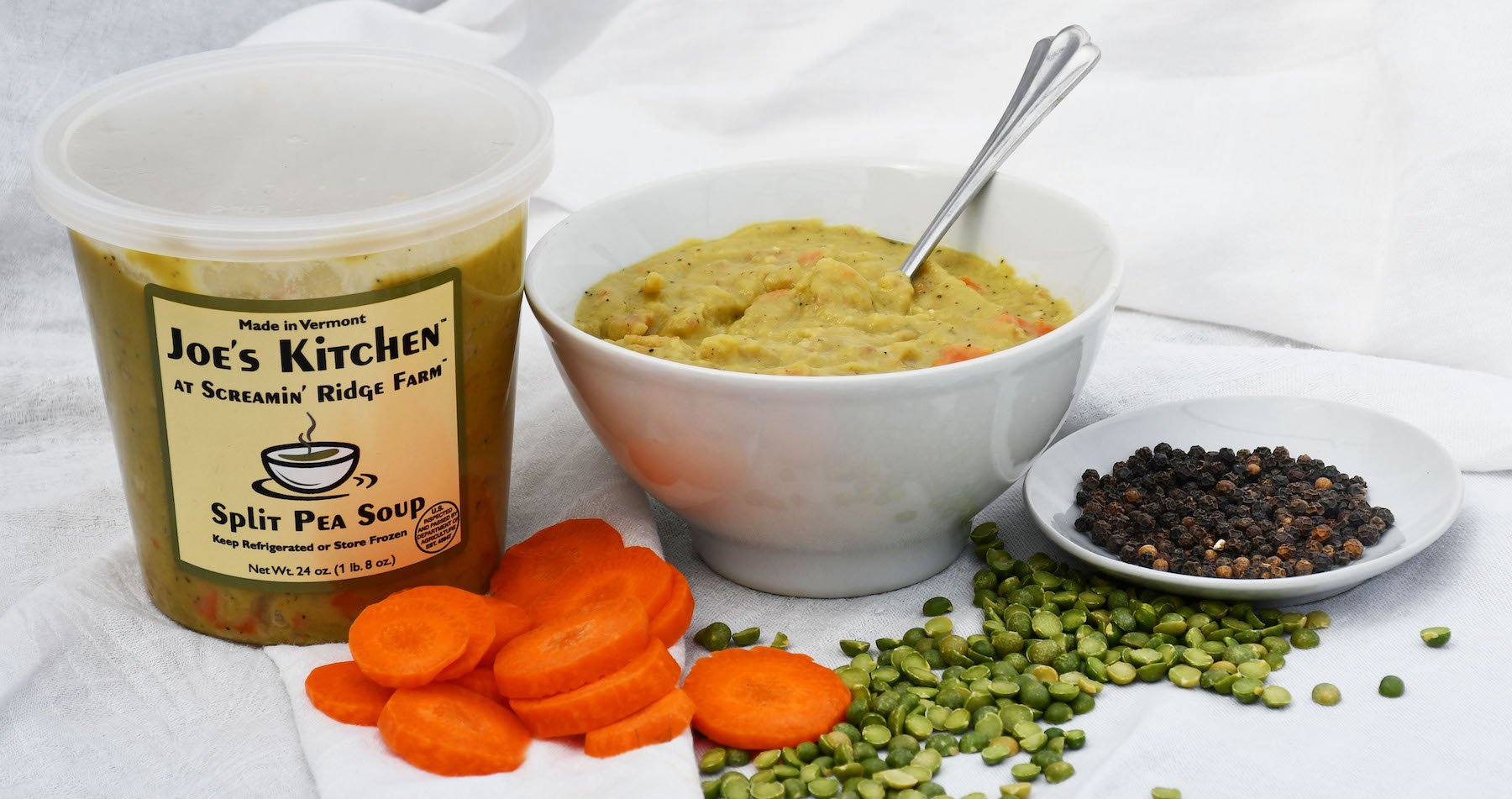
It’s nostalgic, but for me it’s the Split Pea soup. it reminds me of my mom’s, with the big smokey ham hock she used to add to it. I love it with oyster crackers and some extra black pepper. It’s perfect in the middle of winter.

Why is selling locally and the local food movement important to you?
It's really about community and supporting the local economy that we’re a part of. We sell locally and employ locally. A large percentage of our activity is spent locally. We also contribute quite often to help the food insecure in our local community. Community is really integral to how we operate Joe’s Kitchen. 

How does working with Food Connects help your business?

As a like-minded organization, working with Food Connects has provided an awesome opportunity to access the southern part of the state, connecting us with like-minded customers. In particular, it has connected us with the public schools. I used to be a local school board member, and I am very aware of the challenges faced by local school nutrition programs.  

Any events coming up or fun facts about your business?

Soup season is here! Between October and March, our sales usually increase by 500%. We are so excited to be working with Boyden Farm this winter for our beef supply. We make over 35 different soups, as well as some really great Macaroni and Cheese (including a Gluten-Free variety). We have started doing research with smoked meats, as well. 

Anything else you would like me to feature? Anything that you are doing to respond to the COVID-19 crisis?

COVID-19 has posed an extreme operational challenge, not only for us, but for many businesses across the state. At Joe’s Kitchen, we require vaccination of our employees, and we follow very strict sanitation protocols in our kitchens. I would like to take this opportunity to urge people to get vaccinated. 

SHOP JOE'S KITCHEN

Wrapping Up Our Summer Season

To say that summers are busy in the Food Hub is an understatement. With fresh produce at its peak and new items coming in every day our “just in time” delivery services are in high gear—constantly adapting to what’s in demand, what’s available, and what the weather has decided to bless us with an overabundance of. All that said, this year’s summer at Food Connects has been even busier than what we’ve come to expect! 

We have lots to highlight from this summer but our biggest news is that summer sales hit over $465,000! For comparison, this represents a 67% increase over the summer of 2020. And just two years ago, in 2019, we sold $562,000 worth of food the entire year. 

Month number / This year sales / Last year sales / Change year-over-year (e.g. 0.67 = 67% increase).

Three River Farmer Alliance - Exeter. NH 07.2021.jpg

Over the past few months, we’ve significantly expanded our delivery and sourcing routes. We extended a route to southeastern New Hampshire to access food hubs like Three River Farmers Alliance and Organization for Refugee and Immigrant Success, as well as key customers like Sweet Beet Market, and Warner Public Market. 

This new route connects us with our New Hampshire Food Hub Network partners and presents us with lots of exciting potential to expand our sourcing reach into New Hampshire, Maine, and Massachusetts, and to export more products to greater New England.

We expanded to the north as well with new routes up Interstate 89 towards the Montpelier/Burlington area. These new partnerships strengthen New England food resiliency and take us one step closer to the 50 by 60 New England Food Vision. 

2021 Truck Wrap (9).jpg

And how do we get there? With new vehicles of course! In August, after an extremely long, COVID-fueled auto parts delay, we finally received a brand new 20-foot Hino diesel-electric hybrid box truck. The truck is outfitted with dual temperature zones so that we can run refrigerated, frozen, or both at the same time. The truck is now our most advanced, versatile vehicle, and is an emblem of our ongoing efforts to improve the sustainability of our distribution operation. It will give us the flexibility to access new markets and new products—all while increasing fuel efficiency! 

Lastly, we are so excited that the Vermont Way Foods (VWF) team hired Matt Landi to drive market growth in support of VWF’s mission to grow and distribute food the Vermont Way, catalyzing a more sustainable and equitable food system for all Vermont farmers and food makers.

New Farm to Table Campaign Honors Local Restaurants That Source From Monadnock Region Farms

The Monadnock Farm and Community Coalition (MFCC), Food Connects, and the Monadnock Food Coop have joined forces to develop a "Local Food STAR Restaurant" campaign in our region. The goal of the marketing campaign is to connect the public with the finest farm-to-table dining experience in our region, as well as infuse much-needed income into the pockets of local farmers.

Farm to table dining has become the hallmark of communities that support local agriculture, providing rich culinary experiences using fresh, more flavorful ingredients frequently grown in sustainable and ethical ways. "We are very excited to honor Machina Arts Kitchen & ArtBar with our first Monadnock Local Food STAR Restaurant designation," says Roe-Ann Tasoulas, MFCC director. "Machina Arts Kitchen & ArtBar's commitment to local farms and great food is evident to anyone who has the pleasure to dine in this cool, innovative restaurant."

Machina Arts was founded in 2013 by Danya Landis and Rebecca Hamilton to address the need for an art-based cultural experience. "Over the years, Machina has transformed from a homegrown arts collective into a business offering a full-service Farm to Table Restaurant and Artbar," according to co-founder, Danya Landis. "We pay attention to each ingredient that goes into our food and drinks, providing customers with the highest quality and best-tasting food while supporting our local farmers." Chef Jordan Scott continues, "purchasing locally and ethically is a commitment to our local community and economy and we have built that commitment into our business from day one."

A Monadnock Local Food STAR Restaurant sources from at least 4 Monadnock Region farms in one year. Selected restaurants receive a free toolkit of materials—window decals, logos for menus, and for use on social media platforms, as well as other items—designating their business as a STAR Restaurant. Additionally, they will enjoy a feature story in the Monadnock Table Magazine and will be listed as a STAR Restaurant on MFCC's website.

"We hope that this program will incentivize restaurants to purchase from farmers and local food producers throughout the region, increasing the economic impact in our local community," says Laura Carbonneau, Food Connects Marketing & Outreach Manager. Food Connects works with restaurants throughout the region to help them purchase source-identified local food.

Machina Kitchen & ArtBar is located on 9 Court Street in Keene, NH. Reservations can be made at 603-903-0011. Hours: Tuesday - Saturday, 4:00 PM - 11:00 PM.

To apply to become a Monadnock Local Food STAR Restaurant, contact coordinator@mfccoalition.org.

###

Machina Kitchen & ArtBar's mission is to cultivate art and vibrancy through food, gallery installations, design, and experiential events, with a focus on breaking boundaries, exceptional quality, service, ethical sourcing, and community building.

The Monadnock Farm and Community Coalition is a coalition of 140 member organizations that come together regularly to build a sustainable local food system by cultivating community action and building collaboration to implement effective programs, projects, and policies.

Food Connects is an entrepreneurial nonprofit that delivers locally produced food through its Food Hub, and offers farm to school educational and consulting services.

The Monadnock Food Coop is cooperatively owned and operated by people in our community, and exists to meet our community’s need for:

  • An accessible, community-owned downtown food market

  • A marketplace that welcomes and connects community

  • A healthy, sustainable food system

  • The support of local farmers and producers

  • Appropriate education and training for the community

  • A strong, sustainable and improving local economy

Food Connects Fresh Bites: September 2021

6.png

Three River Farmers Alliance Partnership

Vermont Way Foods Hires Matt Landi

Producer Spotlight: Smith’s Country Cheese

Introducing Raymond!

Job Opportunity: Driver

Promos: Red’s Best Seafood, Atlantic Sea Farms, Rhapsody Natural Foods

Producer Spotlight: Smith's Country Cheese

At Food Connects, we are so fortunate to work with so many cheese producers throughout the region. We’re excited to feature Smith’s Country Cheese based out of Winchendon, MA. Passed from one family to the next, Smith’s Country Cheese is a shining example of how new and young farmers can learn from previous generations and how they can work together to conserve farmland for future generations. Plus, they make some darn good cheese! We interviewed Leah Catlin, one of the four owners, to find out more about the farm and its awesome story!

Can you share a little about the history of the farm? What inspired you and your family to start farming?

Smith’s Country Cheese has been a family-owned-and-operated, working dairy farm and creamery in the heart of North Central Massachusetts for over thirty years. Mr. David Smith and his family built the business and the brand from the barn up, growing the starting Holstein herd from 20 to 220 head, and working to become Massachusetts’ original farmstead producer of award-winning Gouda, Cheddar, and Havarti cheeses—all while becoming an industry leader in renewable energy, generating power through solar technology.

In 2013, as David and his wife began approaching retirement age, they began looking for a new owner who would continue Smith’s Country Cheese as a family-operated farm and creamery. It wasn’t until two years later when in the summer of 2015 Jake and Allie Catlin—a week away from welcoming their first daughter—learned that the Smith family was looking to sell their dairy and creamery. Although happy and successful with their jobs outside of Boston (in law enforcement and fitness respectively), they were looking for a more meaningful way of life for themselves and their new family. They made a series of exciting phone calls that put everything into motion: first, a brave phone call to Dave expressing interest in buying the farm without having any formal farming experience; and second, a phone call to Jake’s brother, Mike, and his wife Leah in Atlanta, Georgia, asking them and their two children to move back to Massachusetts and join them on this farm adventure.  

4.png

…and the rest is history! The Smiths taught the Catlins how to make cheese and care for the cows on weekends for over a year before the sale was official. Nearly five years later, the Catlins are putting their own mark on the brand, adding new cheeses to their repertoire, and growing the business with innovative ideas.
What makes your farm unique? Could you tell us more about your sustainability efforts?

3.png

We are proud to be true farmstead cheese producers. This means that all the milk we use to make our delicious, award-winning cheeses comes from our own herd of Holstein cows. Our cows are milked twice a day, every day and we make cheese about 3-4 days a week at our farm. On cheese-making days, we are using fresh milk from that morning’s milking—it doesn’t get any fresher than that!

We are also proud to continue Dave’s sustainability commitment to reduce our carbon footprint. Our grid-tied photovoltaic solar system offsets over 70% of our hot water and 30% of our electrical usage costs by using the energy of the sun. We make our own compost from cow manure, famously known as “Otter River Black Gold” to manage our farm waste in a green way. In 2020 our compost was certified for Organic producers.

What is one of your favorite cheeses?

1.png

I asked everyone to rank their favorite cheeses and got four different answers! But, one of the cheeses we all agree is delicious is the Chive Cheddar—our creamy, mild cheddar serves as the backdrop for a bright and robust chive flavor. We love to snack on it, or add it to eggs, sandwiches, macaroni and cheese, and burgers! 

Why is selling locally and the local food movement important to you?

We love helping people in our community discover and appreciate locally made goods—it really is like finding treasure in your own backyard. Being part of the local food movement is important to us because it helps start the conversation within families about where their food comes from, the environment, and the economy. Shopping locally makes a big impact. I love the saying that when you support a small business an actual, real-life person does a happy dance because it’s 100% true! If you don’t believe us, follow us on Facebook and Instagram!

How does working with Food Connects help your business?

Working with Food Connects allows us to reach a new customer base and to be part of the important conversations they are having regarding the local food movement, agriculture, sustainability, and nutrition. We are confident that we are becoming a household name with the families and communities Food Connects and their programs serve.

Any events coming up or fun facts about your farm?

We will soon be adding some completely new products to our line: farm fresh milk, butter, and yogurt! Stay tuned, Food Connects!

6.png
SHOP SMITH'S COUNTRY CHEESE

Meet Our New Food Hub Warehouse Specialist—Raymond Johnston

Raymond Johnston (1).jpg

Food Connects is excited to welcome Raymond Johnston to the Food Hub team as Food Connects’ Warehouse Specialist. Though not on the road often, Raymond will play a key role in distribution for our Food Hub. In this new position, Raymond will work to increase efficiencies in our Food Hub’s warehouse, maintain and oversee systems and regulatory compliance, and take on the daunting tasks of inventory management.

Raymond joined the Food Connects team in late July and has spent years in the food industry, primarily in warehouse distribution.

Meet Raymond today!

What interested you most about Food Connects and why are you excited to start working here?

What interested me most about Food Connects is its strong and growing presence as a key player in the supply chain of New England’s local food system. I am excited to start working at Food Connects to leverage my corporate sales experience and passion for philanthropy and community service to drive sustained growth and distribution of the Food Hub.

What sparked your interest in Food Connects and why are you excited to be here?

My partner let me know there was an opening and I was eager to apply. I had been aware of Food Connects having utilized the Food Hub myself in the past and was excited to be part of an organization making a positive change.

Why is the local food movement important to you?

I think it's important for people, in general, to know where their food comes from, and to at least think about how it gets to them. The less stuff in general, but perhaps food especially, we ship long distances across the country or around the planet the better we'll all be.

What do you see for the future of Food Connects and what you will do here? What are your hopes and dreams for this position?

I would love for organizations like Food Connects to become more and more about how food gets distributed, instead of long-distance distribution across the continent. My hope is to make the Food Hub as efficient and streamlined as possible so we can serve larger orders and customers seamlessly in order to make that a reality in our local market

How will your previous food systems work impact your work at Food Connects?

I'm hoping my knowledge of how larger operations work will help me realize the steps we need to take to scale up the Food Hub without impacting the great service we provide. I'll also be keeping in mind the frustrations and inefficiencies of the larger distributors I've worked for in order to make sure we don't fall into those same pitfalls.

How do you spend your time outside of work?

I like to spend my time outdoors, usually relaxing but oftentimes doing some of the never-ending upkeep on our small chicken coop. I always enjoy hiking in whatever woods I can find which previous positions I've held didn't really allow the time or energy for so that's something else positive which may come from this position! Most of my free time is definitely spent around the home though with my family.

What is your favorite or least favorite food?

My favorite food is lasagna, and I'll eat almost anything, so it's kind of hard to think of a least favorite.

If you could trade places with anyone for a day, who would you choose?

Joe Biden—but only to try and executive order some decent policies into place given the chance, not really a position I'd get gratification from experiencing. For that I'd probably pick someone from a different culture entirely, as different from me as possible, but probably no-one famous or known. Guess I'd spin a wheel!

What is an experience you've always wanted to try?

Spinning that "trade places" wheel sounds pretty appealing right now