About Us
What We Do
Mission & Values
Our Team
Impact Reports
Partners
Corporate Sponsors
Contact Us
Employment
Frequently Asked Questions
Donate
Farm to School
About Our Program
Become a Member School
Vermont Harvest of the Month
Farm to School News
Become a Farm to School Sustaining Donor
The Food Hub
About Our Food Hub
Shop the Food Hub
Existing Customers
Become A Customer
Sell Through Us
Food Hub News
Technical Assistance Program
Reviews
Shop the Food Hub

Food Connects

About Us
What We Do
Mission & Values
Our Team
Impact Reports
Partners
Corporate Sponsors
Contact Us
Employment
Frequently Asked Questions
Donate
Farm to School
About Our Program
Become a Member School
Vermont Harvest of the Month
Farm to School News
Become a Farm to School Sustaining Donor
The Food Hub
About Our Food Hub
Shop the Food Hub
Existing Customers
Become A Customer
Sell Through Us
Food Hub News
Technical Assistance Program
Reviews
Shop the Food Hub
Fourth grade 4.jpg

Food Connects
November 10, 2020
Farm to School, Farm To School Newsletter

Movie Review: Gather

Food Connects
November 10, 2020
Farm to School, Farm To School Newsletter
maxresdefault.jpg

On a warm evening earlier this fall, several Food Connects employees came together for an outdoor movie night to watch the film Gather as part of the Center for Biological Diversity's Food Justice Film Festival. This inspiring documentary, released in June 2020, follows the personal stories of several Indigenous main characters as they focus on healing themselves and their communities through reconnecting to their Indigenous food traditions.  

We were moved and inspired by this film, which tells the honest and painful story of the impact of colonization on Native Americans and also provides inspiration and hope for healing from this generational trauma.  If you are looking for ways to reimagine Thanksgiving this year and honor the original people of this land, we recommend that you include a screening of Gather in your holiday plans.  

Gather

Not rated. Running time: 1 hour 24 minutes. Rent or buy on iTunes or Amazon.

Tagged: Movie Review, Gather, indigenous foodways

Food Connects
November 10, 2020
Farm to School, Farm To School Newsletter

Compost is Brewing at Riverside Middle School

Food Connects
November 10, 2020
Farm to School, Farm To School Newsletter

Vermonters welcomed a new Food Scraps Ban on July 1st of this year requiring that all peels, apple cores and plate scraps be composted instead of thrown into the trash. 

Led by STEAM (science, technology, engineering, art, math) teacher Becca Osborne, the Riverside Middle School Farm to School team has been planning their compost system since before the pandemic. Despite the challenges of this school year, the Riverside community came together to team up and get composting underway.

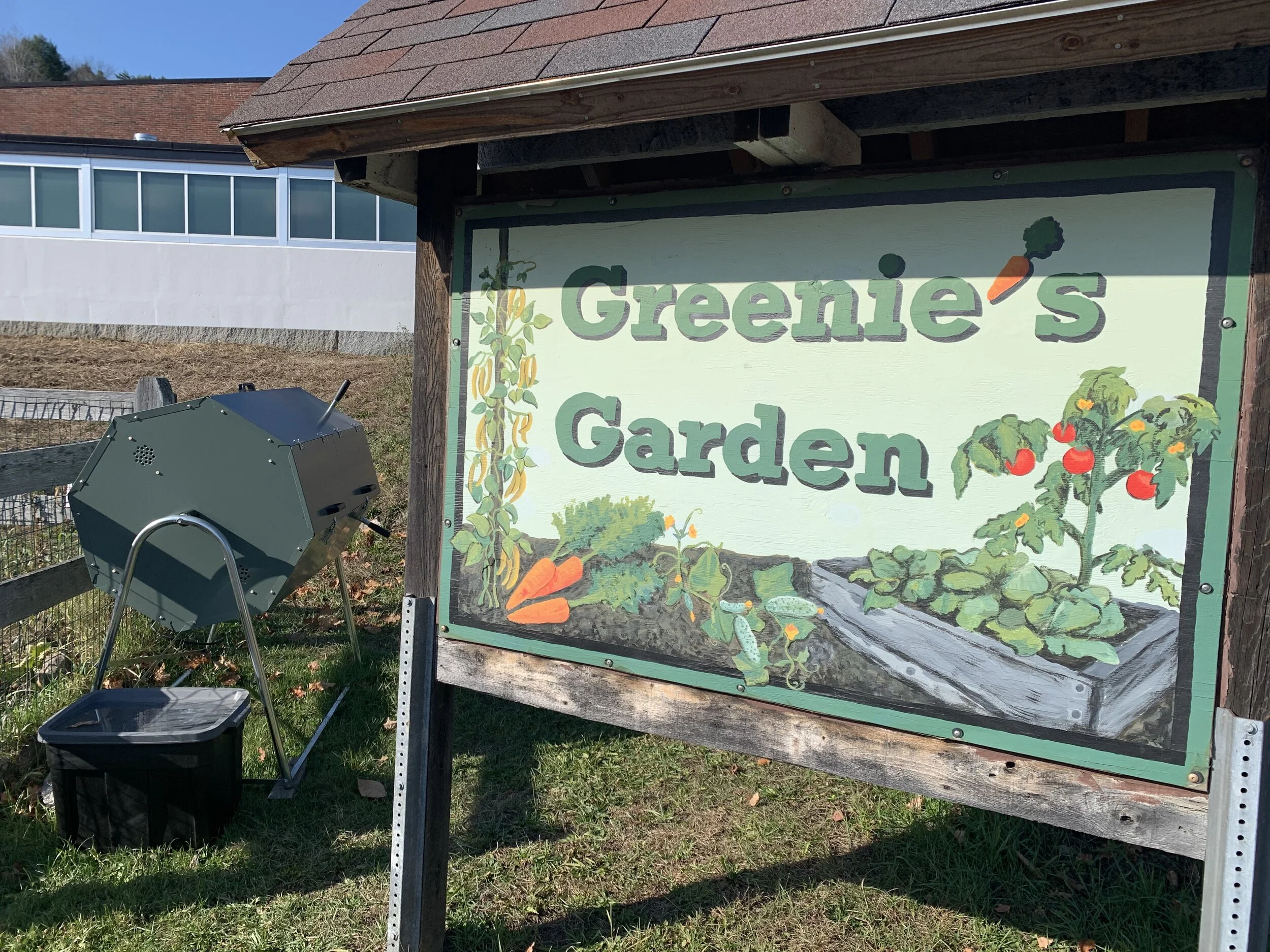
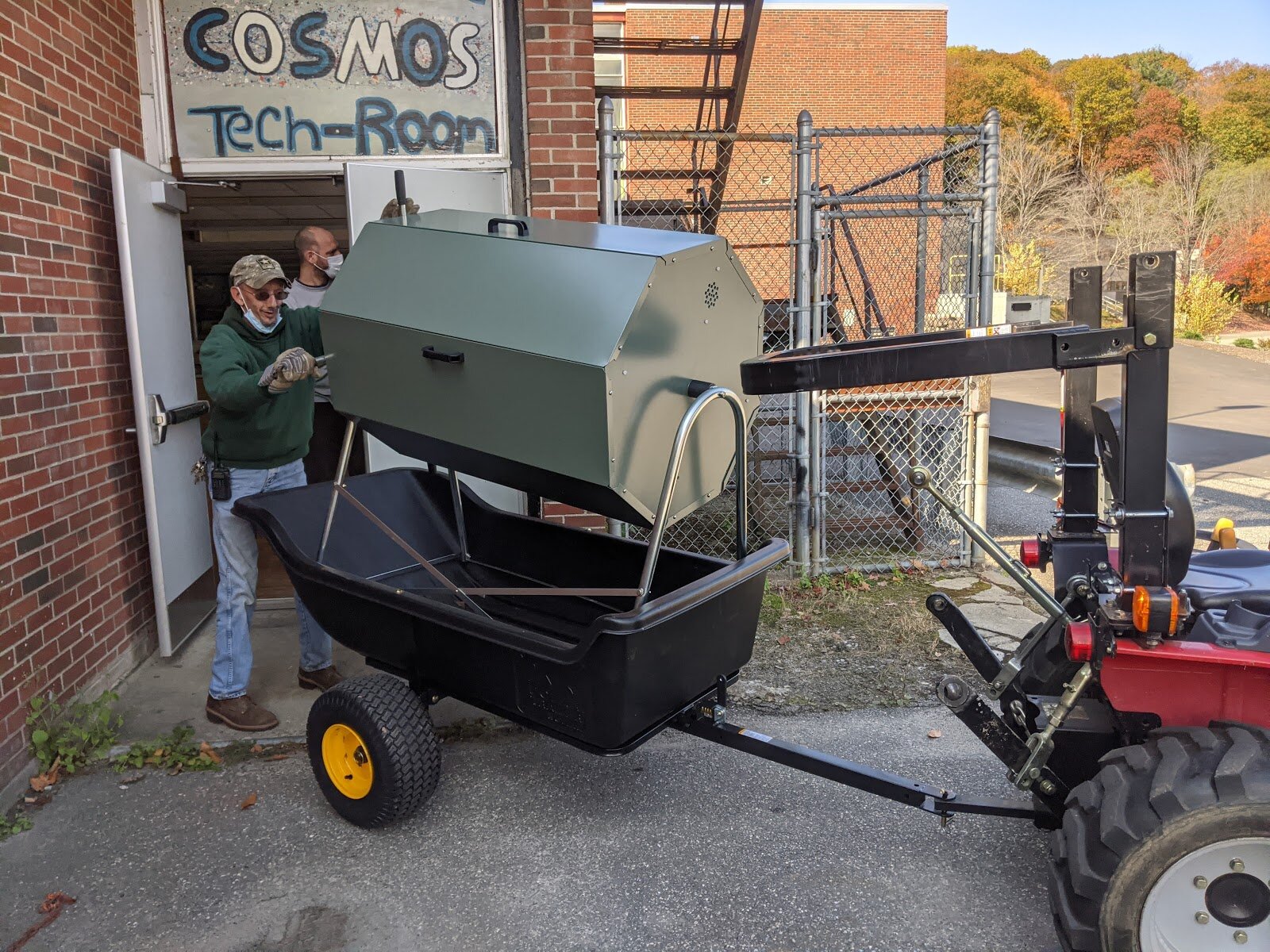
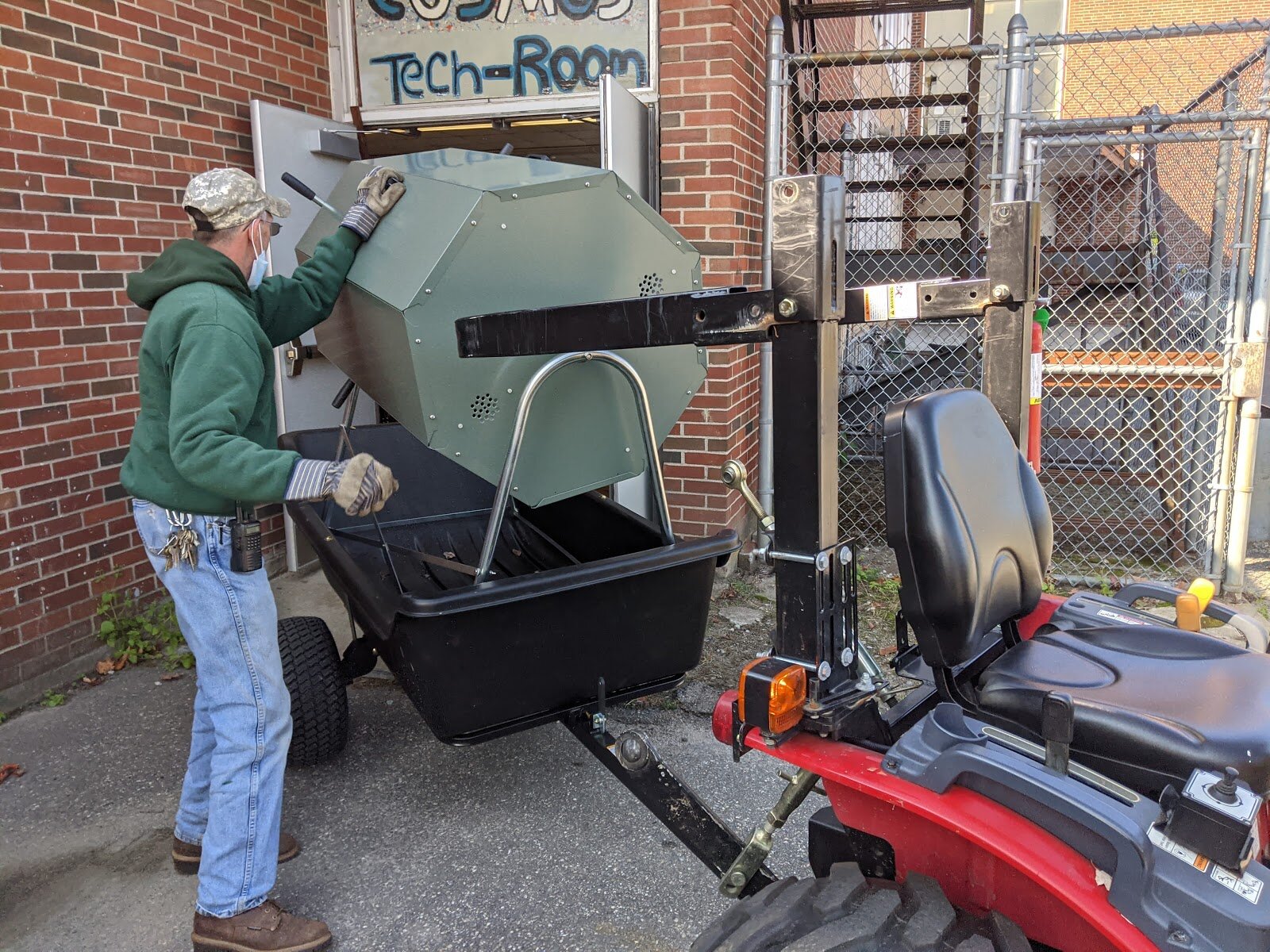
2020.11 Riverside Compost Tumblers 1 .jpg 2020.11. Riverside Compost Tumblers 2.jpg 2020.11. Riverside Compost Tumblers 3 .jpg

Students of the Community Engineering Class, taught by Cliff Weyer, worked diligently to construct these insulated tumblers. The two JORA brand tumblers are insulated with thick foam so that even in a cold Vermont winter, they can maintain the temperatures needed to break down food scraps and brown material. 

Throughout the winter, 6th graders in the STEAM class will bring food scraps and wood pellets to compost a few times a week. The two tumblers now live in Greenie’s Garden and will be brewing compost for the spring planting season. 

Tagged: compost, school gardens, Riverside Middle School

Food Connects
November 10, 2020
Farm to School, Farm To School Newsletter

Who Feeds Our Kids: Erica Frank

Food Connects
November 10, 2020
Farm to School, Farm To School Newsletter

Welcome to Food Connects’ series highlighting the amazing essential workers in our community who work hard every day to keep our children fed. Read on to learn more!

ERICA FRANK

2020.11.EricaFrank resized.png

Erica is the School Nutrition Site Manager at Central Elementary School in Bellows Falls where she is starting her second year. We sat down with Erica in September to learn more about her work and how things have shifted since March. Here are some highlights from our conversation:

Michelle Pinter-Petrillo (MPP): How long have you been working in food service?

“ Knowing that people needed the food and we could still make them food kept me going.”
— Erica Frank

Erica Frank (EF): I’ve been working in food service for close to 14 years. I was a baker for many years and I went back to school for my degree in nutrition, I got out of food service for a number of years and worked as a counselor, and then got back into food when I took this job last year.

MPP: How has COVID-19 impacted what you are doing? 

EF: We don’t get to do as much variety with the kids, which is really hard. I first came back for breakfast and I could only give them certain things. We can no longer give them the choices and that’s really tough. 

We got a salad bar going last year and it really took off. We had so many options and it was so fun. It helped the kids try new things and we just don’t have that this year. 

I loved having the kids be able to come in and say to them “Oh hey, try this I know you usually like that but we don’t have that today, you should try this!” 

Students have to have the right components to make a meal so sometimes I have to chase after them and say you have to take milk or another side. They get all of the components now on their plate but they don’t get to choose it and I think that makes a difference.

When I take out the compost I can see “oh wow that’s a whole apple in there,” but I can’t see who ate what and help them make a different choice the next time which I used to be able to do in the cafeteria.

MPP: What has kept you going during this time? 

EF: When the schools shut down in March, I was able to have enough child care so I could work even though I have two young kids. Knowing that people needed the food and we could still make them food kept me going. And we make good food here. I’m very proud of the food we make. We were even able to open it to not just kids in the school but to the community and that made it nice to come into work and feel proud about feeding our community.

I have a 1st grader and a 2-year old. I’ve gotten lots of support from friends and family to help watch the kids. And I got them into daycare—the two-year-old is in daycare for the first time this year. We are still figuring it out but we still need help. 

MPP: What has been your biggest challenge during this time? 

EF: Dealing with all of the changes like the limited meal offerings, that really is a struggle for me. It’s been hard feeling that the kids aren’t getting the nutrition education I know they could get. But another thing to get me through it is that, hopefully, it is short term. We are pretty good at tackling things as they come on and tackling them as a team. We’ve been working with the teachers, and have navigated how schools are different now.

We have breakfast items at school so I can put together however many bags with the different items and drop them off at each classroom. In the mornings the teachers take their meal counts to see who wants lunch. I come here (BFHS) after my breakfast shift and help them finish any meals for school. After, I pack up insulated bags with all of my meals and bring them back to the school before lunch; I figure out what classroom needs what and I pack it up. I make sure there is milk, all the components, silverware. There are lots of logistics. We are serving 40 meals for breakfast and lunch. We want to make sure that any kid can have breakfast now that it is universal, the teachers have been pretty good at making sure to let kids know it’s not going to cost them anything. They can keep some items for later on cause that’s a big thing too. When kids would come out of breakfast last year you know they were keeping a few things to have for a snack later. Our enrollment for the school is about 60 for each pod, 60 Monday/Tuesday and 60 Thurday/Friday.

MPP: What does the community do to make you feel supported?  

EF: We get a pretty good response for our food which helps—you know that people are enjoying the food that you’re offering. We have families that are thanking us at pickup and others who email, reaching out for delivery and to say thanks. But I miss seeing the kids.

MPP: What advice do you have for someone interested in working in food service?

EF: Look at the overall picture of the job. Sometimes it is very monotonous, where you’re just scooping beans. It might not be very glamorous but if you look in the long run, knowing that you’re feeding people is always a nice feeling and a good thing to keep in mind. There is so much food service opportunity. The idea of mass meals, the amount of logistics, it's a lot tougher than people think but it is very rewarding.

MPP: What brings you joy?

EF: Knowing that I’m serving up local food, and good quality food. We try to do a lot of local foods. We get some pre-made stuff but we still try to get good quality stuff and we actually read the ingredients. I knew Harley did that when I came on, which is part of the reason I came on. Last year, having the ability to make food from scratch and having the ability to actually make homemade food for kids brought me a lot of joy.

I am grateful for the food quality. I’m grateful for the team who comes together at this time to make it work, no drama and just getting the job done. People coming together and bringing lots of different skill sets have been really nice. We’ve made it work and we’ll continue to make it work.
Tagged: Who Feeds Our Kids, Central Elementary School, school nutrition, school meals, COVID-19

Food Connects
November 10, 2020
Farm to School, Farm To School Newsletter

Resource Roundup—6 Tools to Help Teachers

Food Connects
November 10, 2020
Farm to School, Farm To School Newsletter

Since the pandemic closed schools in March, teachers nationwide are shifting their practice and adapting instruction to fit virtual and physically distanced settings. Food Connects maintains a running list of professional development opportunities in our monthly newsletter (scroll to the bottom!) but we also wanted to highlight some other tools that have made their way into classrooms this year. Read on to check out six new tools to help teachers adapt to COVID-19. 

Teaching Outside 101 (Bonnyvale Environmental Education Center - BEEC)

Drawing upon over 20 years of experience, BEEC put together a 15-page guide to getting your classroom outside. The first half of this guide covers the nitty-gritty logistics of outdoor education—from establishing natural boundaries in your new outdoor classroom, to supply lists for teachers and students. The second half of the guide covers idea starters for outdoor lessons in each academic subject.  

What we appreciate about this resource is that it is not overwhelming and covers just enough to get you thinking about how to improve your practice and routines with outdoor education. Each topic gets you thinking about a particular aspect of teaching outdoors (ie: travel to the forest) and offers a few idea starters (challenge them to walk like a ____ dog/cat/deer/mouse/etc.) without ever being exhaustive. 

Cooking with Students (Food Connects)

In response to requests from our member schools, Food Connects created a 2-page guideline on how to safely cook with students during COVID-19. The guidelines touch upon the following topics: Students in the Garden, Cooking in the Classroom, Eating in the Classroom, Cooking Outside, and Utensil Sanitation. Our intention is to empower teachers and administrators to make safe decisions for their school while keeping cooking and hands-on nutrition education a part of student learning. Once you feel confident about bringing cooking back into your classroom, the next two resources will help identify recipes to try. 

Indigenous Harvest of the Month (NH Farm to School and Indigenous NH Collaborative Collective) 

Released earlier this year, this collection of resources from NH Farm to School and Indigenous NH Collaborative Collective focuses on the traditional crops of the Abenaki tribe. Some of these may already be a familiar sight in your school garden or around campus—others, a new learning opportunity for your students. We love the resource’s background on each harvest, the inclusion of nutritional information, as well as the crop’s historical context.

Farm to School programming is rooted in the land, yet too often the history and stories of those who have lived here (wherever “here” may be) for millennia are overlooked. By teaching their history and elevating their work, we remind students of a Native American culture that is still thriving today. 

Celebrating our Roots: Multicultural Recipe Book (Burlington School District - BSD) 

Created by BSD teachers in partnership with the University of Vermont, this recipe book highlights dishes from around the world, representing the home countries of many BSD families. Like the Indigenous Harvest of the Month materials, the book pairs each recipe with facts about the dish, an explanation of its cultural significance, and suggested learning activities. 

2020.11.ResourceRoundup(1).jpg

Classroom Compost Buckets (WSWMD)

Windham Solid Waste Management District has classroom compost buckets available. As schools relocate lunch to the classroom, teachers and facilities staff are rethinking how waste is collected. Send an email to John at WSWMD (recyclewswmd@icloud.com) to get one for your classroom as well as other resources such as signage for your waste sorting station. 

Sails for Schools (Wild Carrot Farm)

Jesse from Wild Carrot Farm donated sails (from sailboats) to schools to use as shelters this fall. They’re all spoken for the time being but the next time he’s able to get more—likely sometime in the spring—Food Connects will help distribute them. If you’re interested in one for your outdoor classroom, send us a message at farmtoschool@foodconnects.org.

2020.11.ResourceRoundup(2).jpg

Tagged: resources, teachers, COVID-19, education

Food Connects
October 14, 2020
Farm To School Newsletter, Farm to School

October 2020 Farm To School Connection

Food Connects
October 14, 2020
Farm To School Newsletter, Farm to School
hom_kale_draft_7.14.15.jpg

October Newsletter

Back to School During COVID-19

Shifting the Narrative Around Charitable Food

Summer Garden Reflections

Food Connects Gives

Who Feeds Our Kids

Source: https://mailchi.mp/foodconnects/the-farm-to-school-connection-october-2020

Tagged: Farm to School, FTS Newsletter, October

Food Connects
October 13, 2020
Farm to School, Farm To School Newsletter

Back to School During COVID-19

Food Connects
October 13, 2020
Farm to School, Farm To School Newsletter

Leaves are starting to change and there’s a hint of fall in the air, and during this most unusual year, students are learning and growing in schools and homes throughout Windham County. One of the benefits of working as a Farm to School team coach is that we get to experience the many diverse colors and flavors of back to school throughout the region. Here are a few from schools and districts across the region.

At schools throughout the Windham Southeast School District (WSESD), teachers and students are spending more time than ever in school gardens as they learn to maximize their time outside and use school gardens as outdoor learning spaces. 

At Academy School, plans are being made to add a new pumpkin patch where students can grow pumpkins for the school’s annual pumpkin festival. Teachers are working together to see what’s possible in terms of building an onsite composting system as part of hands-on science for 6th grade, and Academy welcomes back Kathy Cassin for her second year in the role of Garden Coordinator. The gardens are looking great, and Food Connects’ summer garden coordinator Tara Gordon froze basil for fall cooking projects with students. The school is hoping to find funding this year to buy 2 or 3 mobile cooking carts to enable them to cook more with students.

Oak Grove School’s garden is bountiful this year with watermelons, tomatoes, acorn squash, Aronia berries, and kale. Normally the school community gathers together each October to celebrate the harvest with a community meal made by students using produce grown in the garden. Instead, this year teachers are getting creative and finding ways for students to enjoy the harvest during their in-person learning days throughout the fall. The first farm to school meeting of the year included conversations about the best recipes for kale chips and what to do with dehydrated tomatoes. Students will make signs for the garden to identify the variety of foods they’ve grown, and thanks to a grant from Blue Cross Blue Shield, garden coordinator Tara Gordon and pre-K teacher Jamie Champney plan to buy more kitchen equipment for the school’s cooking cart.

At Guilford Central School, Sarah Rosow, the Farm to School Coordinator, continues to work with students in the garden. She hopes to grow the garden and replace aging infrastructure—a grant was submitted for new raised beds and more supplies. The Guilford community is busy supporting the school by expanding the outdoor learning spaces. They are constructing two beautiful pole barns and work on their forest classrooms continues. 

2020.10.FallSchoolsUpdate(1).jpg

Twin Valley Elementary School is wrapping up a School to Farm project with NOFA-VT in which they built connections with Boyd Family Farm in Wilmington. The project was interrupted this spring by COVID-19 and will continue this fall with farm-fresh taste tests for students and a virtual tour of the farm filmed by NOFA staff to share with the school community.

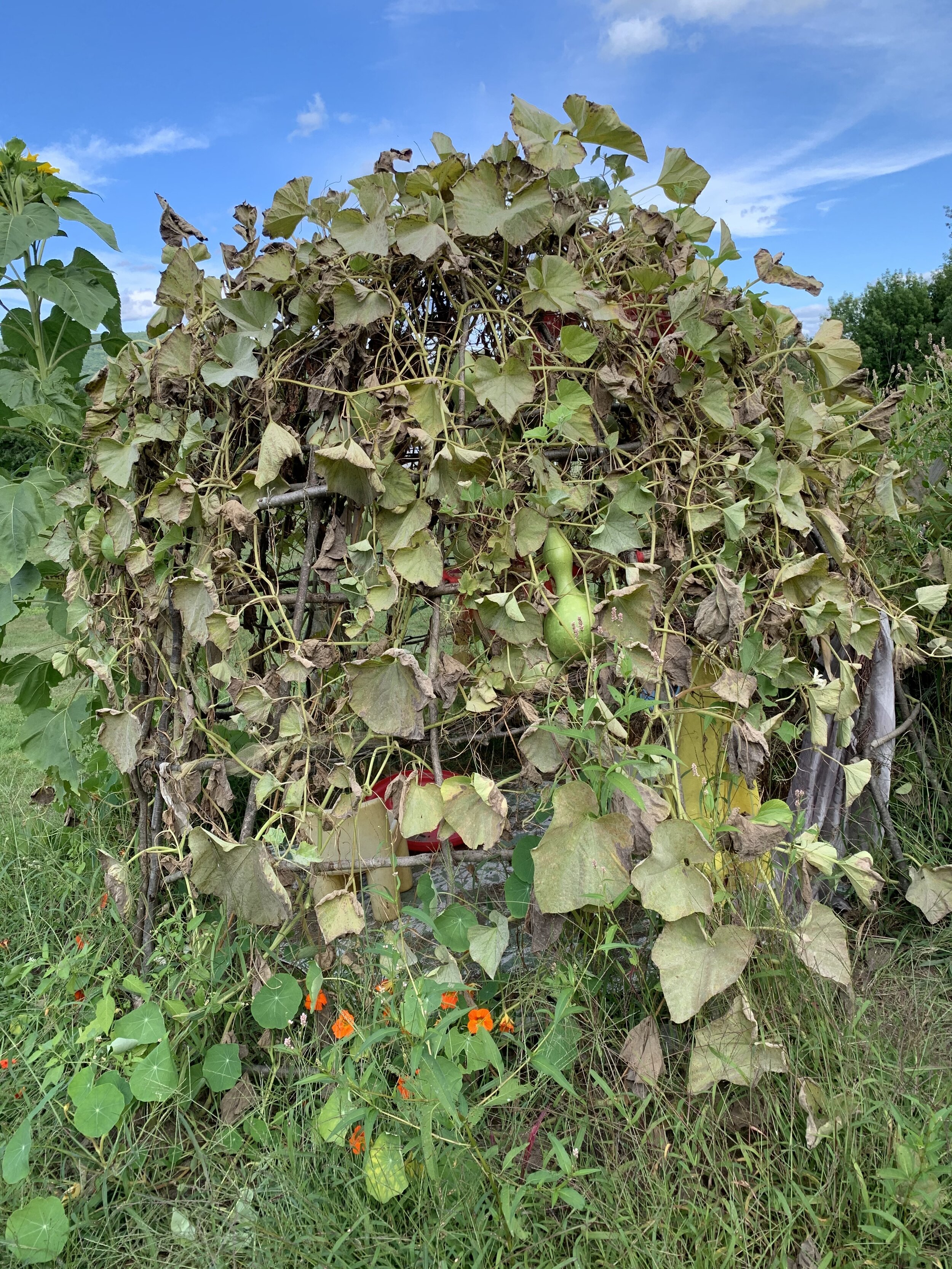
The newly formed Farm to School Team at Winston Prouty’s Early Learning Center is excited to use produce from their garden to make homemade baby food this fall to feed to their youngest students. The first recipes use mashed squash from their plentiful butternut squash crop. The students thoroughly enjoyed playing in the gourd house throughout the summer, which became more and more magical as the gourds grew above their heads!

IMG-2934.jpg
IMG-2936.jpg

At Riverside Middle School the Farm to School team worked with students to collect pumpkins from the nearby church garden. The garden club will put Greenies Garden to bed this month and plan for next year. The last funds from a Vermont Agency of Agriculture, Food, and Markets (VAAFM) Nutrition Grant were used to buy two Jora brand composters for the school. Cliff Weyer, the Design and Technology teacher, is working with his Community Engineering class to assemble both units.

In the Windham Northeast Supervisory Union (WNESU), a new commercial veggie peeler at the high school kitchen means the food service team can process more local produce and include it in lunches! Harley Sterling, the School Nutrition Director, recently processed a large batch of potatoes from Westminster Center School’s (WCS) garden. WSC built a chicken coop over the summer and a flock of chickens has now officially moved in! Now, in addition to a bountiful garden, students can collect fresh eggs for classroom cooking projects and share them with the nutrition program, Farm to School Cafe. 

At Newbrook Elementary School, the community harvested potatoes, squash, corn, and herbs from the garden. Some of the produce will go right into the school nutrition program while others will be saved for activities with students throughout the year. Teachers are getting ready for students to return to the classroom and thoughts have turned to the annual Farm and Field Day celebration. While it won’t look the same as in years past, there’s still hope that an adapted version can be held for the students to celebrate their school community.

Tagged: Farm to School, back to school, COVID-19, Windham Southeast School District, Academy School, Oak Grove School, Guilford Central School, Twin Valley Elementary School, NOFA-VT, Boyd Family Farm, Winston Prouty Center for Child and Family Development, Riverside Middle School, Windham Northeast Supervisory Union, WNESU, WSESD, Westminster Center School, Farm to School Cafe, NewBrook Elementary

Food Connects
October 12, 2020
Farm to School, Farm To School Newsletter

Summer Garden Reflections 2020

Food Connects
October 12, 2020
Farm to School, Farm To School Newsletter

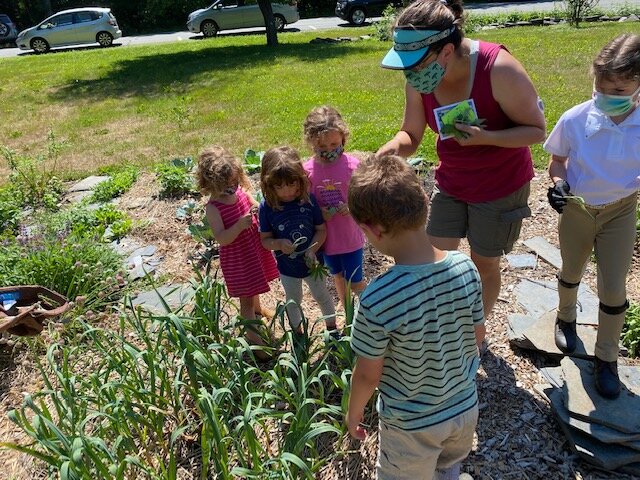
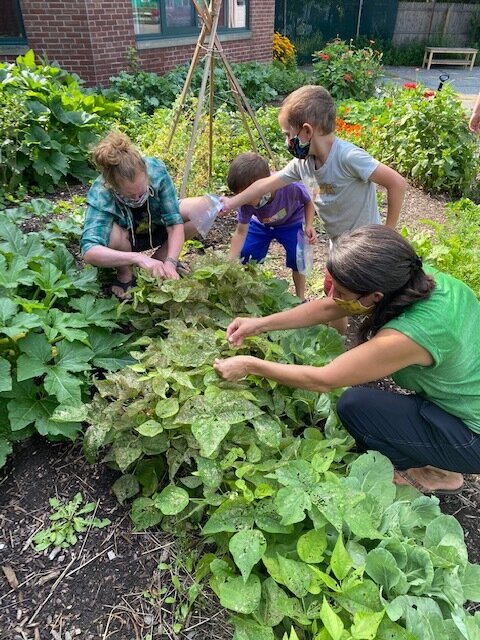
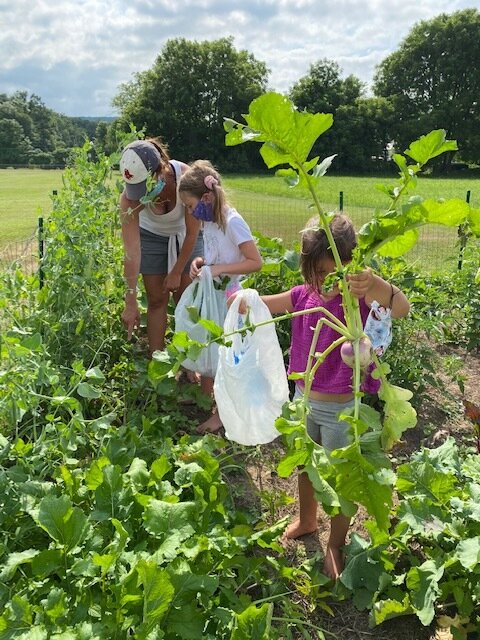
Despite the uncertainty around school this past spring, and even now in the fall, Food Connects Summer Garden Coordinator, Tara Gordon, spent her summer caring for six elementary school gardens in the Windham Southeast School District (WSSD) and welcomed students and families throughout the season. Participating schools were Guilford, Dummerston, Oak Grove, Green Street, Academy, and Vernon. New this year, Food Connects and RiseVT partnered with three local arts organizations to provide free programming alongside the open garden hours. Insight Photography, River Gallery School of Art, and the Human Art of Play were fantastic partners and added a new element of fun to the program! 

This summer garden program was made possible in part thanks to a grant from RiseVT.

Things looked a little different this year—masks, social distancing, and pre-registrations all ensured that students and families stayed safe. Nationwide, there was an uptick in gardeners and a surge in interest in outdoor ed. Our community was lucky enough to have strong garden programs already thriving before the pandemic arrived. This allowed families to stay connected to schools and get outside even after school buildings closed in March. 

As always, the gardens were bountiful and there was plenty of produce for participants to take home at the end of each open garden session. 

SGP1.jpg SGP2.jpg SGP3.jpg SGP4.jpg

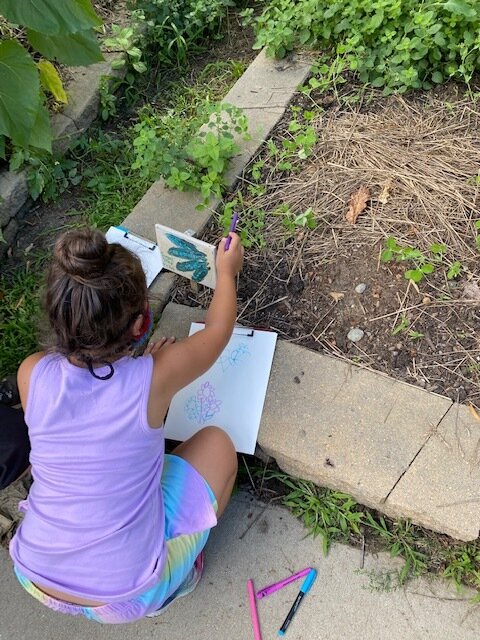
Thanks to supplies from Insight Photography, students made cyanotypes. During this activity, students gathered materials from the garden and placed them on light-sensitive paper. The shadow that was then created turned into beautiful art for the students to take home.

SGP5.jpg

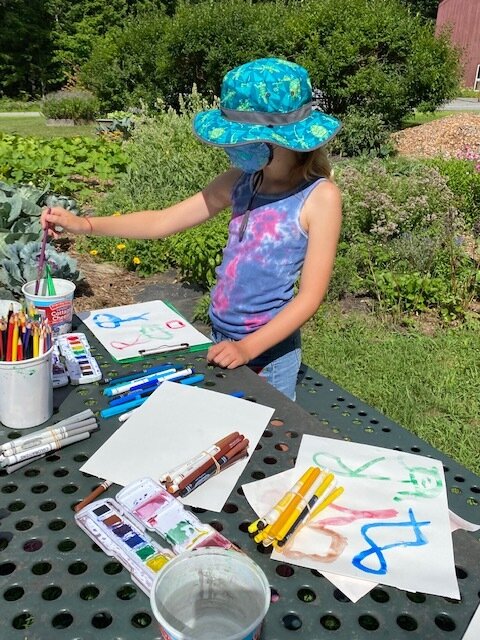
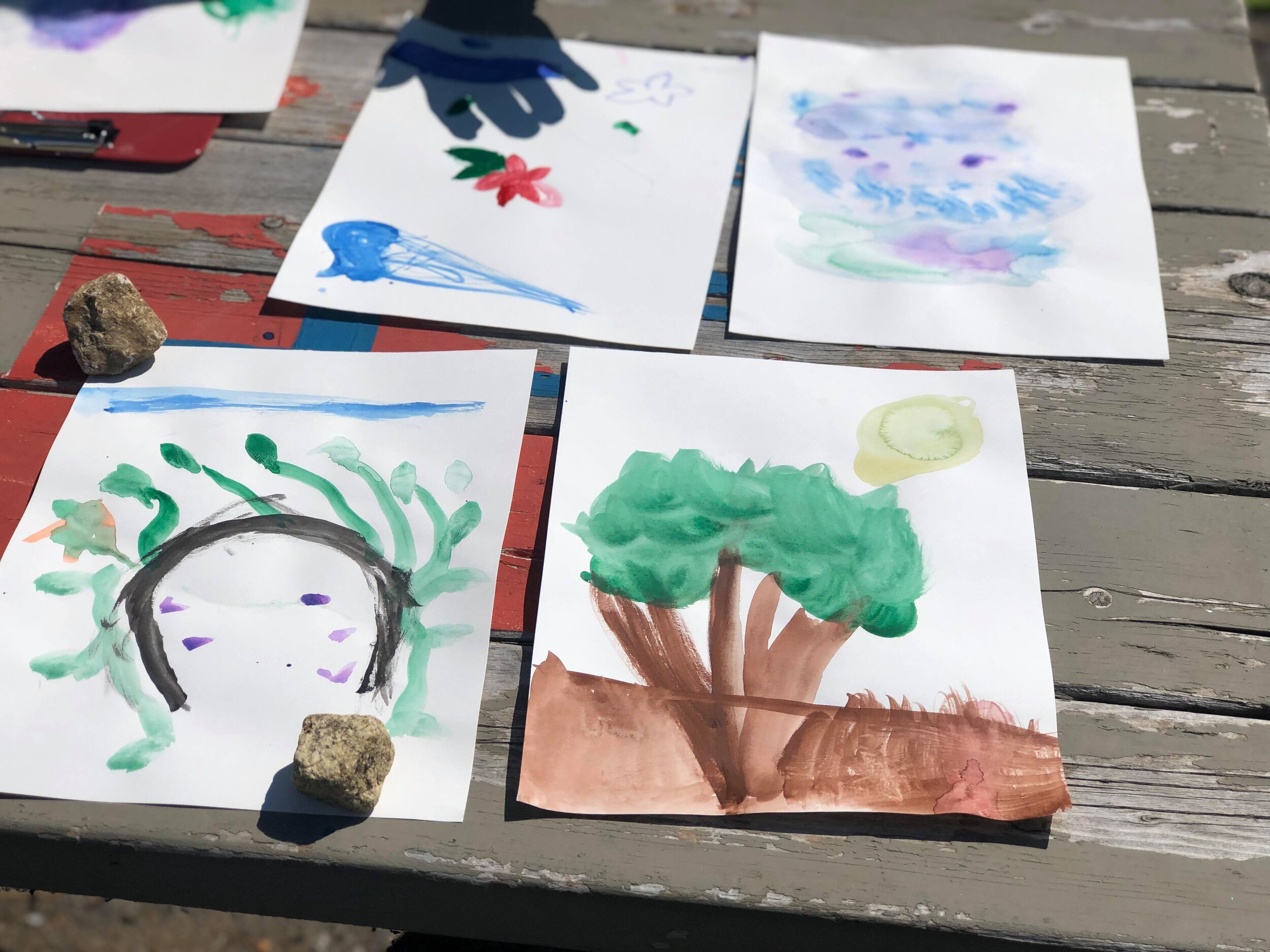
Along with Lauren from the River Gallery School of Art, students explored different mediums—such as watercolors—using the garden as their natural subject. 

SGP6.jpg SGP7.jpg SGP8.jpg SGP9.jpg

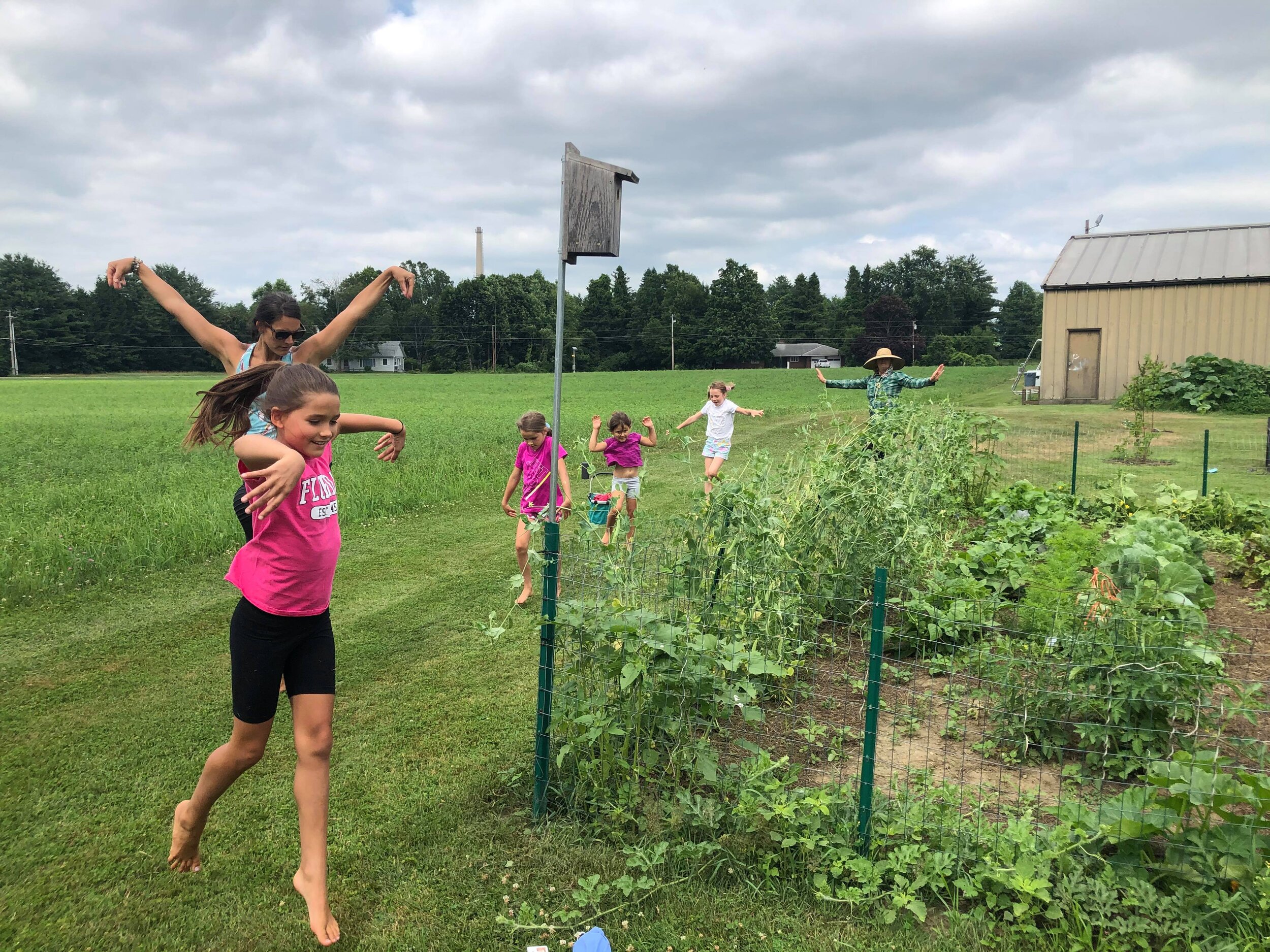
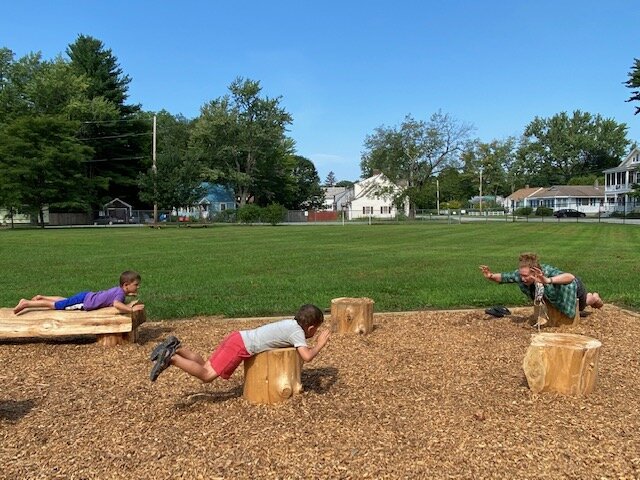
And Erin from the Human Art of Play got kids moving through circus yoga. Kids (and adults!) channeled their inner sunflower, grew their bodies like vines, and posed like grasshoppers. 

SGP11.jpg
SGP10.jpg

Throughout it all, students were finding new plants and discovering wonder in their school’s gardens. We saw lots of incoming kindergarteners, excited to check out their new school before the first day, and families enjoying the beautiful summer weather. 

Thanks to Tara’s diligent work throughout the season, each school has returned to a beautiful garden—ready for students to harvest fall veggies, incorporate into a science lesson, or just use as a quiet space to read. 

We’re thankful to all of the families who participated, our arts partners, and school administrators who remained flexible as we developed new protocols.

SGP12.jpg SGP13.jpg SGP14.jpg SGP15.jpg SGP16.jpg

We’d love to hear your stories from the garden this summer or ideas for improvements for next year. Shoot us an email at farmtoschool@foodconnects.org. 

Tagged: Farm to School, farm to summer, school gardens, summer gardens, outdoor education, RiseVT, Insight Photography, River Gallery School of Art, Human Art of Play

Food Connects
October 9, 2020
Farm to School, Farm To School Newsletter

Shifting the Narrative Around Charitable Food

Food Connects
October 9, 2020
Farm to School, Farm To School Newsletter

Nearing the halfway mark for the program, Everyone Eats! grew from a far-fetched idea to a wildly successful COVID-19 relief program that is now replicated throughout the state. With over $600,000 of funding coming from the Federal Coronavirus Relief Fund to southeastern Vermont’s regional economy, the program is a huge support for restaurants, local producers, and residents.

Developed through conversations with the Vermont Department of Housing and Community Development and the Downtown Brattleboro Alliance (DBA) on how to use FEMA funds to support local restaurants, the Everyone Eats! Brattleboro (EE!B) coalition now represents a diverse, cross-sector team consisting of nonprofits, state agencies, and local businesses. Modeled off of preceding programs, such as The Skinny Pancake’s Shift Meals program and mutual aid groups that popped up nationwide, the radical idea was to pay local restaurants to feed their neighbors in need.

That seemingly simple idea ended up being more complicated than originally thought. Those complications, along with road bumps in securing funding for the program, pushed a June start date back to August. Despite the setback, that gave the new coalition time to meet, plan, and develop the relationships that would prove essential for success. In an article from earlier this year, Food Connects highlighted the importance of starting with existing connections and celebrated the strong partnerships that exist between charitable food organizations in the area thanks to the Windham Region Hunger Council. The EE!B benefited from these connections as well, but also included new organizations and businesses, opening the door to new opportunities. 

The program has had three major pillars guiding it throughout its creation—supporting local restaurants, supporting our neighbors, and supporting the community. It’s a win for everyone, whether you’re making the food, receiving a meal, or are a producer selling to the restaurants.  Currently, participating restaurants are spending about $2,000 a week total on local food. This is helped by a 10% local purchasing requirement built into the program and restaurants are going far beyond that, with 20% of spending often staying local.  

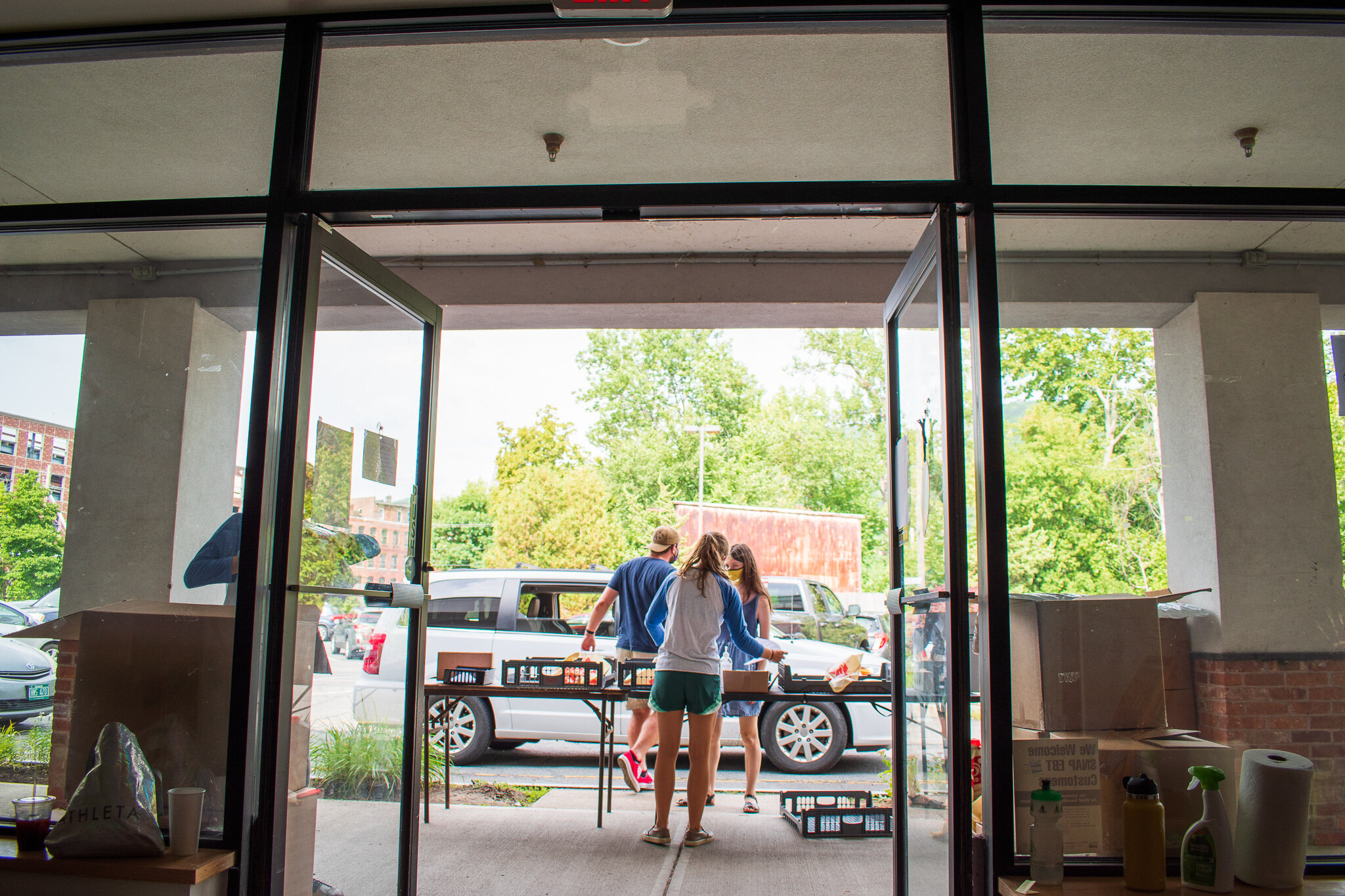
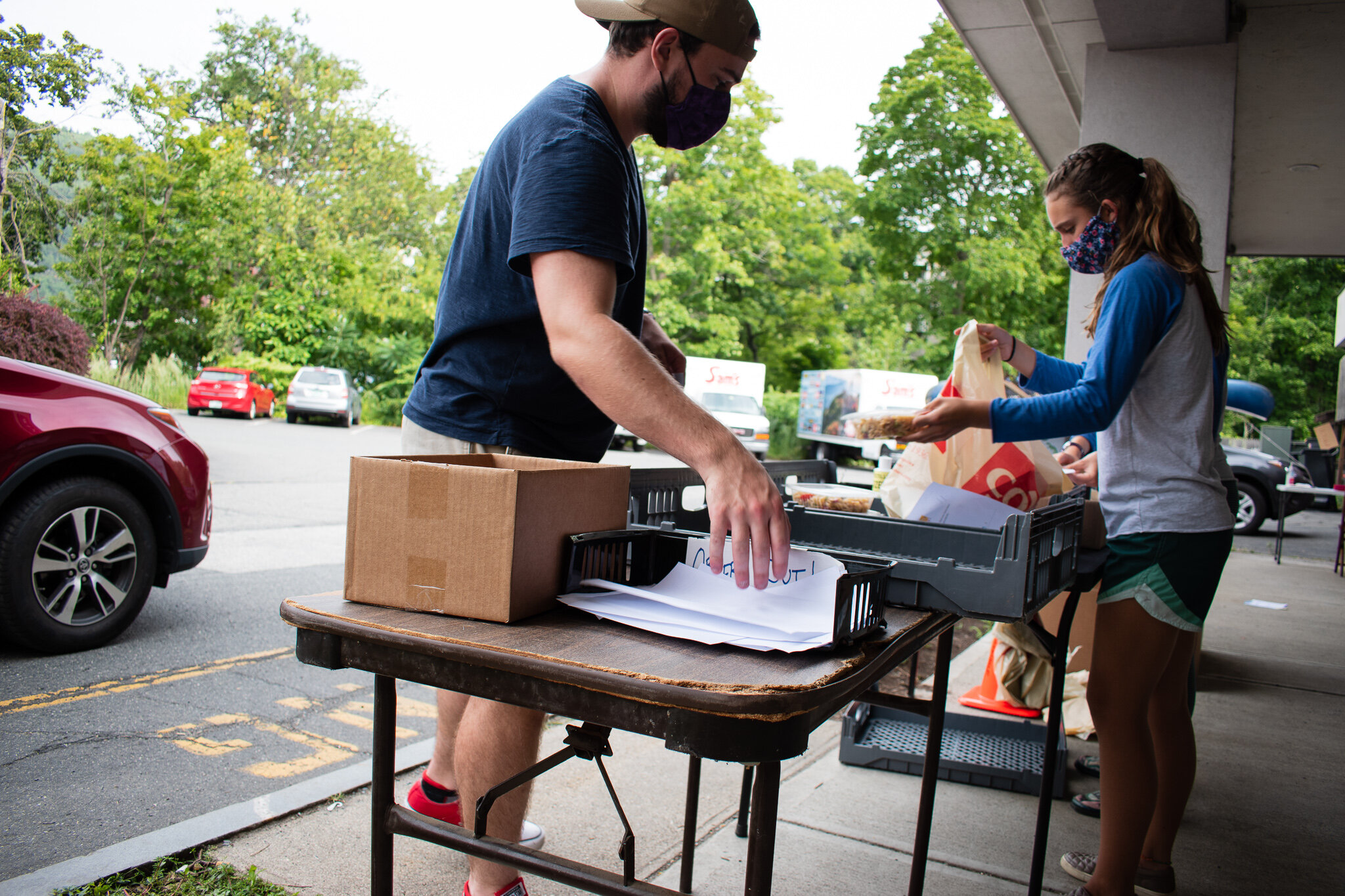
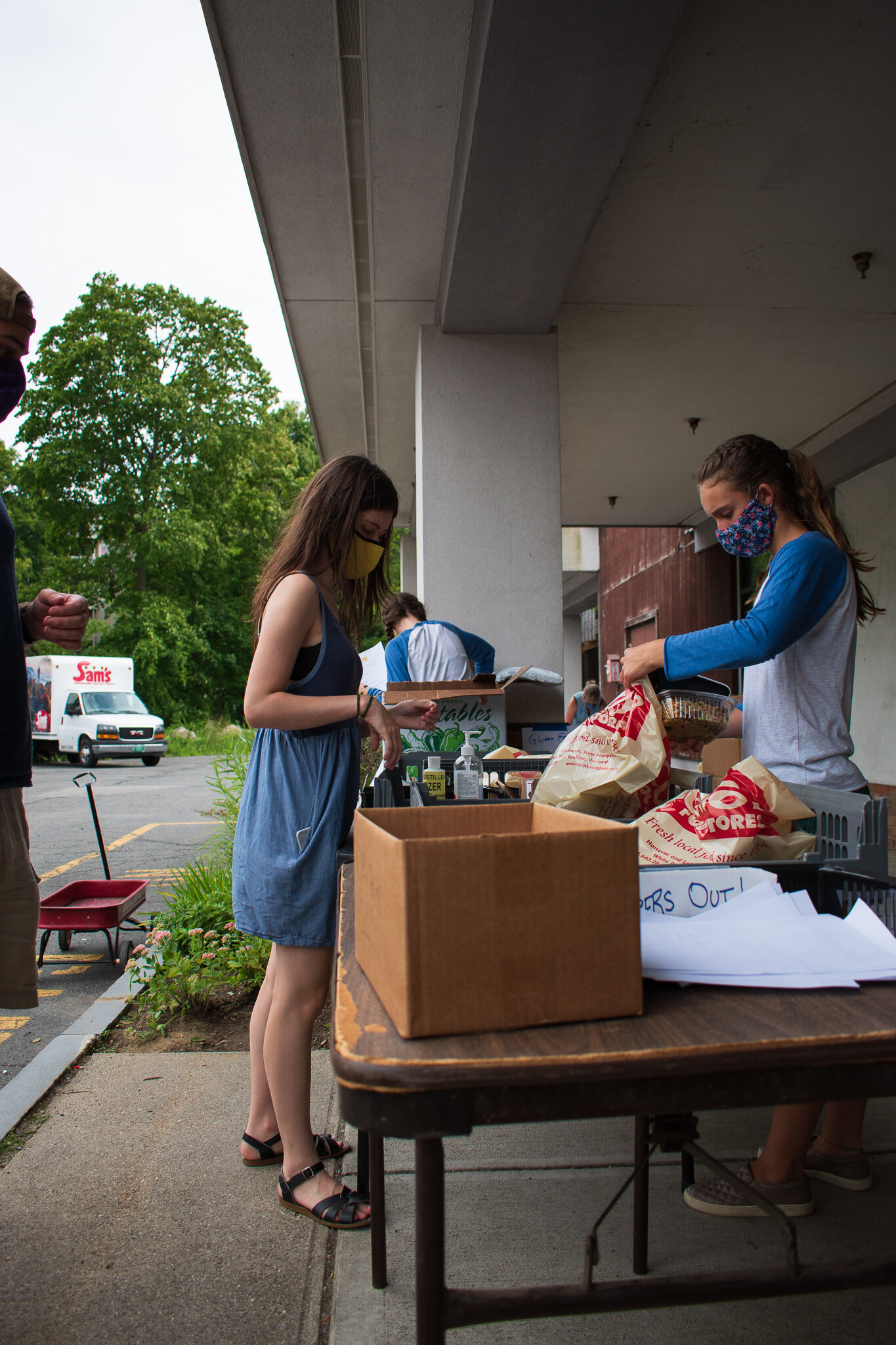
2020.10.EveryEats!(1).jpg 2020.10.EveryoneEats!(2).jpg 2020.10.EveryoneEats!(3).jpg 2020.10.EveryoneEats!(4).jpg

Photo credit: Stephanie Bonin 

The EE!B coalition saw this program as an opportunity to build compassion in the community. Food shelves and food relief is often stigmatized which creates barriers for families in need of support to access the programs. With many new people accessing support for the first time, we wanted to ensure that the program was equitable for all participants. That meant that those who were experiencing homelessness and long time users of charitable food were able to access the program alongside the newly unemployed and community members picking up meals for the first time. 

We strove for equity through two different approaches. First, we provided an alternative channel for organizations to pick up meals for their clients. By doing this, we made meals accessible to homebound residents, families without cars, or neighbors who had tight schedules and couldn’t make the pick-up times. Next, we created language about the program that made it clear that everyone was welcome—foregoing means-testing, income identification, or other class-based demographics meant that it was easy for anyone to pick up meals. 

Our hope is that by opening up the program to the entire community, a stronger collective recognition and compassion for charitable food has been developed. People who never before had waited in line for a free meal or so clearly been the recipient of community support now have new experiences to draw from. 

So what does this mean moving forward? EE!B will run until December 10. Participation is strong and new restaurants continue to join the program. Looking to the new year, we hope to shift how charitable food is thought about and accessed in our community. Foodworks started this long before the pandemic, adapting their programs to be more trauma-informed and accessible. The new partnerships formed between Foodworks, the Vermont Foodbank and the Downtown Brattleboro Alliance could lead to even more innovation. Services are more often accessed when they’re in central, welcoming, and high-use locations. EE!B saw an increase in users as it mixed traditional charitable food with a more general community support program. What’s next is for the community to decide, whether that be pay-what-you-can markets, mixed-use community spaces where services are also provided, or something yet to be thought of. 

‘Vermont Everyone Eats’ is funded by the federal Coronavirus Relief Fund and made possible through a grant provided by the Vermont Agency of Commerce and Community Development to Southeastern Vermont Community Action (SEVCA). 

Tagged: Everyone Eats!, Charitable Food, COVID-19

Food Connects
September 11, 2020
Farm To School Newsletter, Farm to School

September 2020 Farm To School Connection

Food Connects
September 11, 2020
Farm To School Newsletter, Farm to School
hom_sweetpeppers_2020.jpg

September Newsletter

Everyone Eats! Brattleboro Extended

Meet Our New Farm to School Coordinator

The Lunch Monitor: It Pays to Buy Local

Who Feeds Our Kids?

Who Grows Our Food?

Source: https://mailchi.mp/foodconnects/the-farm-to-school-connection-september-2020

Tagged: Farm to School, FTS Newsletter, September

Food Connects
September 9, 2020
Farm to School, Farm To School Newsletter

The Lunch Monitor: It Pays to Buy Local

Food Connects
September 9, 2020
Farm to School, Farm To School Newsletter

Local Purchasing Incentive (Vermont) | S.273

What it does

  1. Creates a tiered local purchasing incentive for Vermont schools and correctional facilities. 

  2. Reimburses schools annually for local purchasing. Reimbursements would start at 15 cents per plate when at least 15% of ingredients are purchased locally. This would go up to 20 cents per plate at 20% and top out at 25 cents per plate at 25% and above. 

  3. Defines the broadest definition of local as grown or produced in Vermont or within 30 miles of Vermont. Processed foods would need to be made in Vermont and contain at least 75% locally sourced ingredients. 

  4. Provides an additional full-time position in the Child Nutrition Programs at the Vermont Agency of Education to assist schools in purchasing more local foods.

Why we think it’s important

Schools in Vermont have a lot of buying power. $15.5 million was spent on food by School Nutrition Programs in 2018 and over half that money comes from outside the state via federal funding. If we’re able to create a stronger incentive to purchase food locally, we can keep more of that $15.5 million within our communities. This translates to higher quality meals and a stronger economy. The case for local food was apparent during the pandemic when shocks to national food chains demonstrated the resilience of local food. Leveraging schools to buy more local can help farms grow and develop a more robust local food system to protect our community against future uncertainty. 

defaultLF0814_WhyLocalFirstGraphicNew_J3.png

Local purchasing incentives are gaining traction regionally as well. New York currently has the most generous program in operation—any district that spends at least 30% of their food dollars within the state gets their state reimbursement quadrupled, from 6 to 25 cents per meal. A similar proposal is currently being crafted by a working group in New Hampshire. Nationally, the Small Farm to School Act was introduced in July and would take the incentivized local purchasing model nationwide. 

Senator Balint and Sheila Humphreys of Food Connects chat with kindergarteners during breakfast after the bell at Green Street School.

Senator Balint and Sheila Humphreys of Food Connects chat with kindergarteners during breakfast after the bell at Green Street School.

Who supports it

In the Vermont Senate, there are 12 co-sponsors of the bill, including Senator Becca Balint from Windham County, Senators Dick McCormack and Alison Clarkson from Windsor County, and Senator Brian Campion from Bennington County.

Current status

The bill passed the Senate Committee on Agriculture with a favorable report and is now being reviewed by the Committee on Appropriations. Last action was taken on March 12th, 2020, and as normal Senate procedures resume we hope to see more action. 

Interested in more?

To learn more about how money is currently spent on school nutrition and what the impact could be if redirected locally, check out this info booklet from VT FEED and VT FTS Network. 

Want to talk with your local representative? Easily look up your local Senators and Representatives here!

Tagged: The Lunch Monitor, Farm to School, local food, food purchasing, policy

Newer Posts
Older Posts
Back to Top
Food Connects, 22 Browne Court, Brattleboro, VT, 05301, United Statesinfo@foodconnects.org
SUBSCRIBE TO OUR NEWSLETTER!