When new Organic regulations took effect under the Strengthening Organic Enforcement rule, many Food Hubs found themselves asking a practical question: does this apply to us?
For Food Connects, the answer led first to certification, then to deeper technical assistance work through the Transition to Organic Partnership Program (TOPP). After completing certification as part of a Vermont TOPP Food Hub cohort, Food Connects became a TOPP partner and technical assistance provider, helping other Food Hubs and small distributors understand new Organic requirements, assess whether certification applies to their operations, and prepare for the process when it does.
For McKenna Hayes, Food Connects’ Director of Strategic Impact and Compliance, that work also sparked a deeper curiosity.
“My curiosity to learn more about Organic regulations grew naturally out of our work as a TOPP partner and Food Hub compliance technical assistance provider,” McKenna said. “I am pretty comfortable with the ‘what,’ and I wanted a deeper understanding of the ‘why.’”
That curiosity led McKenna to the MOFGA TOPP Inspector Mentorship Program, a training program designed to help new inspectors, or inspectors adding a new scope, build the regulatory knowledge, technical skills, and field experience needed for Organic inspection work. McKenna’s mentorship is focused specifically on handler and processor inspections, a scope directly connected to the Food Hub and distribution operations she supports through Food Connects’ Technical Assistance Program.
Food Connects first turned to TOPP when the Strengthening Organic Enforcement rule changed requirements for many handling entities, including Food Hubs. Since then, McKenna has helped other hubs navigate the same process through facility tours, mock audits, one-on-one coaching calls, and practical tools that make Organic certification feel more manageable.
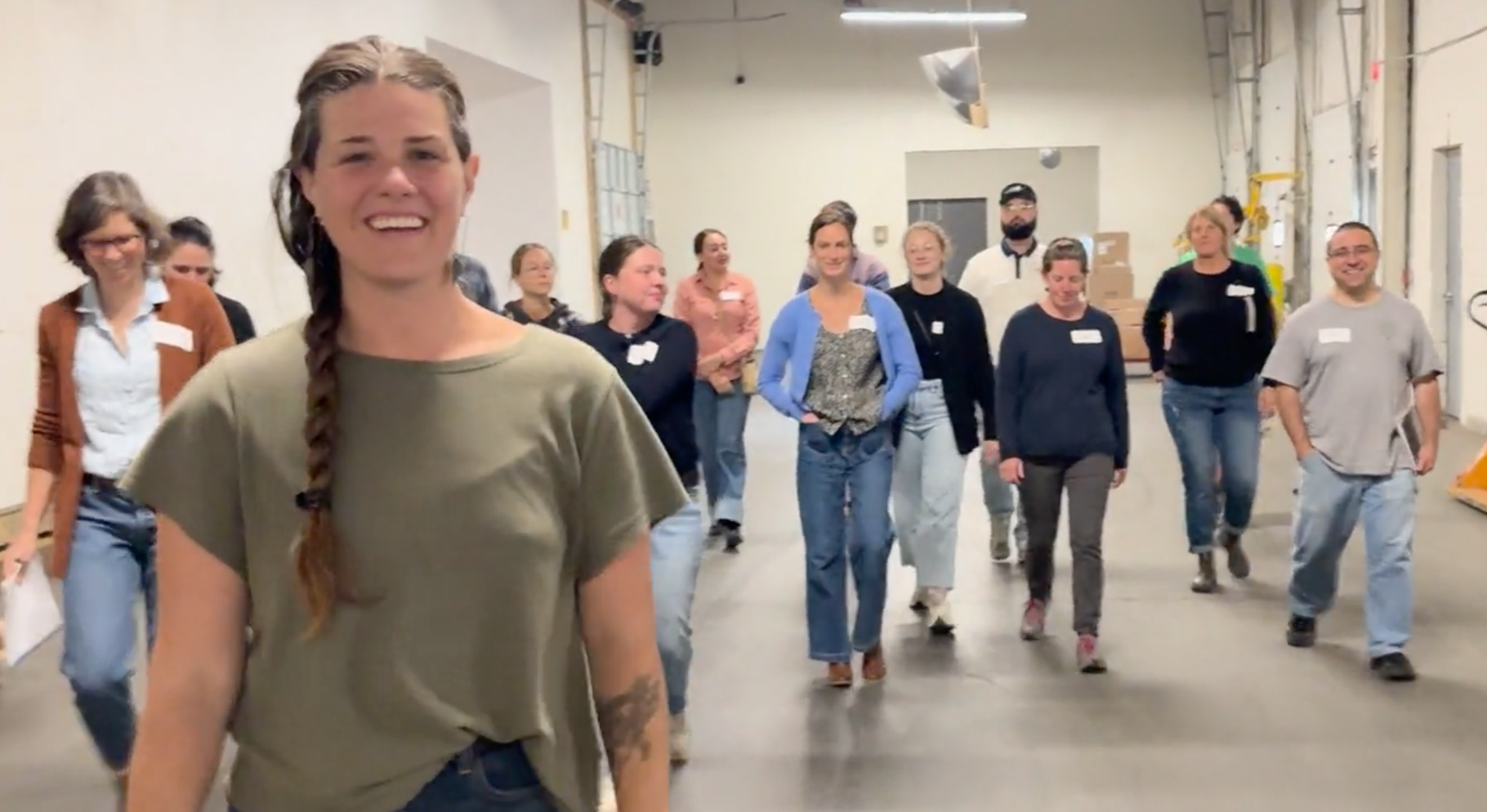
At the New England Food Hub & Processors Network site visit in September 2025, McKenna led a detailed facility tour that looked at operations through two parallel lenses: third-party audit requirements and Organic certification expectations. Along the way, she pointed to specific practices and records that support compliance at each step.
“The inspector mentorship takes all of that and adds depth,” McKenna said. “Now, I’m learning to evaluate those systems the way an inspector would, gaining a deeper understanding of the regulations and all the nuanced ways they may, or may not, apply to each unique Food Hub.”
That shift, from helping hubs prepare for certification to learning how inspectors verify Organic systems, has sharpened how McKenna thinks about compliance. She said the mentorship has helped her better understand how each part of an inspection and Organic System Plan connects back to specific regulatory language.
“As with any regulation, there is some layer of statutory interpretation,” she said. “But really, these regulations are very clear. The ability to more quickly and easily reference back to them when working with Food Hubs allows me to provide better technical assistance.”
The program has also expanded her understanding of what inspection requires beyond regulatory knowledge. Through MOFGA’s group trainings and question-and-answer sessions with experienced inspectors and certifiers, McKenna has been struck by how much attention is given to communication, empathy, and professionalism during inspections.
“What has surprised me most is how much emotional intelligence, empathy, and compassion is discussed,” she said. “Yes, we get into the technicalities of the regulation, but we also spend a lot of time on how to engage as a human during the inspection process.”
For McKenna, that balance matters. Organic certification is important to businesses that rely on it, but inspectors must also maintain objectivity, boundaries, and respect throughout the process.
“There is deep awareness and intentionality in how an inspector engages with folks during the inspection process,” she said. “It’s not always an easy balance, and sometimes the inspector is dealing with much more than just the regulations.”
McKenna’s mentor, Wendy Sue Harper, brings decades of experience as an inspector, soil scientist, and teacher. That background helps her explain not only what the Organic rules require, but how those requirements show up in real operations.
“Knowing about plants and soils helped me understand what I was seeing,” Wendy Sue said. “It helped me understand what equipment looks like, what it is being used for, and what is happening in greenhouses.”
For Wendy Sue, mentorship is essential because inspection cannot be learned only from a book, webinar, or workshop. The field experience matters.
“Part of the training is going on inspections with inspectors and watching how they approach topics, problem-solve on site, and interact with producers,” she said. “You can’t get that out of a book or a workshop. The experiential learning is key.”
The conversation after an inspection is just as important. Wendy Sue said mentees gain more from shadowing when they are able to ask questions, reflect on what they noticed, and understand why an inspector approached a situation in a certain way.
“What did you think? What did you notice? Why did you do it that way?” she said. “That process helps people digest the experience.”
Wendy Sue sees McKenna’s background in law, food systems, and compliance as a strong foundation for inspection training.
“McKenna is amazing,” Wendy Sue said. “Her background in law helps her understand the regulations, and her background in food helps too. She has a great mind for asking questions, remembering things, and interpreting regulation.”
That background also shapes how McKenna approaches handler and processor operations. Food Hubs are complex environments where certified Organic products may move alongside conventional products, and where compliance depends on clear systems for receiving, storage, handling, labeling, documentation, and staff training.
For Wendy Sue, that is where inspection plays a key role in Organic integrity.
“Inspectors verify that the work is being done,” she said. “The farmers and processors make the decisions to have it happen, and inspectors verify the work. You need a third-party verification to ensure integrity.”
That need is growing. When the Strengthening Organic Enforcement rule went into effect, many handlers and distributors were required to become certified. That did not only affect the businesses newly subject to regulation. It also affected certifiers, who needed more inspectors qualified to evaluate these types of operations.
“The Northeast has a strong Organic sector, and inspection capacity also has to keep pace with that growth and evolution of the industry,” McKenna said.
For Food Hubs, that capacity has real consequences. Food Hubs in the Northeast source from hundreds of regional producers and move tens of millions of dollars of local and regional food each year, much of it certified Organic. That product needs to move through compliant supply chains.
“Growers invest real time and labor into becoming certified Organic,” McKenna said. “Keeping that integrity intact through handling and distribution is part of supporting those farms and maintaining trust in the Organic label. If we don’t have enough inspectors who understand regional Food Hub operations, that integrity is harder to verify and harder to uphold.”
Wendy Sue also sees a generational need. Experienced inspectors will eventually retire, and the field needs new inspectors who are prepared, well-trained, and grounded in the practical application of the Organic regulations.
“I am going to be 70 next year,” Wendy Sue said. “At some point, I’ll retire from most of what I do, teaching and being an inspector. People will age out, and we need new people coming in who are well trained.”
Through the mentorship, McKenna hopes to bring back a more grounded and confident ability to support Food Hubs preparing for Organic certification and inspection. That includes helping operators understand whether the new regulations apply to them, how they apply, and what steps are needed to move toward certification.
She also hopes to help Food Hub operators see their facilities the way an inspector will.
“It can be really overwhelming, but most hubs have much more in place than they often realize,” McKenna said. “It is often about refining systems, not starting from scratch. The inspector mentorship gives me language and a framework to make that even more concrete.”
For Food Connects, that is the practical value of this next phase of TOPP work. McKenna’s training strengthens not only her individual expertise, but also the support Food Connects can offer to Food Hubs, small distributors, and regional supply chain partners navigating Organic compliance.
As Organic requirements continue to evolve, technical assistance grounded in real operations, regulatory understanding, and inspection experience can help make certification clearer and more approachable. It can also help keep regional Organic products moving with integrity from farms to Food Hubs to buyers.
To learn more about Food Connects’ Technical Assistance Program or connect with McKenna Hayes about Organic certification and compliance support, contact mckenna@foodconnects.org or visit Food Connects’ Technical Assistance Program page.