
Summer Gardens
Summer Meals
On Farm Learning
Share Coolers

Summer Gardens
Summer Meals
On Farm Learning
Share Coolers

Food Connects extends a warm welcome to Tara Gordon—our new summer garden program coordinator for five area schools this summer (Academy School, Green Street School, Oak Grove School, Guilford Central School, and Vernon Elementary School). Tara is a mother of two, has a multidisciplinary background in the biological sciences, was the Garden Coordinator for Putney Central School for three years, and is now the Green Street School Garden Coordinator. Tara finds gardening to be a wonderful way to instill a sense of purpose, a practical way to grow awareness of our place in nature, a way to cultivate our curiosity and creativity as caregivers, and a way to develop a closer interrelationship with the natural world. She is looking forward to working in the gardens with students and families over the summer.
Summer garden care is a crucial part of a healthy school garden program. Without someone tending gardens over the summer, gardens get overgrown and underwatered, making the fall harvests smaller and the overall gardening experience less pleasant for students and teachers. This is the third year that Food Connects has offered this valuable service to schools. Some schools have been able to find funds within their existing budgets to “buy-in” to this program, however not all schools have been able to find funds even though they have the need. We are grateful to Rise VT for a grant this season which allows us to expand our program and serve the communities of Guilford and Vernon.
Twin Valley Elementary School, in Wilmington, VT, will be participating in School to Farm: Know Your Farmer, Know Your School pilot project—an initiative of NOFA VT.
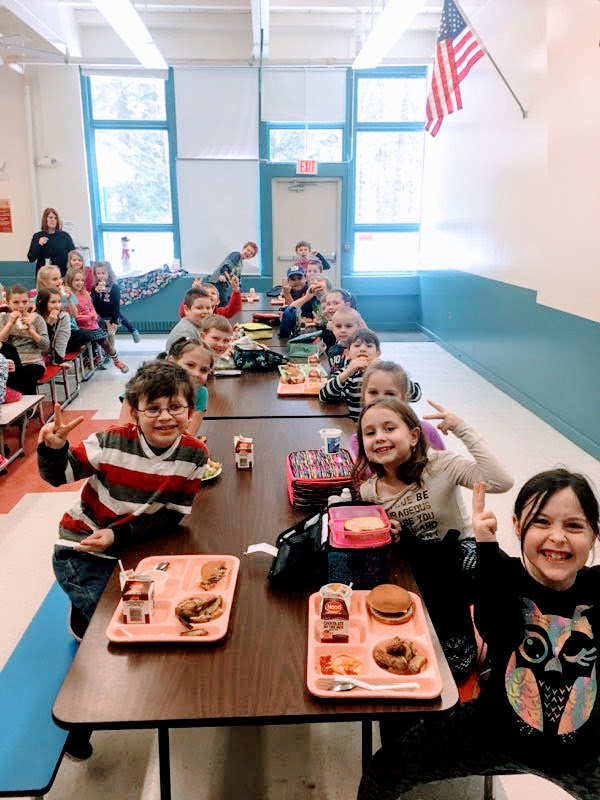
Students across Vermont rely on school meals throughout the school year for breakfast, lunch, and afternoon snacks. But when school is out of session nearly 37,000 students lose access to these services. Luckily, programs and organizations throughout southern Vermont offer summer meals programs.
Brattleboro will host a Summer Meals Kickoff event at Retreat Farm on Friday, June 28 from noon to 4 pm. Lunch will be served from noon to 12:45 pm and will be free for kids, and adults who come with a child that day! Attendees may enjoy the farm for free until 4 pm, including the calf barn, trails, and learning garden.
There are 9 Free Summer Meal sites this year, 5 of which are open to the public. You can find more details here.

Bellows Falls will host a Summer Meals Kickoff event at Bellows Falls Middle School on Monday, June 24 from 11 am to 1 pm. Kids and adults alike may eat for free that day—lunch will include homemade pizza, salad, and more! Garden Coordinator, Marylous Massucco, will be leading garden tours and giving away her boxes that day! Learn more about the event here.
A new initiative that is underway and community lead is in the Windham Central Community. They will host summer meals at the UCC church in Newfane, Vermont throughout the summer.
These events are great opportunities to learn about programs available to students throughout the entire summer. Check out this list of more summer meal sites throughout Vermont.

On an early spring day in mid-April, leaders from six community organizations came together to explore the question of how traumatic life experiences (and even the experiences of our ancestors) shape the way we eat. Guided by gifted trainers Kendra Colburn, Deb Witkus, and Angela Berkfield from Equity Solutions, staff from the Vermont Foodbank, Groundworks Collaborative, Food Connects, Brattleboro Food Co-op, Retreat Farm, Putney Foodshelf, and Pathways Vermont gathered together in the community room at the Retreat Farm for a day of learning about the connection between trauma and eating.
The goals of the training were:
Learn about trauma and how it can impact people’s relationship to food
Practice telling our own stories related to trauma and food
Interrupt related biases and assumptions that are getting in the way of connecting with people
Apply trauma-informed practice to our life and work
At the beginning of the training, each of the trainers shared their own food stories and created space for all participants to share food stories with each other as a way to practice vulnerability. Participants were also invited to contribute to a potluck lunch and to share with each other the values and beliefs that were connected to the food that they brought. After lunch, organizations were introduced to the Substance Abuse and Mental Health Services Administration’s (SAMHSA’s) 6 Core Trauma-Informed Practices, and working groups were formed to apply these practices to our work and to set goals.
The training was sponsored by the Vermont Foodbank, Groundworks Collaborative, and Food Connects—three organizations in the community that are actively engaged in conversations about becoming more trauma-informed in their approaches.

Food Connects was the lead organizer of the event, and is the recipient of a 2-year grant from the Thompson Trust to support Trauma-Informed initiatives in the Brattleboro Town Schools, with a focus on the ways that Farm to School programming can support resiliency for students and families who have experienced trauma. Food Connects’ next step will be using SAMHSA's 6 Principles to a trauma-informed approach for an internal assessment, and based on that assessment staff will determine what actions make sense as Food Connects supports the Brattleboro Town Schools in their resiliency work.
The Trauma and Food training was one piece of the work that the Vermont Foodbank is undertaking towards becoming trauma-informed. The Foodbank hosted their annual Hunger Action Conference in early May with a focus on “Healing the Past.” The keynote speaker, Dr. Ken Epstein, gave a series of workshops throughout the day on trauma. Additionally, the Foodbank’s Community Impact Team hosted a daylong team retreat in early May to continue conversations and build on the action steps that came out of the Trauma and Food training.
At Groundworks Collaborative, food shelf staff met with residents at Great River Terrace and Groundworks shelter to gain insight from folks with lived experience on the food shelf intake process, hours of operation, and the physical layout, with the goal of gaining an understanding of why people may not feel comfortable using the food shelf and ways to make the space less stigmatizing and more inviting. Additionally, staff met with current volunteers to discuss ideas on how to implement each of the six principles of trauma-informed care. As the food shelf moves into a new space in the coming months, Groundworks hopes to use this as an opportunity to incorporate a trauma-informed lens in all decision-making processes.

Equity Solutions supported the training participants in gaining confidence in their ability to interrupt long-held biases, recognize the impact that systems have on individual outcomes, and take action for equity in their communities. Trainers encouraged the group to consider their own food stories and find the courage to share those with others. According to a post-training assessment, attendees demonstrated an increased understanding of what it means to be vulnerable and share stories with others.
After the training, one of the participants stated, “This training will dramatically impact how I approach my work, especially in the coming year with taking action on incorporating lived experience and figuring out how to walk with people in relational ways.”
Another participant said that they, “Loved that facilitators did not shy away from naming things people often talk around in ‘professional’ trainings—i.e. oppression, capitalism, power structures.”
Becoming a Trauma-Informed Community will require schools, community organizations, and town leadership to work together to change systems to better meet the needs of people in our community, and this training was one piece of the rewarding, challenging, powerful work that it will take to transform our community and make it a better place for all people.

This past September, Windham Northeast Supervisory Union kicked off a new school meal program: the Farm to School Cafe. Led by Food Service Director Harley Sterling, the Farm to School Cafe model is thriving in Bellows Falls and the surrounding towns, including Westminster, Grafton, Athens, and Saxtons River. While breakfast and lunch menus still look familiar to students and families, they now feature a variety of locally grown products and the large majority of meals are prepared from scratch. Students at these schools are enjoying things like locally raised beef, potatoes, carrots, corn, tortillas, beans, dairy, maple syrup, and more!
According to Sterling, this new model has been well received by students and faculty alike.
“We get excited every time we see a new face come through the lunch line or we can get someone to try something for the first time and they end up loving it. Just knowing that the kids in these communities have access to the very best food every day in school—there is no better feeling. We’re seeing steady gains in student participation, especially at the schools where we’ve made the biggest changes. We had pretty terrific programs at Saxtons River, Grafton, and Westminster. At the Bellows Falls schools, we’ve seen about a 5% bump already this first year. We have also seen sales to adults triple. We feel like this is a really great leading measure of how good our meals are since adults have the choice to buy whatever they want for lunch. The fact that they are choosing to spend their money on the same food we serve to students speaks to the quality that our school chefs are serving up.”
Administrators within the school district have also welcomed these positive cafeteria changes and intend to build on them wherever possible. In fact, the district’s wellness committee, led by assistant superintendent Lynn Carey, just received a $15,000 grant from the Vermont Agency of Agriculture Food & Markets to support Farm to School initiatives at Bellows Falls Middle School. The school is excited to use this funding for updating kitchen equipment, re-building garden beds, re-envisioning cafeteria space, and hosting a community meal & garden tour this summer.

The team, which also includes Art teacher, MaryLou Massouco, Family & Consumer Sciences teacher, Jane Mitchell, Finance Specialist, Shawna Coutu, and Food Service Director, Harley Sterling, has set some lofty farm to schools goals, including new projects in the classroom, cafeteria, and community. Carey says, “I am proud of the improvements accomplished since we brought our food services in-house with Harley.” She looks forward to coupling these changes with efforts in the classroom and community.
Other schools in the district are also eager to engage students in Farm to School education. Westminster Center School and Grafton Elementary School were recently accepted to attend the Northeast Farm to School Institute, a year-long professional development opportunity for twelve school teams from New England and New York, hosted by Vermont FEED. The institute kicks off this June at Shelburne Farms and includes three full days of action planning, professional learning, and networking with like-minded individuals from across the northeast. Grafton Elementary principal, Liz Harty, and Westminster Center School librarian, Mandy Walsh, are excited to use this opportunity as a way to partner more intentionally and bring new and engaging activities to their students. Harty says, “We are excited to expand on what we already have in place and provide students with more authentic learning opportunities."
Windham Northeast is part of a larger movement in Vermont to reconnect students with their food. The local food system is vibrant and the schools are stepping up to further strengthen it. In order to create resilient communities in southern Vermont, educators are beginning to talk with students about where their food comes from and engage them in hands-on learning to reinforce Farm to School concepts. Classrooms are visiting local farms, working in school gardens, cooking with teachers, and connecting with their environment in new and exciting ways. The region partners with a local farm to school organization, Food Connects, an entrepreneurial non-profit that delivers locally produced food as well as educational and consulting services aimed at transforming local food systems.

Let’s Grow Together!
West River Education District Hires Garden Coordinator
School Spotlight: Kitchen Equipment

During April vacation, our Farm to School team went on a road trip with Brattleboro Town Food Service Director Ali West to Steiger Supply, a family-owned kitchen supply store in Rutland, VT. Ali was like a kid in a candy store, filling her cart with everything from small items like measuring cups and tongs to a commercial immersion blender for making soups and smoothies for the more than 700 students that she cooks for every day. Brattleboro Union High School and Brattleboro Area Middles School (BUHS/BAMS) Food Service Director, Justin Mcardle, also made a trip to Steigers and his purchases included a 40-quart stockpot and a food processor to help him make more soups, sauces, and spreads from fresh, local fruits and vegetables.
These shopping trips were funded by a generous Community Health Rankings and Roadmaps grant from the Robert Wood Johnson Foundation applied for in partnership with the Vermont Department of Health. The goal of this project is to foster health improvement efforts in our community. As a result of this funding, Food Connects was able to provide funds for the Brattleboro Town School District, Brattleboro Area Middle School, and Brattleboro Union High School to buy some much-needed equipment to help them process more fresh, local produce.
Many thanks to our friends at the Vermont Department of Health for collaborating with us on this grant and supporting healthy, fresh, local food in our schools!
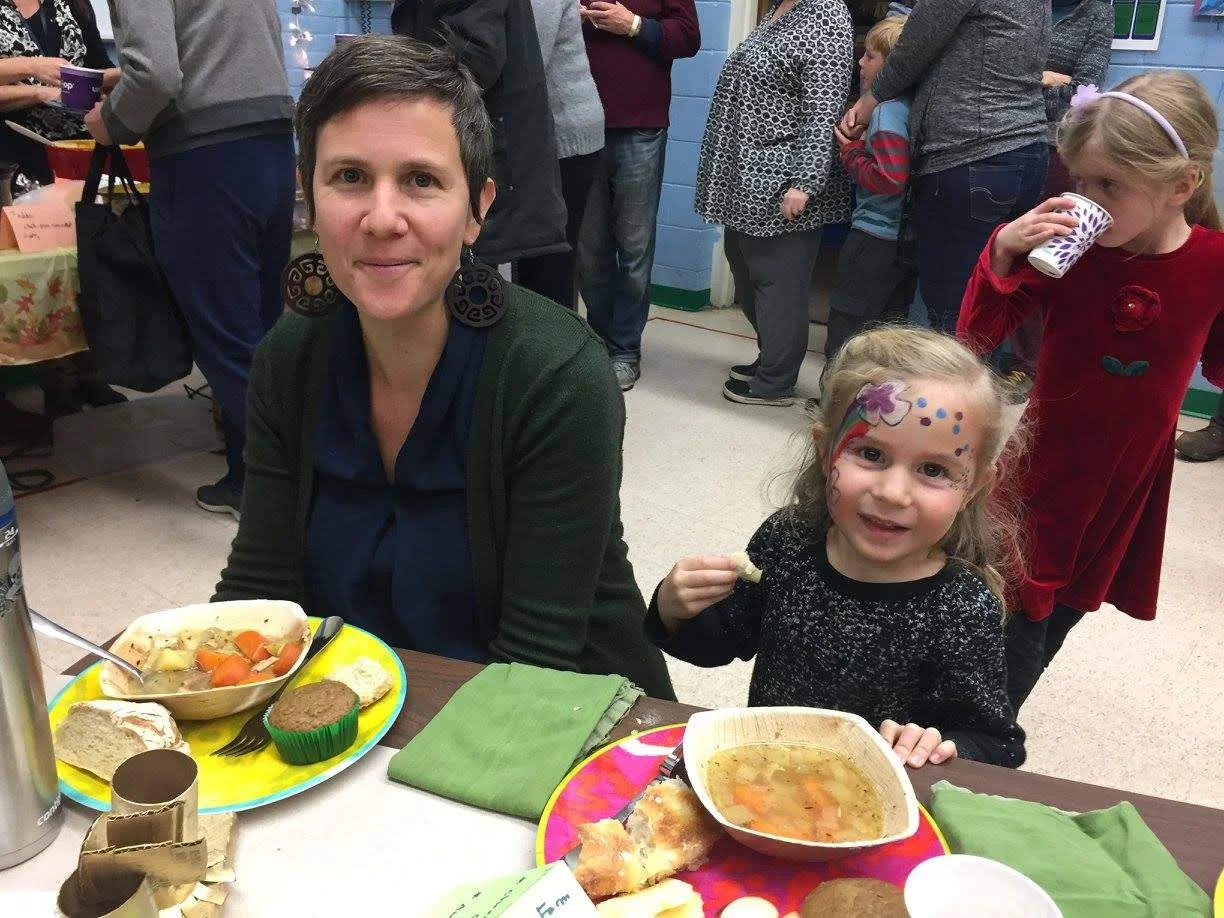
Leland & Gray Union Middle & High School and NewBrook School have combined forces to hire local farmer and educator, Sam Kilmurray, to coordinate garden activities for students at both schools this spring. Modeled after similar programming in Guilford and Brattleboro, Sam will work with classroom teachers to get even more students working in the garden. She is excited to involve students in planting, maintaining, and harvesting spring crops and will coordinate with teachers to reinforce classroom concepts whenever possible. Co-owner of Amazing Planet Farm in Williamsville, VT, Sam has immense experience in farming. Having participated in the Four Winds program over the past 3 years, Sam is also an experienced outdoor educator and enjoys teaching students new and useful skills for understanding the world around them. This position is generously funded by the Vermont Agency of Agriculture, Food & Markets, Food Connects, and WRED Medicaid funding.
“Eat and drink with people without fear and prejudice...they open up to you in ways that somebody visiting who is driven by a story may not get."

Peabody Awards [CC BY 2.0 (https://creativecommons.org/licenses/by/2.0)]
Anthony Bourdain, chef, traveler, and storyteller; spent nearly 20 years sharing meals with people from around the world as part of his television series, A Cook’s Tour, No Reservations, and Parts Unknown. Before becoming a television personality, Bourdain held the position of Chef at a number of NYC restaurants, including Supper Club, One Fifth Avenue, and Sullivans. Most notably, he was the executive chef at Brasserie Les Halles in Manhattan for many years.
Between 2002 and 2018, Bourdain visited nearly 90 countries and filmed over 200 episodes about food culture around the world. While he spent much of his twenties and thirties stirring up trouble in professional kitchens around NYC, his television series often took a more serious tone. Bourdain used this platform to convey a sense of disappointment in modern food culture and maintained the opinion that food should be eaten thoughtfully and with others. According to the Washington Post, he once said in an interview with VPR,
“If you sit down with people and just say, ‘Hey, what makes you happy? What’s your life like? What do you like to eat?’ More often than not, they will tell you extraordinary things, many of which have nothing to do with food.”

Our Farm to School team took that notion and ran with it—school cafeteria style. We may not have gotten quite as far as Bourdain. In fact, we didn’t get much further than Bellows Falls. But, we did decide that visiting school cafeterias to eat lunch with local students was going to be an important component of our programming moving forward. We wanted to know what their lives are like and what they like to eat. We wanted to confirm that the stigma around school meals really is changing. And, we’ve heard plenty of extraordinary things.
What Bourdain said was true; food is an incredible conduit for good conversation. While we may have strayed from this tradition a bit in recent years, sharing a meal with others in such an important and nourishing practice. Kids at school do it every day. They pile into the lunchroom with friends and catch up over sandwiches and cartons of milk. They are a jumble of lunchboxes, colorful trays, and winter jackets—and man, do they have a good time!
Anthony Bourdain was all about stepping outside of one’s comfort zone. For many of us adults, school lunch doesn’t quite fit inside that zone. It’s unfamiliar and in many cases, marred by our own primary school experiences. So, we jumped into that zone! We joined students, teachers, and food service professionals in the school food experience. We heard from students that they crave familiar, comforting, and fresh foods; as well as meals that allow for student choice. Food service professionals spoke about their commitment to serving nourishing meal and reducing food waste. And educators are keen to see school meal programs continue to evolve.
As school meal programs are a vital resource for many families, Food Connects is committed to supporting food service professionals in creating programs that they are proud of. Food plays an essential role in community building and we encourage you to learn more about your school meal program. Barack Obama once shared a meal with Anthony Bourdain. He recalls, “This is how I’ll remember Tony. He taught us about food — but more importantly, about its ability to bring us together. To make us a little less afraid of the unknown.”