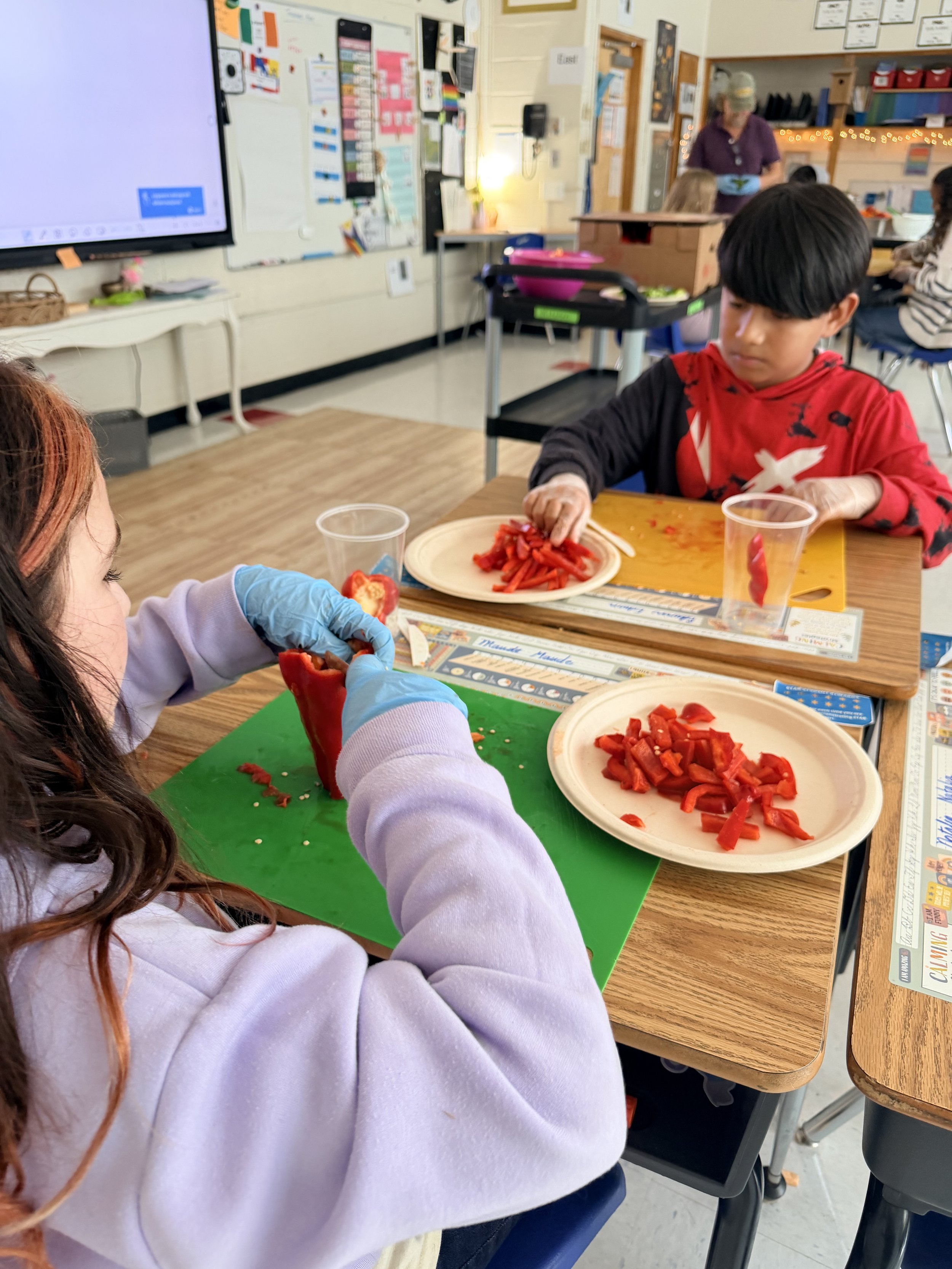
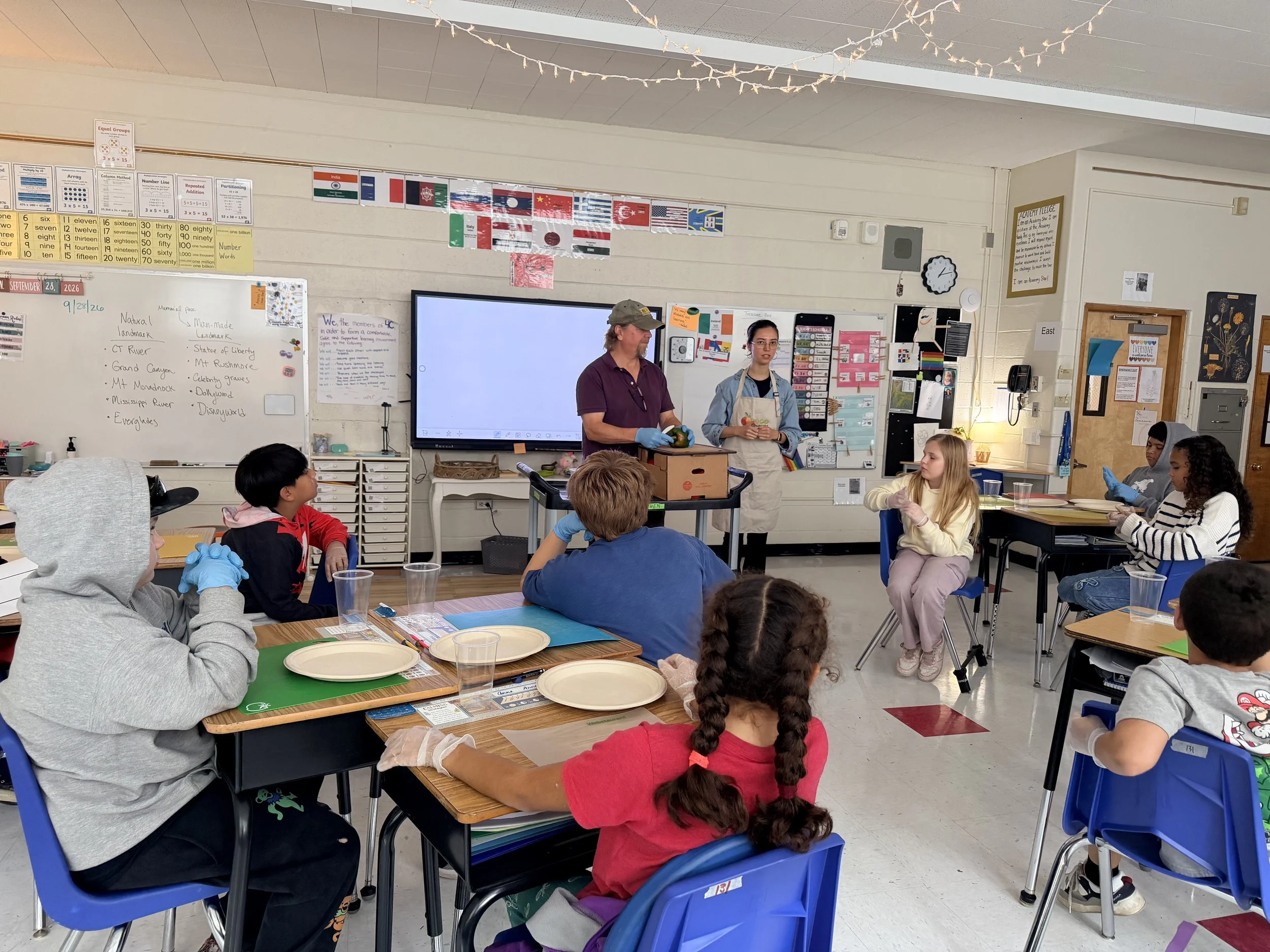
A lunchtime taste test became an opportunity to explore science, writing, and math for Sarah Coughlin’s fourth-grade class at Academy School in Brattleboro, VT. Students joined Food Connects for a Vermont Harvest of the Month activity focused on peppers, helping prepare samples for their schoolmates while connecting local food to their classroom learning.
The lesson began with a conversation about peppers: what makes some spicy, why bell peppers are sweet, and what to do after eating something too hot. Students also learned how pepper seeds, which are easy to dry, save, and replant, helped the plants spread around the world.
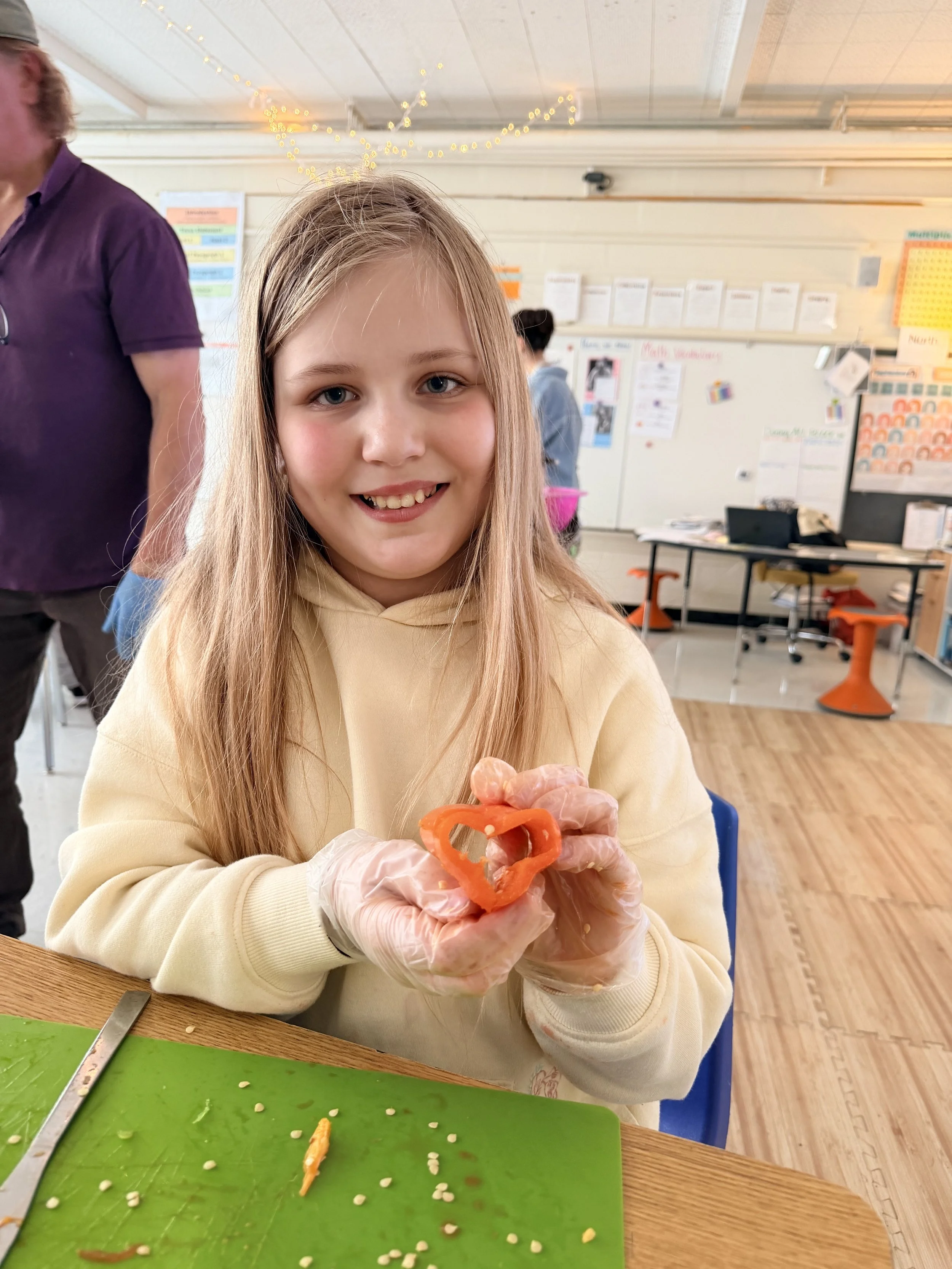
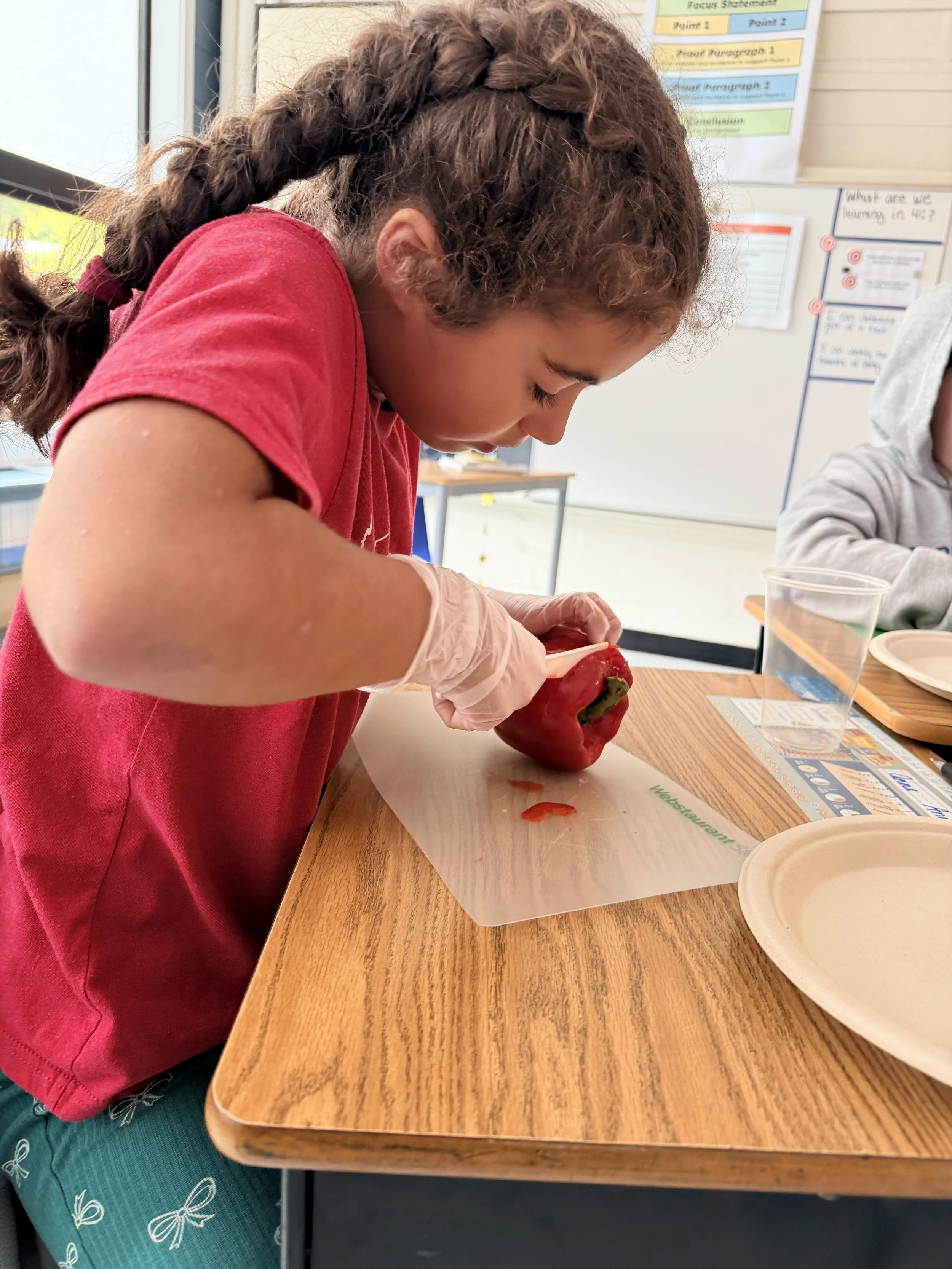
Next came the preparation. Students learned how to safely slice peppers and helped cut samples for the school’s lunchtime taste test. As they worked, they paid attention to the peppers’ smells, flavors, textures, and colors.
Those observations supported two classroom projects. Students made scientific drawings of pepper anatomy and used sensory details to write poems, connecting the activity to subjects they were already studying.
At lunch, students throughout Academy School sampled the peppers and voted for their favorite color. Orange Italia peppers were the most popular, winning students over with their sweetness. The fourth graders are also using the voting data for math activities to investigate which peppers their schoolmates liked and disliked.
Vermont Harvest of the Month gives schools a seasonal focus for exploring local food. At Academy School, that meant connecting a cafeteria taste test with classroom lessons and giving students a role in preparing food for their school community. It’s one way Food Connects’ Farm to School programming helps students build cooking skills, try local foods, and learn through firsthand experience.