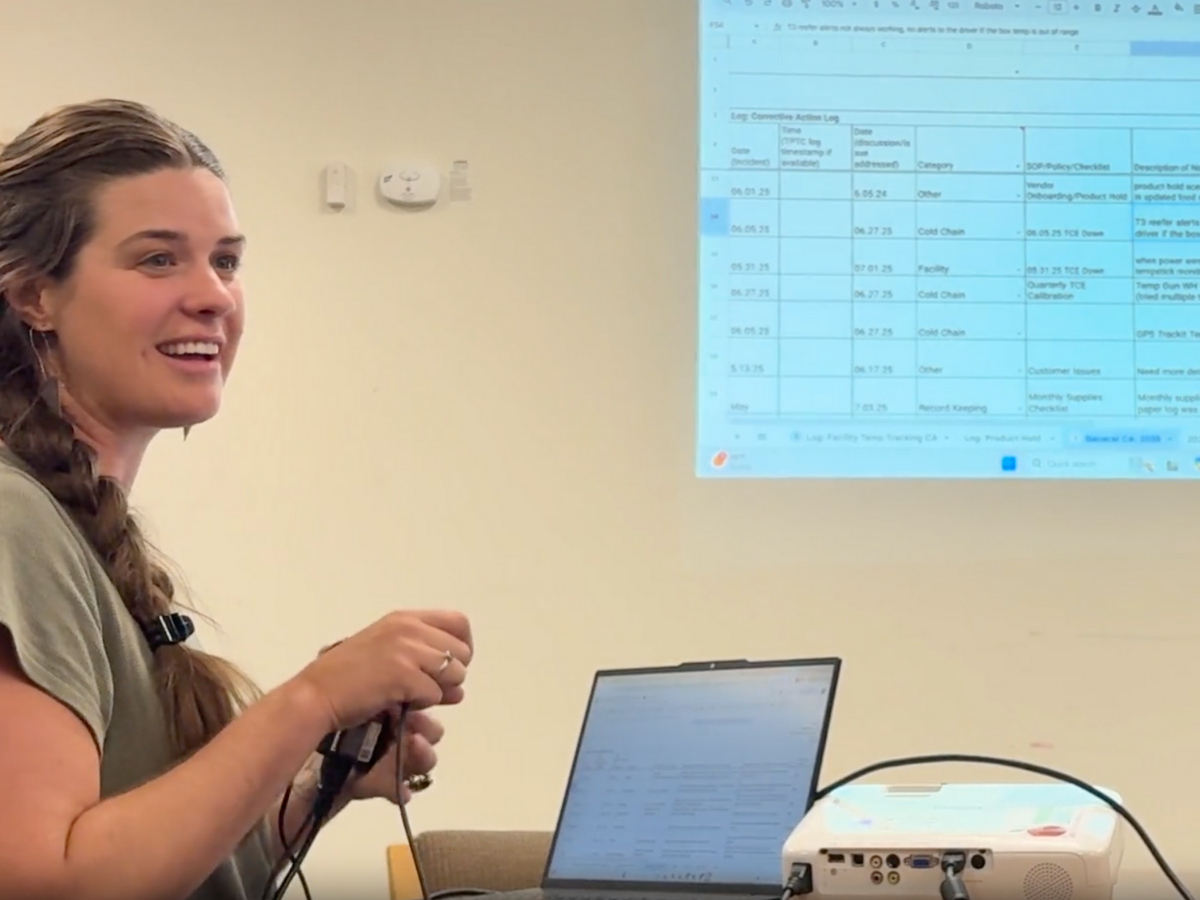
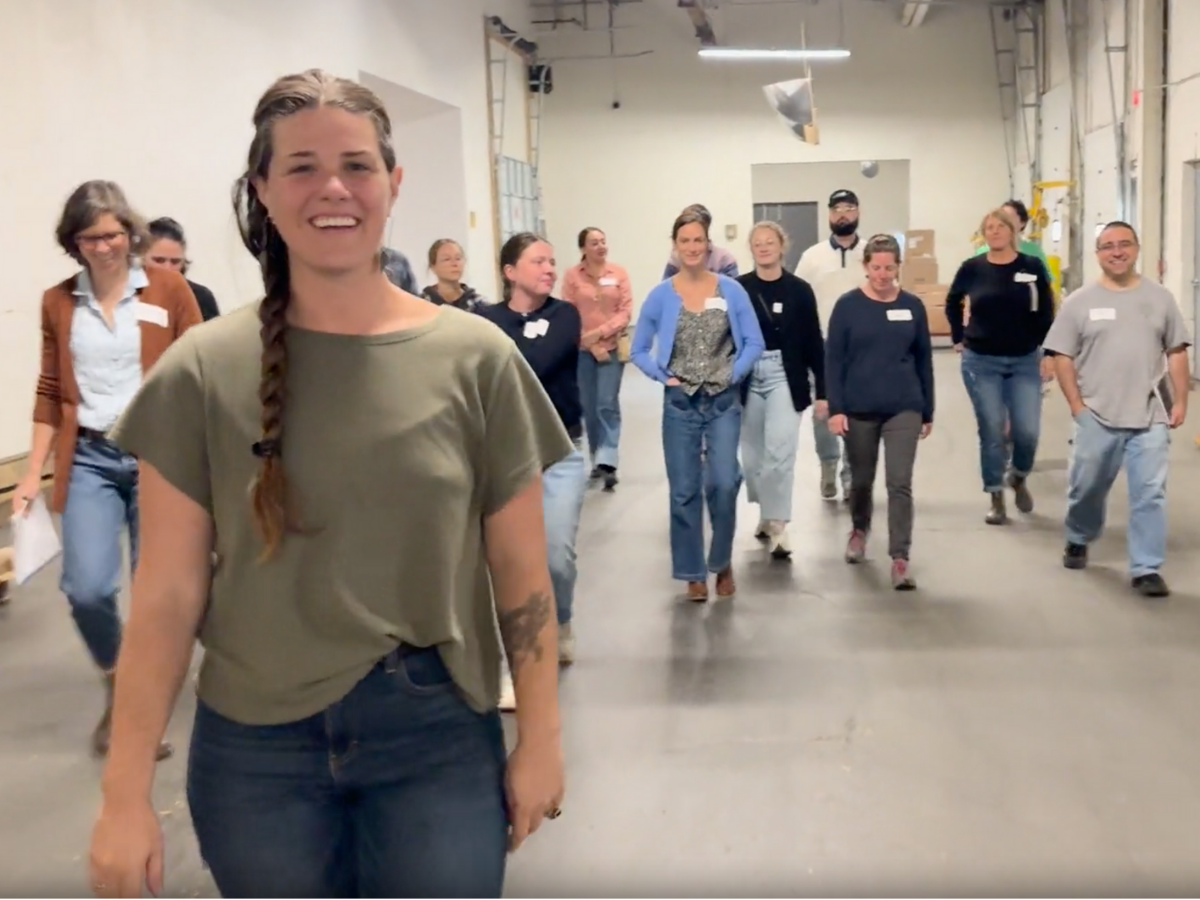
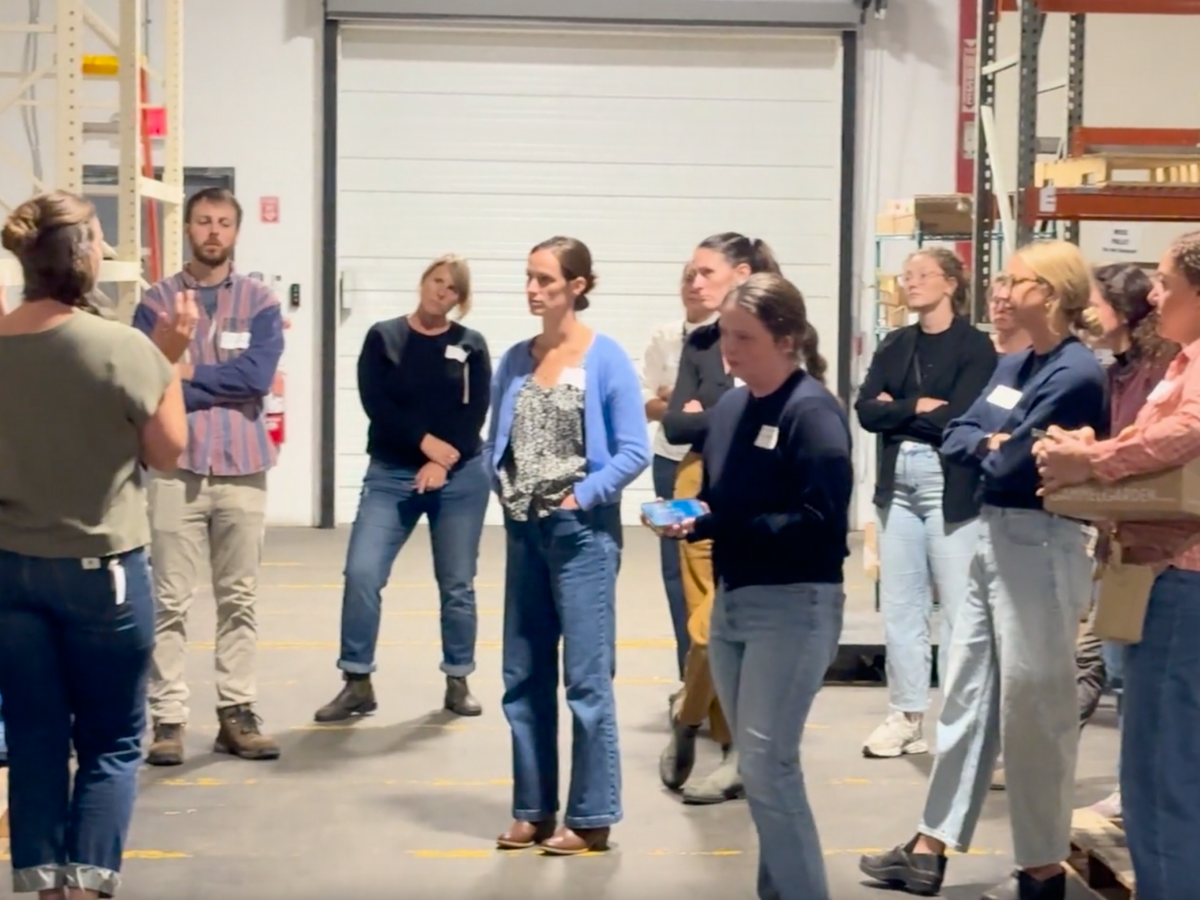
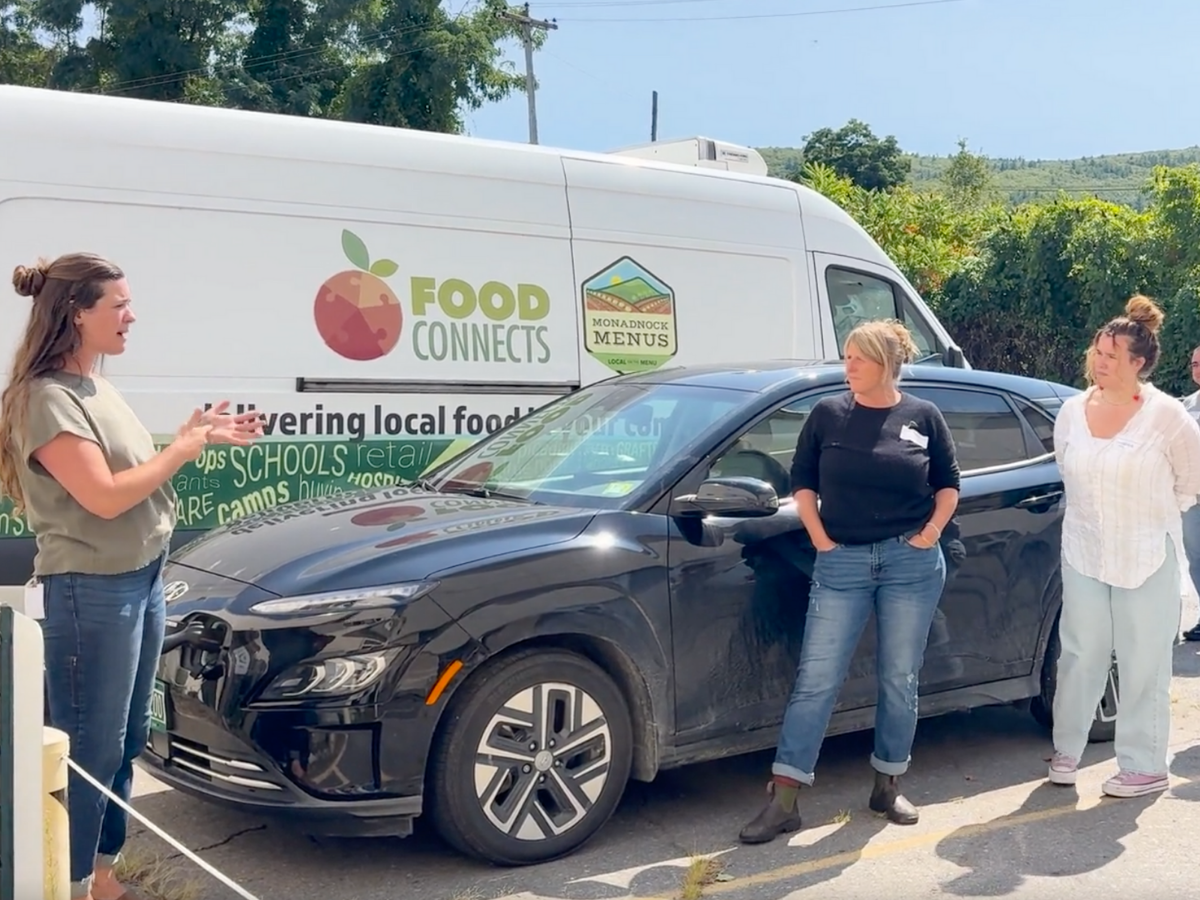
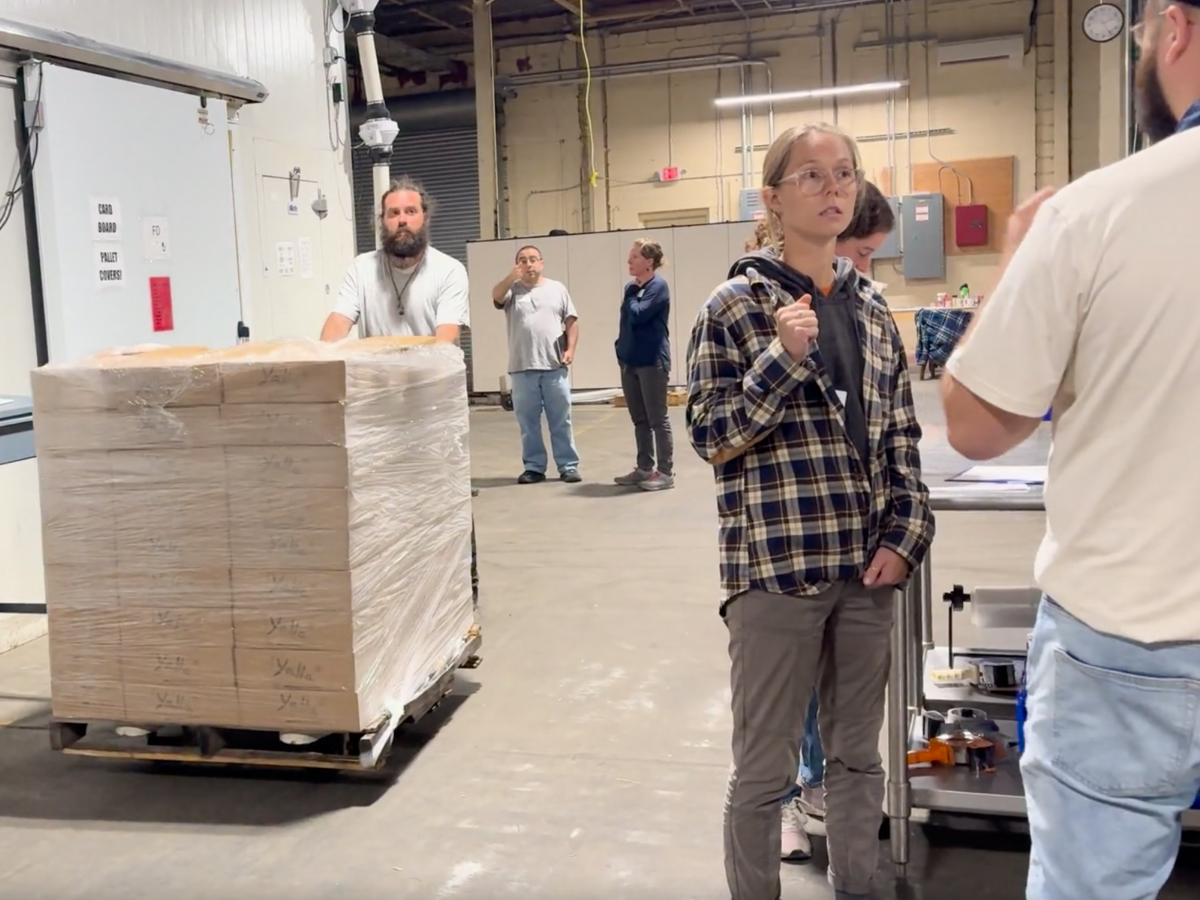
In September 2025, Food Connects welcomed 21 members of the New England Food Hub & Processors Network to our Brattleboro facility for a full day focused on practical, peer driven support for food safety and compliance.
Participants traveled from thirteen hubs and processors across the region, including the Center for an Agricultural Economy (VT), Salvation Farms (VT), Hope & Main (RI), Boston Food Hub (MA), ACORN Food Hub (VT), Fresh Start Farms (NH), Coastal Food Shed (MA), Farm Fresh RI (RI), Western Mass Food Processing Center (MA), NWCT Food Hub (CT), Southside Community Land Trust (RI), the New Hampshire Food Alliance (NH), and Farm to Institution New England (FINE).
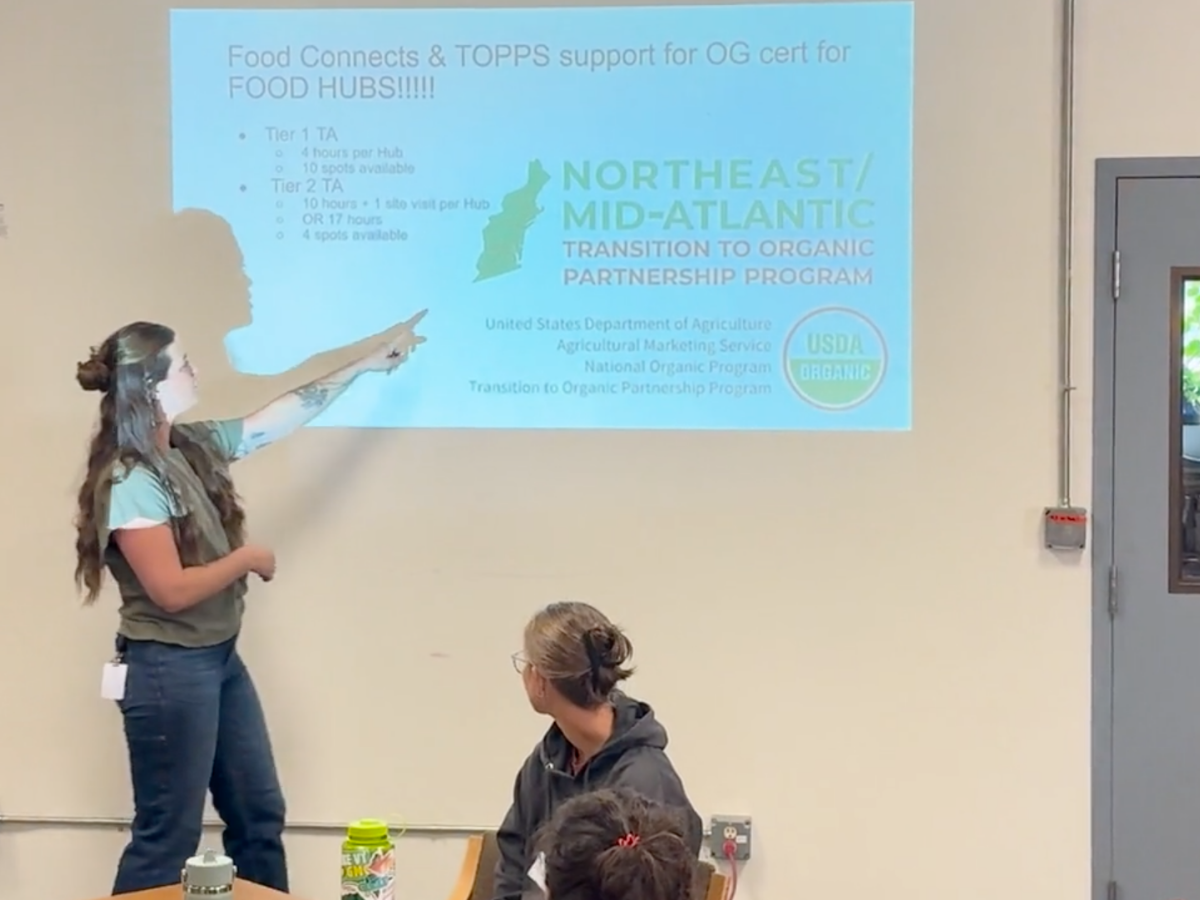
The visit showcased Food Connects’ growing role as a technical assistance partner through the Transition to Organic Partnership Program (TOPP) and our Food Hub Technical Assistance Program. It also highlighted the collective power of the New England Food Hub & Processors Network, a community of practice of more than forty organizations that source from hundreds of regional producers and move tens of millions of dollars of local food each year.
A day built around real compliance questions
The afternoon began with check in, safety reminders, and a shared lunch. Over sandwiches and salads sourced from our partners at the Brattleboro Food Co-op, Food Connects staff introduced our wholesale aggregation and distribution operation and walked through our compliance journey, including the decision points that led us to pursue both Organic certification and a cGMP third party audit.
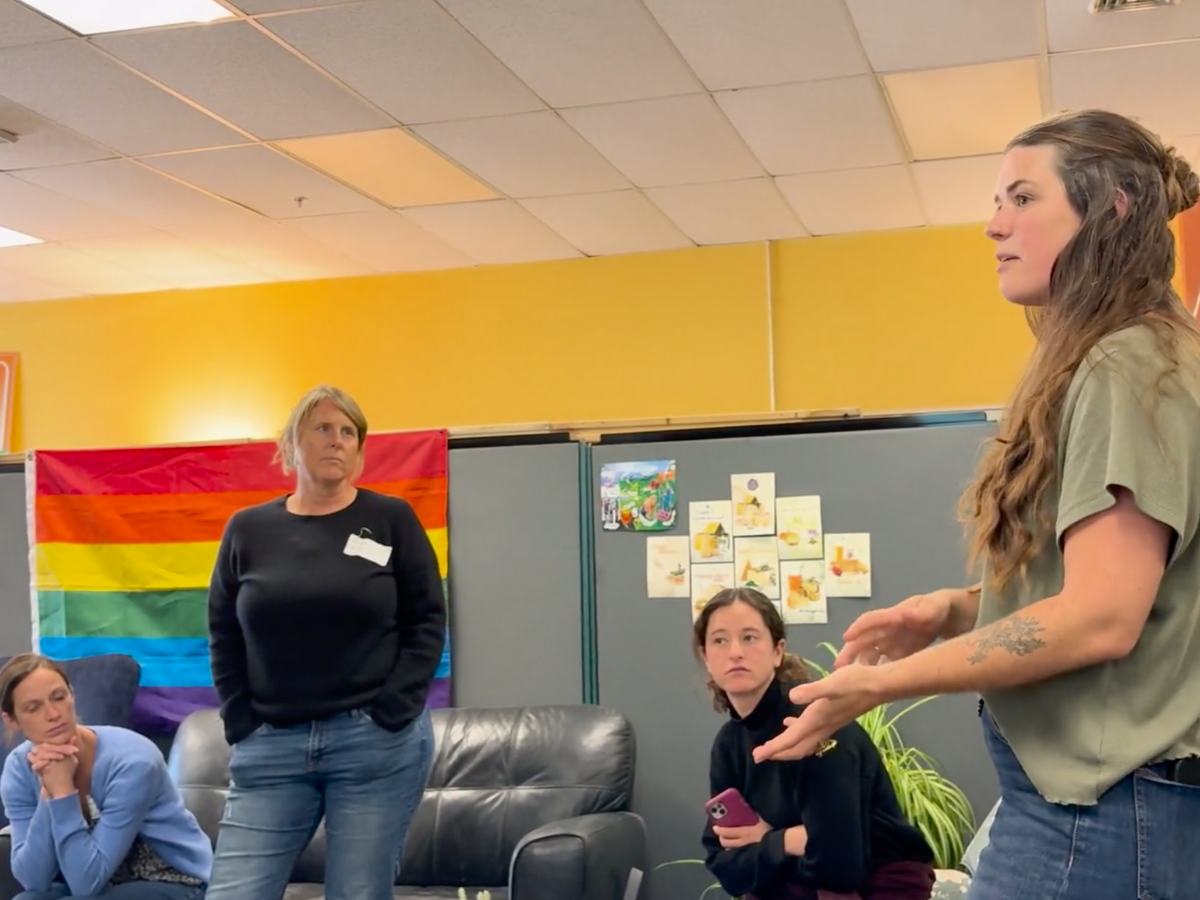
Participants then went around the room to share what they most wanted to learn. Questions ranged from “How do you organize documentation for multiple audits” to “What funding sources have helped you invest in food safety upgrades.” That framing grounded the day in the real challenges food hubs face as they work to access institutional and wholesale markets.
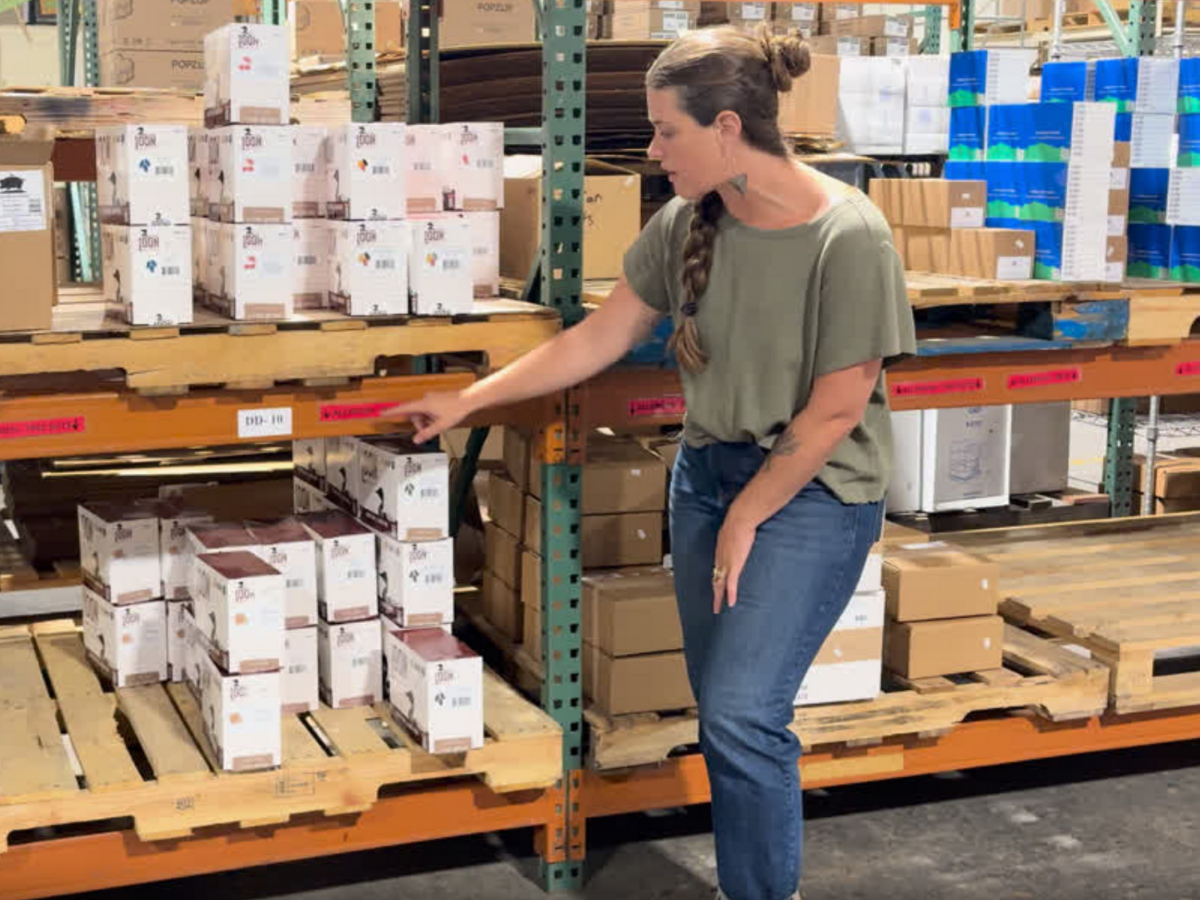
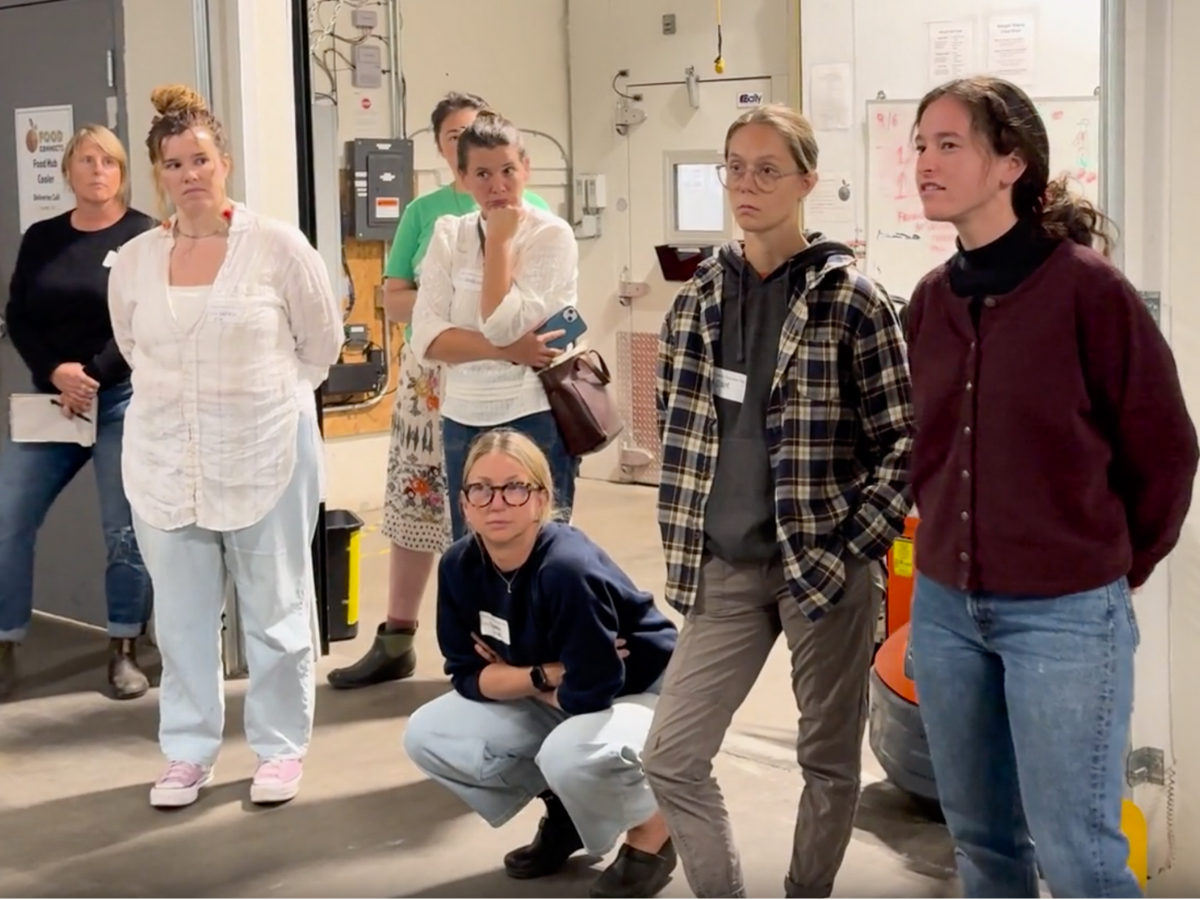
From there, Director of Strategic Impact and Compliance McKenna Hayes led a detailed facility tour with two parallel lenses: third-party audit requirements and organic certification expectations. At each step in the warehouse, staff pointed to specific practices and records that support compliance, such as lot tracking, sanitation procedures, corrective action logs, and how Food Connects balances efficiency with food safety and risk mitigation practices.
Participants were encouraged to pause, ask questions, and compare notes from their own facilities. The tour functioned as a live version of the mock audits and site visits that anchor Food Connects’ technical assistance work.
One-on-one guidance and shared problem solving
After the tour, the group shifted into focused discussion on funding and strategy for compliance work. Many hubs are juggling tight margins, minimal infrastructure, and complex regulatory frameworks. The conversation surfaced grants, institutional partnerships, and mentorship models that are helping hubs invest in compliance & food safety upgrades without losing sight of their mission.
Throughout the day, McKenna met one on one with several attendees to talk through upcoming audits and organic certification plans. This mirrors the structure of Food Connects’ Technical Assistance Program, which offers personalized guidance, workshops, mock audits, templates, and peer learning models to help hubs understand and meet basic food safety and regulatory requirements and navigate audits and inspections, including cGMP and Organic
As one participant shared during the closing go around, “I am leaving with concrete steps and a clearer sense of what is possible. Seeing another hub’s systems in action helps me picture how our team can get there.”
The day ended with each attendee naming a key takeaway and next action, from revising staff training plans to exploring Organic certification through TOPP mentorship.
TOPP in action
The Brattleboro site visit was built directly on Food Connects’ work with the Transition to Organic Partnership Program. Through TOPP, Food Connects has adapted the Vermont Food Hub mentorship model that helped seven hubs earn organic certification in 2024, using group learning, one on one coaching, site visits, and mock inspections.
In 2025 this model expanded beyond Vermont, reaching food hubs across the country through national food hub networks, including the Eastern Food Hub Collaborative and the California Food Hub Network, and programing through the Northeast Center to Advance Food Safety and Farm to Institution. Webinars, conference presentations, technical assistance calls, and shared tools like Organic System Plan templates and flowcharts have helped operators make sense of new USDA Organic regulations and decide whether certification is required for their business.
The New England Food Hub & Processors Network site visit offered a regional, in person extension of that work. Participants had the chance to see how Organic and food safety systems show up on the warehouse floor and in daily operations, not only in policy binders.
Technical assistance backed by lived experience
Food Connects’ ability to host this compliance deep dive grows from our own journey. In 2024, the Food Hub earned Organic Certification with a perfect inspection score. In 2025, we achieved cGMP certification with a 99 percent score on a rigorous third-party audit, opening the door to new institutional sales, including the University of Vermont through Sodexo.
Those milestones sit within a period of rapid growth. Food Connects’ Food Hub has grown from $411,000 in sales in 2018 to nearly $4 million in 2025, all while maintaining a focus on producer relationships and regional supply chains.
That experience shapes our Technical Assistance Program for food hubs and institutions. The program helps partners:
Understand and meet food safety and regulatory requirements
Minimize risk while scaling to serve larger buyers
Develop clear, accessible food safety systems and staff training tools
Navigate audits with confidence
Build trust between hubs and institutional buyers
Position themselves as competitive, mission driven partners in regional food distribution
Support can take the form of one session of one-on-one coaching, workshops and webinars, mock audits and site visits, open source templates and toolkits, and peer mentorship models that mirror the TOPP approach.
Part of a larger regional story
The New England Food Hub & Processors Network exists to make this kind of collaboration easier. Network members source from hundreds of New England businesses and food producers, return a large share of sales to farms, and employ local residents. They also incubate new value-added businesses and provide critical market access for growers and processors across the region.
Survey highlights from 2025 show how this shared work is deepening. Ninety one percent of respondent hubs and processors report working with or sourcing from others in the network, up from seventy percent the previous year. At least nineteen new partnerships or collaborations were formed in 2025 between network members and market access points. Members also exchanged resources, held shop talks, and participated in two site visits, including the Food Connects event in Brattleboro.
Technical assistance sits at the center of this progress. In 2025, fifty network members either received or offered support on topics such as accessing institutional buyers, improving processing and storage capacity, value chain coordination, supporting BIPOC producers, financial resources, business development, market development, and food safety. The September visit to Food Connects served as a concrete example of what that support looks like on the ground.
As Salvation Farms Executive Director Kelly Dolan notes in the network’s 2025 highlights, partnerships like these can strengthen Vermont’s food system, support more farms, and ensure that surplus crops nourish communities for years to come.
Looking ahead
Food hubs carry a great deal of responsibility. They bridge small and mid-sized producers with schools, hospitals, universities, and retailers. They hold the trust of communities that want safe, transparent, and regionally rooted food systems. Compliance is one key to maintaining that trust and unlocking new markets, yet it can feel daunting and isolating.
The September 2025 site visit showed another path. When hubs come together to share tools, ask candid questions, and walk through real facilities, compliance becomes more manageable and more connected to shared goals.
Food Connects will continue to partner with the New England Food Hub & Processors Network, TOPP, and other regional and national collaborators to grow this kind of practical, relationship based support. Hubs and institutions interested in technical assistance, site visits, or mentorship are invited to reach out through our Food Hub Technical Assistance Program and start a conversation about their next steps toward stronger, more resilient, and compliant regional food systems.